Musical accompaniment for this week's newsletter.
The market's AI mood ring was glowing green again last week as the S&P 500 hit record highs. However, if you exclude the AI version of the Magnificent Seven stocks, the S&P's market value was actually down. So, basically, the entire market is floating on AI froth and foam.
Against this backdrop, Wall Street is sorting software companies into winners and losers. What they’ve discovered is that everyone isn’t equally doomed.
The companies that can win are the ones that can control workflow rather than just inform it, handle sensitive data that makes switching painful, and serve narrow enough niches that an AI startup can't easily replicate them. So, a lot of Work Tech vertical players should be feeling pretty good, right?
Yeah … no. SAP and ServiceNow showed how that knife can cut both ways from seemingly similar data. SAP posted Q1 cloud revenue up 27% — quietly, confidently, no drama. The company that everyone wrote off as a legacy dinosaur five years ago is now the most interesting growth story in the HCM space. Meanwhile, ServiceNow beat revenue estimates and raised its 2026 outlook … and still watched its stock post a historic plunge that dragged the entire sector.
Well, then, there are horizontal players like Qualtrics staring down the barrel of commodification. Perhaps unsurprisingly, five senior execs are out at Qualtrics as the new CEO restructures the leadership team.
So, is AI an existential threat for enterprise software or an historic opportunity? Yes. Microsoft is a great example.
In the span of a few days, the company announced that it’s offering voluntary buyouts to up to 7% of its U.S. workforce — a first in its history — reframed as workforce “reshaping’ around AI. Much of Microsoft’s travail seems to be about Copilot, the supposed killer app that justified the OpenAI bet and the enterprise AI story that made the numbers sing. It has been, to put it diplomatically, a work in progress.
However, Josh Bersin argued that Microsoft could win the war for enterprise AI. He makes the case that Microsoft's combination of distribution, existing enterprise relationships, and Copilot integration depth gives it a structural advantage the pure-play AI vendors can't match. It’s a useful counterpoint to the "Copilot is underperforming" narrative — though both can be true at once.
The company is betting that shedding people and redirecting payroll toward AI infrastructure and Copilot development is the move. That's not crazy. It might even be right. But will the cast be worth it?
Microsoft's AI bet requires Copilot to become a genuine enterprise revenue driver, not just an upsell feature. If it does, cutting 7% of headcount now looks prescient. If it doesn't — if Copilot keeps underperforming against the hype — then you've flushed a lot of institutional knowledge without the AI ROI to show for it. That's a hard position to unwind.
But at least Microsoft is tracking against a narrative. Meta announced it’s cutting 10% of its workforce in the same news cycle, and it just comes off as reactive and flailing.
Unfortunately, the stakes for getting AI right may be higher for Work Tech users than vendors. Consider this: A major law firm submitted court documents containing AI-generated hallucinations. This type of thing is no longer a “cautionary tale from early adopters” story; it's an enterprise-scale deployment problem wearing a pinstripe suit.
Let’s just wrap up by saying this: it’s never been more important for Work Tech companies to nail messaging and positioning at a time when messaging for industry vendors has never been worse. A 3Sixty Insights piece this week on the growing gap between vendor messaging and organizational reality is worth noting. Enterprise buyers are increasingly frustrated by the distance between what AI-powered platforms promise in the sales cycle and what actually gets deployed.
Wall Street is no longer pricing effort or guidance optimism; it's pricing the distance between what platforms promise and what buyers actually deploy. Messaging is about managing perceptions as well as making pipeline happen. SAP has closed that gap. ServiceNow, for all its numbers, hasn't convinced the market.
What else is going on this week?
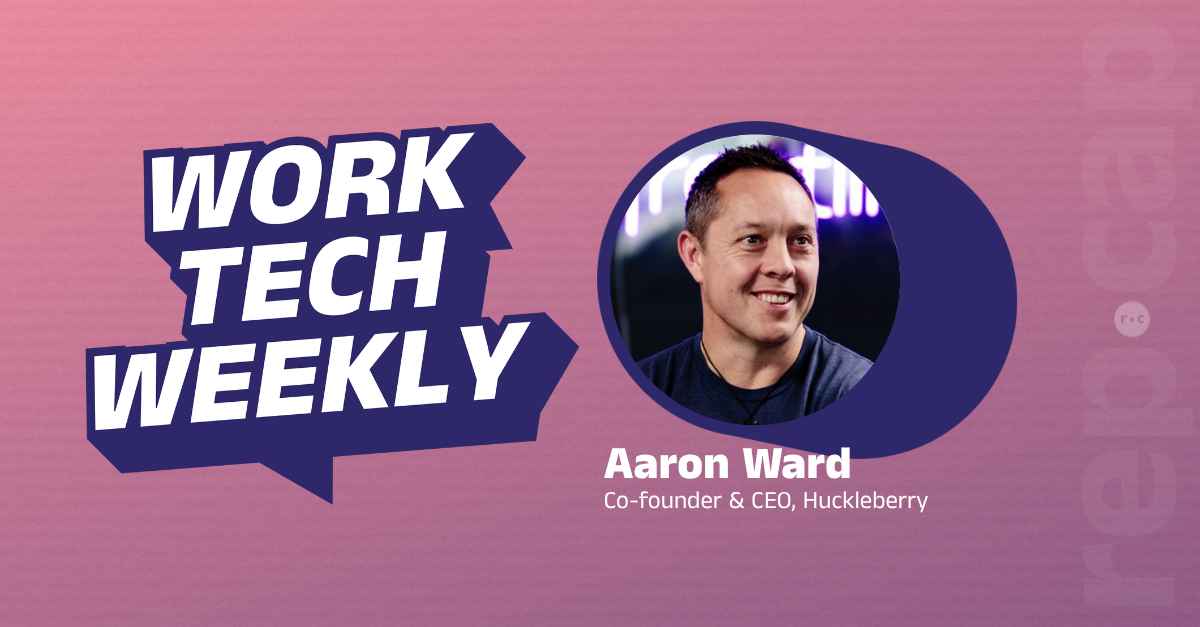
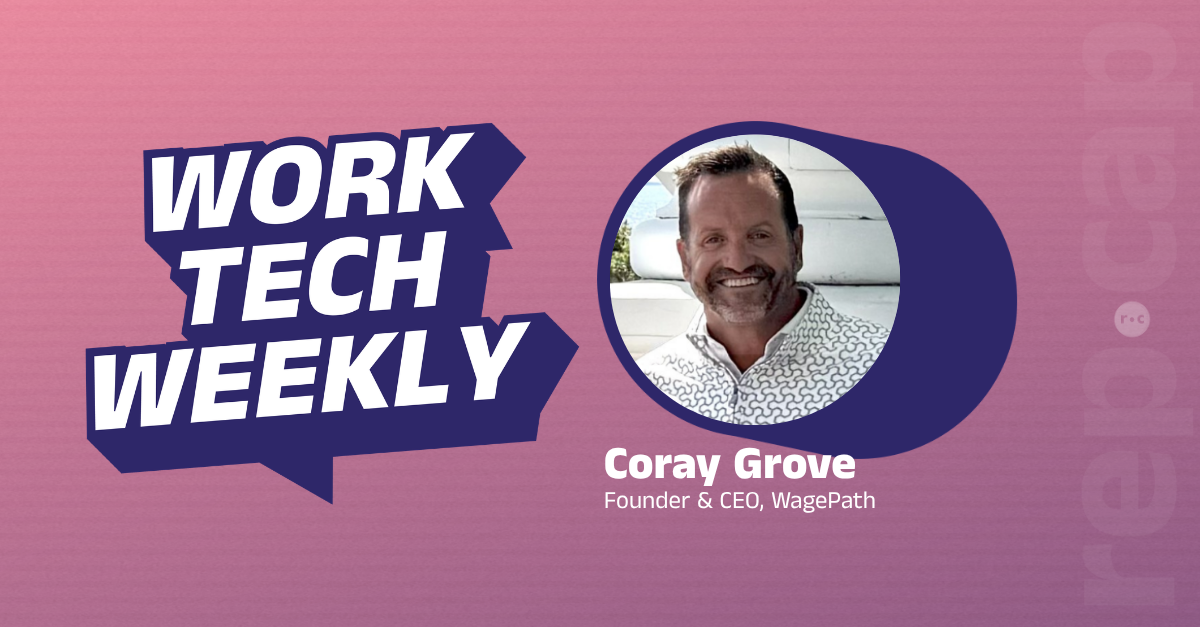
Work Tech Weekly Podcasts Two-Fer: Aaron Ward and Coray Grove
In the latest episode of Work Tech Weekly, recorded live at Transform, I sit down with Aaron Ward, co-founder and CEO of Huckleberry, to talk about why AI coaching is closing a gap that's existed for decades, and what it means to put a real coaching relationship in the hands of every employee. You can listen here.
In the second episode of our doubleheader, I’m talking with Coray Grove, founder of WagePath, to talk about why prevailing wage compliance is still a manual nightmare in 2026, and what changes when contractors finally get the fringe offset math right. You can listen here.
Transactions
-
A.I. start-ups from Canada and Germany merge to take on Silicon Valley. Cohere and Aleph Alpha combining forces is the non-U.S. AI market acknowledging what's been true for a while: you can't compete with OpenAI and Anthropic alone, so consolidation is the strategic move. The enterprise AI market outside the Valley is sorting itself out faster than most people expected, and this won't be the last merger of this type. (New York Times)
-
LumApps acquires workplace experience platform. The intranet and employee experience space keeps consolidating — LumApps is building toward a more complete digital workplace suite rather than staying in its lane as a pure intranet play. The acquirer is always buying something: in this case, probably time-to-market on capabilities it would have taken two years to build. (Press Release)
-
Tava Health raises $40M Series C. Mental health and EAP infrastructure continue to attract serious capital — the employee wellbeing market has survived the post-pandemic retrenchment and is now scaling into something more structurally embedded in benefits stacks. (FinSMEs)
-
Gaia acquires SocialJobs as it eyes U.S. expansion. A European recruiting tech player is buying its way into the U.S. market rather than building from scratch. It’s the right call, given how hard it is to enter the States in a crowded space. (Press Release)
-
TraqCheck raises $8 million Series A. Background screening and compliance verification are attracting growth capital. It’s a quiet corner of HR tech that doesn't get much attention but continues to generate steady returns for investors who understand the regulatory tailwinds. (FinSMEs)
-
Realm raises $4.5 million in seed funding. The Finnish startup focuses on workplace search and knowledge management. (FinSMEs)
-
urfuture raises £1.7 million in seed funding. UK-based early-stage HR tech company focuses on entry-level hiring. (FinSMEs)
Industry Notes
-
SkillCycle CEO and founder files federal lawsuit alleging predatory takeover, fraud and retaliation by venture capital firm. The startup funding relationship is framed as a partnership right up until it isn't, and this lawsuit is an unusually public airing of what can happen when founder and investor interests diverge at the worst possible moment. Worth watching as a cautionary tale for the HR tech founder community specifically. Unfortunately, there are bad actors out there. (Press Release)
-
Lars Schmidt to Anthropic. One of HR's most thoughtful practitioners and public voices moving to the company building the tools most likely to reshape the profession. If you want to know where the serious talent thinks the action is in the next five years, this is a pretty clear data point. (LinkedIn)
-
AI is improving employees' benefit literacy rates. Businessolver research shows that when you make benefits information conversational and on-demand, rather than buried in a PDF nobody reads, people actually engage with it. (Employee Benefit News)
-
Gallagher’s 2026 AI adoption and risk benchmarking. As AI adoption accelerates, the risk management conversation is finally catching up to the deployment conversation. The gap between “we're using AI” and “we understand our AI risk exposure” remains wide, and it's where the next wave of enterprise liability is quietly accumulating. (Gallagher)
-
Greenhouse unveils new 'AI principles' to combat bias and burnout in tech-driven hiring. Publishing AI principles is quickly becoming necessary, table-stakes, and only meaningful if the operational reality matches the document. To Greenhouse's credit, naming burnout alongside bias as a design concern is at least asking the right questions. (Press Release)
-
Zoom teams up with World to verify humans in meetings. We have arrived at the moment where enterprise software needs to confirm that the person on the other end of your Zoom call is, in fact, a person — and somehow that sentence is just normal news now. (TechCrunch)
-
Google Cloud and Vista Equity Partners form a partnership to accelerate enterprise agentic AI adoption. Two heavyweights combining distribution muscle with portfolio reach to push agentic AI into the enterprise. Every mid-market Work Tech vendor in Vista's portfolio just got a very direct signal about where their AI roadmap needs to go. (Press Release)
-
Paylocity launches Elevate Solutions to help HR and payroll teams scale more efficiently. A new product tier from Paylocity targeting the efficiency-obsessed buyer. The timing is smart given how aggressively CFOs are scrutinizing HR tech spend right now. (Press Release)
-
Product launches from Vensure, Harver. Vensure announced the launch of HR Compliance, a new AI-powered compliance platform built directly into its technology ecosystem. Harver announced the launch of Harver AI PREVAIL™, the first purpose-built AI aptitude and adaptability assessment module. (Press Releases)
Worth Reading
-
When your digital life vanishes. What happens when platform dependency collides with account termination, data loss, or company shutdown? It’s a useful gut-check for anyone advising enterprise clients on AI vendor lock-in. (The New Yorker)
-
What replaces the org chart? Craig Hepburn asks a relevant question about how AI-driven organizational redesign works at the task level rather than the headcount level. It’s the framing that actually matters for leaders trying to figure out what their org looks like in 18 months. (Substack)
-
What will be scarce? A behavioral economist asks the question the AI abundance narrative keeps dodging: when generation gets cheap, what actually holds its value? The answer — judgment, taste, context trust — isn't new, but the framework for thinking about it rigorously is worth the read. (Substack)
-
The podcast where you can eavesdrop on the AI elite. Dwarkesh Patel has built the closest thing we have to a primary source for how the people actually building AI think about what they're building — less polished than a conference keynote, more revealing than a press release. If you want to understand the room where the decisions are being made, this is a decent window in. (The New York Times)
