Trent Cotton:
We talk to our clients all the time. You know, our product team is really good about sitting down and making sure that we have a finger on the pulse. And they're not ready for agentic, you know, they're kind of in that Gen AI and automation, and there's still a huge lift in efficiency that you can get just with some AI-assisted automation.
So we're kind of playing to where our clients are, where our prospects are, and where we see the market is — not where the glam and the glitter is.
Steve Smith:
Hey everyone, welcome back to another episode of Work Tech Weekly. I'm Steve Smith, Managing Director of Growth at Rep Cap.
Inside the work tech industry, the conversation around AI in talent acquisition has been moving fast for a couple of years now. Agentic AI, automation, skills-based hiring. But when you actually talk to the TA teams doing the work, the picture looks pretty different from what's being discussed on stages and in vendor decks.
That gap between the market narrative and the market reality is what this conversation is about.
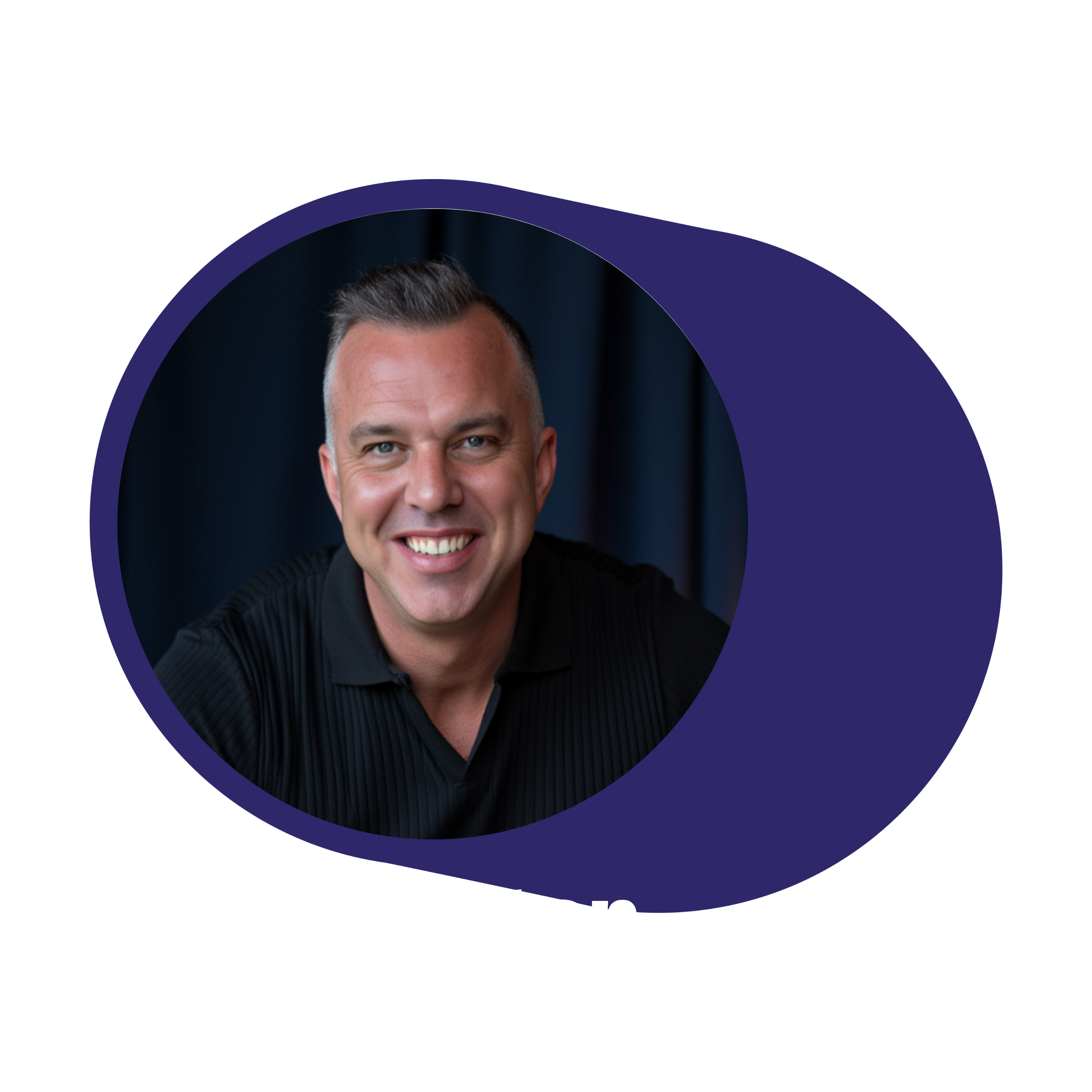
My guest is Trent Cotton, Head of Talent Insights and Analyst Relations at ICIMS. ICIMS is one of the most established talent acquisition platforms in the market, 25 years in, fresh off a significant rebrand, and making a serious push around AI-powered recruiting.
Trent spent the better part of two decades on the practitioner side before crossing over to the vendor world. He's not just theorizing about what TA teams should do. He's been in the seat.
This conversation was recorded live at Transform 2026 in Las Vegas. In it, we talk about where AI adoption in talent acquisition actually stands, what the data shows about how recruiters are spending the time AI gives back to them, and why governance needs to come before anything else.
We also get into candidate trust, the shift from pilots to operationalizing AI, and what it looks like to meet your clients where they are.
Let's get into it.
Welcome to the Work Tech Weekly podcast. I'm Steve Smith and I'm joined by Trent Cotton from ICIMS.
Trent Cotton:
Hey, welcome. Welcome to our booth.
Steve Smith:
Hey. And a lovely new brand. There's a lot going on, you know. How are we kind of popping a little bit?
Trent Cotton:
Yeah, kind of pop a little bit.
Steve Smith:
So how's all that going over?
Trent Cotton:
It is going well. We've had clients and prospects stop by. We actually had some random person a second ago who goes, I love your booth, I love your messaging and all that. Which is, you know, unsolicited, which means that it's a little bit more authentic. So getting a lot of really interesting feedback. Good feedback.
Steve Smith:
Well, and so what's the story behind the rebrand? What's the story you're telling in the market?
Trent Cotton:
Alright, so we've been around for 25 years. Very longstanding, best in class talent suite. It was just kind of time that our brand matched some of the really cool cutting edge things that we're doing in the market. So this was the best time. And it's really interesting — we went through, for our logo, I think there was like 500 some odd iterations before we got to that. So a lot of research around it. We actually tested the colors, our tagline, our logo with prospects and with clients, not just in TA, but like CIOs and stuff within the organization to just really kind of get their feedback. And this is what we landed with.
Steve Smith:
Well, I mean, I've had the good fortune to work with Jody Kaminski before.
Trent Cotton:
Miss Jody.
Steve Smith:
She's one of the best, and I'm not surprised that this is where you landed. Well, so let's talk a little bit about the event. Transform, I've always loved this event. You were talking about that earlier.
Trent Cotton:
It's one of my favorites. Yeah. I was telling the team this morning, this is the one that I actually look forward to coming to. It's just got a different vibe. There's a different level of energy. What's been really interesting, 'cause this is my first time being on the vendor side — you know, usually I'm out there questioning the vendors — but having people come in and it's like they're going, this is a problem that I'm trying to solve, can you help me with it?
Steve Smith:
Right.
Trent Cotton:
And I think that to me is such a more valuable conversation versus, ICIMS, what does that do? They're really kind of coming in looking for a solution for their problem. I think to me that's a deeper, more relationship based type of conversation.
Steve Smith:
Well, and what's interesting is, I've been in some sessions and one of the themes that's come across is, you know, obviously we've got humans plus AI. But it's the practical real world application of AI as opposed to just, you know, falling for whatever the marketing buzz line of the moment is. It seems like talent acquisition has been on kind of the front end of —
Trent Cotton:
Always is.
Steve Smith:
— the punishing part of the AI adoption. Where do you think that talent acquisition is with AI right now?
Trent Cotton:
Well, you know, it's funny in HR, and I think one of the reasons I always had a hand in TA was because I knew that TA would always test something first, you know. It was like the guinea pig for HR. So I think it makes sense that some of the blowback and everything that has happened in TA — you know, usually the person wants to test it, so it does make sense. But also, I do think that that's where we're gonna see a lot more hyper growth, right? Because with all this technology, part of my job is getting into the workforce data and we're seeing a lot of volatility in the market. So the conversation around talent is gonna become even more intense. And I think the thing that excites me is that with AI, it's actually going to allow the recruiters to actually be those talent advisors that they need to be in order to have a good, strong talent strategy.
Steve Smith:
Well, and you're talking about kind of the data part. I know that ICIMS has a report that's coming out here pretty soon with a bunch of new data. Tell us a little bit about that. Where did that come from? What was the genesis?
Trent Cotton:
And you actually almost set it up perfectly. I didn't take it, but there was — I'm gonna quote Tim Sackett. He and I talked in July right after I started. We were talking about the whole AI and TA and like, what's going on. And both of us were practitioners, so we like case studies. And he said there's a lot of sizzle but not a lot of steak.
Steve Smith:
Right.
Trent Cotton:
And so we kind of noodled on it. And then we brought in Madeline Loriano from Aptitude Research. And with kind of just like on the back of a napkin at HR Tech, we're like, this is what the report should do and this is what we should test. And so what we are doing is we actually came up with, what is the AI adoption in TA orgs based off of TA orgs? So we surveyed, went through a questionnaire with TA organizations to really kind of get an answer to that question — how much of the process is being leveraged by AI, and at what stage?
So I've got my secret little document here. Let me pull it up. But I will tell you, the headline is that 69% of those that we surveyed said that they are using AI in some part of the process. Only 45% said that they were willing to test or they're considering using agentic AI. So we're starting to see TA kind of move out of this, "okay, automation is AI" — which it's not.
Steve Smith:
Right.
Trent Cotton:
Moving into Gen AI, and roughly 45% are looking at how can they leverage agentic AI. But we're still very, very early on the curve.
Steve Smith:
Well, and that's sort of like one of the stories right now — inside the industry, we talk about agentic AI all the time, like everybody's doing it. But market adoption of this is still, it seems to me, kind of far behind the marketing conversation, the sales conversation.
Trent Cotton:
I'm so glad you said that. 'Cause there's a lot of the influencers, the talking heads and all of that, that are talking about the agent and thinking that this is where the market's going. But you know, we talk to our clients all the time. Our product team is really good about sitting down and making sure that we have a finger on the pulse. And they're not ready for agentic, you know, they're kind of in that Gen AI and automation, and there's still a huge lift in efficiency that you can get just with some AI-assisted automation.
So we're kind of playing to where our clients are, where our prospects are, and where we see the market is — not where the glam and the glitter is.
Steve Smith:
Okay, well, you know, a question for you is, we're starting to see some of these lawsuits bubble up around bias and use of data. You know, Workday, the Eightfolds. And so it seems like in the market there's a bit of a step back and maybe a loss of trust, a lack of trust, some skepticism. What are you seeing in conversations with your clients right now? Has that caused some hesitation in the market?
Trent Cotton:
You know, I don't really know, 'cause I mean, we don't really kind of look at what's going on with our competitors. We really just kind of focus on our stuff and what our clients need. And a lot of our clients are in very regulated industries. So you know, we've been doing AI since 2018, and one of the things that impressed me about ICIMS is that it started and said, okay, before we get too far, let's create our governance framework — and you can go and check that out on our website. We've got a fireside chat on our YouTube called our responsible AI. It's very thorough and it's also audited by a third party. So we're one of the only ones that have the TrustArc certification for our process. All of our AI goes through that process to make sure that it's verified, that it's safe and that it's responsible.
So I think that our clients kind of depend on us for that safety and kind of being that SME, and giving them that grace and that credibility that they need to be able to trust AI. 'Cause it is a huge leap of faith.
Steve Smith:
Well, so you have a bit of a different background than a lot of the folks on the vendor side. I mean, you spent almost your entire career on the practitioner side. What's it like being on this side of the fence?
Trent Cotton:
It's fun, because it's like I get to stay in the industry but not having to do some of the stuff that I've done for 20 years. I still have a lot of friends and they'll call and they go, how would you handle this? It's like, can I just say I'm so glad I'm out of the practitioner side.
It's just interesting because there are so many different problems that you can solve. I think one of the things that has been interesting to me is how we're navigating which problems we wanna solve in which order. And so that's been fascinating to me. Luckily I was very fortunate — in TA, I had to go through product management and all this other kind of stuff, so I understand the precepts. But seeing it in action always is just kind of fascinating to me.
Steve Smith:
So what do you think on the vendor side that we don't get, that practitioners are like, how do you not understand that?
Trent Cotton:
You know, I'm actually gonna quote one of our clients from a client panel that we have for our yearly kickoff. And I always ask at the end of a podcast or something like that — I'm like, gimme a mic drop moment. And her mic drop moment was advice for us as her vendor: meet me where I am.
Steve Smith:
Yeah.
Trent Cotton:
And I think that's probably the biggest piece of advice that I could give for anyone — solve the problem that your client needs or your prospect needs, not the one that's over here that they don't know about yet. Solve the ones today and then help them avoid the ones in the future.
Steve Smith:
So what's kind of interesting is there have been a couple of conversations that have come up with panels where it's just like, in regarding the vendor conversation, it seems like practitioners are wanting the vendors to move faster. And I was surprised to hear that — like, you need to move faster or we're going to take this on ourselves. And I'm like, this is surprising, 'cause it seems to run against the current and the tone of the things I'm hearing, like what we've been talking about.
Trent Cotton:
Yeah. But which market, right? 'Cause I do think if you look at the market, if you have your kind of SMBs — yeah, even your mid cap — I think that there's probably some of that. Like they're wanting to move fast. But I think once you get into that mid space and even enterprise space, it's two totally different animals.
So I think Sapient came out on the commercial side — they're curious but cautious. And everything is tied to ROI. So they're not gonna invest in a tool that they don't see immediate ROI. Enterprise is something that's very different. You and I both have been around.
Steve Smith:
Right.
Trent Cotton:
Enterprise usually would look at commercial and say, you test out that new tech. You make all the mistakes. I'm gonna come in later and scale it. We're not seeing that with AI. They're actually looking at how do we move from testing and piloting to operationalizing it on the enterprise space. So I think that kind of feedback — I'd really like to know where does that client or that prospect sit.
Steve Smith:
And has that changed a little bit? I know that AI pilots were kind of all the rage in the past, you know, 18 months. But it seems like there's been a bit of a shift, and I don't know if this is C-suite or board pressure of like, no, pilots are done, we need to operationalize, go. Are you seeing that manifest in market?
Trent Cotton:
I don't know about manifesting in market, but looking at some of the data — if you go and look at, I think it was the Wall Street Journal, they tracked how many times ROI of TA has been brought up in shareholder meetings. And it's almost at a six degree slant. So I think the board is getting pressure from the shareholders going, you're investing in all this AI infrastructure, where's the return on investment? And then all of that pressure's coming down from the C-suite.
And it is driving a different type of buying decision. We're seeing a lot more involvement of the C-suite in the discovery process and really trying to determine what's going to be the best platform to be able to meet the needs and solve the problems that we need solved.
Steve Smith:
Well, and you've seen it from the vendor side, you've been on the practitioner side. Is there any part of you that thinks, you know what, number one, things need to slow down? There's a lot of, we need to move fast for the sake of moving fast, we need AI for the sake of AI. Are you seeing that maybe everyone needs to take a breath, think about what's the business case they're trying to address, and being more methodical and thoughtful about it?
Trent Cotton:
Well, one of the things our product team says that I love is that AI does not solve all problems.
Steve Smith:
Right.
Trent Cotton:
Alright. And so two weeks ago I was in market with a couple of our clients doing an AI workshop. So I gave them a preview — since they're clients, I gave them a preview of some of the AI adoption report information, and then we just sat down and said, okay, let's chart out your entire process. Let's circle what is uniquely human in this process.
So for them it was the recruiter interview. Like they didn't want to hand that off to AI. They wanted the first interview to be a human. Okay, cool. That works for them.
Steve Smith:
Right.
Trent Cotton:
For me, over my cold dead body — I would automate everything up until that point, depending on what kind of company I was in. But that offer, that's a human involvement, right? You know, even the hiring manager interviewing, setting that up. So once you have that part, then kind of go in and say, okay, could this or should this be automated, or could this or should this go to AI?
And then when we left, they actually had like a timeline of different things that they wanted to do. And for us, we were able to look at it and say, okay, this is where we can help you, this is probably where we need to wait. And I think there needs to be more conversations like that, that are more constructive and data based. And the other part about slowing down is you need to have your governance framework in first. Don't retrofit it. Put it in first.
Steve Smith:
Do you think that's a failure point in market, that too many companies are ready, fire, aim, and not addressing that governance component?
Trent Cotton:
I think everyone got really, really excited about AI.
Steve Smith:
Yeah.
Trent Cotton:
And governance, you know, it's kind of got a bad rap. It slows things down. I really think that if you do governance right, it speeds things up — it's just on the tail end, you know? So yes, you can move really, really fast, but if your governance framework is not in there and something hits the fan, you're gonna spend all that time you were trying to avoid on the front end. You're gonna spend multiples of it on the back end trying to get it fixed.
Steve Smith:
Well, what about on the candidate side? I think that one of the themes in market and also at this conference is just the sense among either candidates or employees that AI is not their friend, it's not for their benefit, there's a mistrust. Is your data showing that, or are you picking up different signals?
Trent Cotton:
I think we're picking up different signals. So I think there are a couple of different entry points of AI with the candidate. So a candidate going in and automatically getting disqualified — let me pause. Best practice: if you hear nothing else out of this interview, if you're a head of TA or you're handling HR, you make your candidate go through this application and there's this little thank you screen — take the time, chart out the journey and say, you are here, here's where we use humans, and here's what's done by AI.
'Cause what I'm hearing in the market whenever I'm talking to candidates is, "AI automatically declined me." It's not that — we've been using automation since, I mean, I got in 2004. We had DQs back in 2005, 2006. That's not AI, but because you're not clarifying and providing some transparency, there's a lack of trust because of the lack of transparency. So that's an easy fix.
Steve Smith:
Right.
Trent Cotton:
So once you get that part fixed, then it's kind of looking at, all right, would a candidate like for their resume to be analyzed, skills to be brought out, and then to recommend jobs in the company? Because let's say I'm a software developer, I've done some project management before, I really like both of them. I have no idea about product management because I'm not in an agile shop. If I go and apply to something and it looks at my skills and then it looks at the jobs that are out there, it's like, hey, have you ever thought about being a product manager? Here's what it does. Wow. That's where you can leverage AI to really blow up the candidate experience.
Steve Smith:
Well, and I think that also candidates — even if they end up not getting an offer or not making it to the final round or whatever — if you're communicating with them and they understand what's the criteria, here's what happened, you can create an experience that brings them back in a different role and maybe even leads them to being in the company.
Trent Cotton:
Yeah. And I think one myth that I'm seeing kind of self-correct in recruiting — and I was guilty of this — is once the candidate said I do, I was done. Like they went to onboarding, I didn't have to worry about how long they stayed. But I'm starting to see a lot of organizations looking at recruiting and saying, it's not just recruiting, but you need to be recruiting for retention.
Steve Smith:
Yeah.
Trent Cotton:
Again, I think that's where AI can kind of come in and help. You know, like our matching — it looks at what's on the resume and what's on the job description, and it gives a matching score. Now the recruiter can go in and review all of those. We want the human driving the process, but we want our embedded AI to help support it, to help augment it. And I think that's the delicate balance that is really gonna spell success in TA in the future.
Steve Smith:
Anything about the conversations here at the conference that are standing out to you? Anything that you see themes coming together or things that are noteworthy from your perspective?
Trent Cotton:
Yeah, so for the longest time we've always had problems at the top of the funnel. How do I get more qualified candidates? How do I, you know, the employer branding as a marketing, not as a retention tool. And I'm starting to see a little bit of a shift. 'Cause if you look at the funnel, the biggest pressure for both hiring managers and for the candidates, according to our data, is in the screening and the interviewing.
So our frontline hiring report — one of the questions asked was, you know, how often have you abandoned an application? 60% of the respondents said they have abandoned an application. So for all your recruiters that are complaining about, oh my God, I have so many candidates — well, if your application process was better, you probably have more, which I don't know if is a good thing or a bad thing. But that was one of the big things for them.
And what's really interesting is we're starting to see Gen Z wants to show off their skills. They're looking at the resume as kind of the great equalizer now, right? There's no way to really kind of stand out. So they're ready for job simulations, they're ready for these assessments. They're saying, test me and let me prove that I could do the job. I think that's a great opportunity for recruiting.
And the hiring managers, they want that too, because 62% of them cited candidate quality has been the biggest obstacle in the hiring process. So I think that's a way that we can look at what's the right technology to help kind of alleviate that friction.
And then the next one is scheduling. How many years of your life have you lost scheduling and rescheduling an interview? That's definitely something that we're looking at. How can AI help with some of that conflict resolution and enhance that experience? Those are the two areas that we're really focused on, because that's where a lot of the friction is.
Steve Smith:
Well, you know, it sounds like a little bit that the hiring process, maybe on the vendor side, we're holding it back because it's the way things have always been done. And we can bring in simulations, we can bring in some of this testing into the process, and it sounds like there is a segment of the candidate audience that wants that.
Trent Cotton:
There is. And it's really like, one of the things that I love whenever I came on is, of course I met our product team — our chief product officer and Lisa, who's right there. Both of them from the product side, they come from finance, not HR tech. So they had to learn HR tech. And I love watching them in the meeting going, why aren't we trying to solve it this way? There are other ways of doing it.
So I think for us that's a competitive advantage, because we're not trying to solve things the way that we've always done it. We're trying to say, is there a different, more efficient way of doing that just by looking at the problem from a different angle?
Steve Smith:
And I guess one thing I'm kind of curious about is, in sales conversations, there's been a lot of talk about buying committees expanding. There's been a lot of conversations about sales cycles extending, things getting longer. What's kind of the boots on the ground reality of what you're seeing and experiencing?
Trent Cotton:
I think what we're seeing is the more successful leaders, like TA or HR, that are getting things through, they're bringing all of the people to the table on the front end. So they're bringing in their governance, their compliance, their legal teams, even their procurement. And CTOs and CIOs are playing a pretty heavy role in this because usually the AI mandate sits in their realm.
Steve Smith:
Right.
Trent Cotton:
So you know, they wanna be able to have some kind of a weigh in on the decision. So we're finding that those clients and prospects that move the quickest and most efficiently, they're bringing all those people in on the front end. And that's kind of what we like, so that way we kind of know, you know, are we solving the right problem? Is this going to be an issue for you? Is this gonna create other issues internally? We'd rather know that on the front end, so that way we're helping them draft and build that solution that's gonna be the most efficient.
Steve Smith:
And do you see HR kind of being thrust, maybe more than they want, into the front line of, okay, how are we going to implement and encourage adoption of AI in the enterprise?
Trent Cotton:
Yeah, but it makes sense.
Steve Smith:
Yeah.
Trent Cotton:
I mean, everybody's talking about AI as being like this huge technological transformation, which it is. But it's also a human transformation. We're looking at where's the value of work? Who needs to be doing, or what needs to be doing that work? So that whole value concept is changing completely. And that's a people thing. So the people function should be driving that.
And I mean, you've led tech innovations, I've led tech implementations. Where do we always trip? It's right at the finish line with adoption.
Steve Smith:
Well, so when you're looking at the market right now and what's going on, is there anything that's standing out to you about kind of the state of talent acquisition? 'Cause obviously the last few years have been pretty brutal —
Trent Cotton:
Yeah.
Steve Smith:
For recruiters. But now it just seems like things have maybe stabilized a little bit. There's innovation going on.
Trent Cotton:
Yeah. I think we went through that huge curve in 2021 coming out of the gates. I mean, people were hiring people that had a pulse to be a recruiter.
Steve Smith:
Right, right.
Trent Cotton:
And then we had the great trough after that in, what was that, 2023?
Steve Smith:
Yeah.
Trent Cotton:
I think we are starting to see some things level out. But I think that people are looking, because TA tested AI so quickly, and going, okay, this is a way that we can take this small and mighty team and make them even more mighty. You know, it's just how do we do that? How do we make sure that we're complying and following a governance model and growing the right way?
But I think that a lot of the successful TA teams that I've talked to, they're looking at AI as an augmenter and not as a replacer. So it's a mindset thing.
Steve Smith:
And do you think that that's common in the market, that it's augmentation versus replacement?
Trent Cotton:
I think there's a lot of clickbait fear out there of, AI is gonna replace recruiters. I've had trolling people that have said stuff on comments like, recruiting is going to be null and void in the next two years. Okay. I'll talk to you in two, in three years. We'll talk about it. Because I don't see it happening. Do I see it evolving? Absolutely. Do I see recruiters getting out of the day-to-day process and actually sitting down and going to, hey Steve, what are you actually looking for? Here's some things that I'm seeing in the market. Look at this person, I think we should probably hire them preemptively.
The good recruiters, they want to have those kind of conversations. I think technology's gonna enable us to be there, but it's gonna be a little bit of growing pain till we do.
Steve Smith:
Well, and it seems like that's the goal in recruiting — being able to identify a great candidate who becomes a great employee that wouldn't have made it through the screening, without the intervention of the recruiter.
Trent Cotton:
Yes. The highlight of my weeks are whenever I'm scrolling through LinkedIn and I see someone that I recruited get a promotion. You know, I'm not part of that promotion, but I remember the conversation. I remember the first time they go, no, I'm not interested. I'm like, just hear me out, let's talk about this.
And I think the good recruiters, that's where they find the value in their job. So the more that we can take off of them to have those kind of connections, not just with the candidates but also with the managers, I think it's just gonna elevate the practice. And in fact, our data that's coming out on April 8th — one of the questions we asked is, alright, you're saving an average of X number of hours per week per recruiter. What are they doing with that time? They're reinvesting it back in the human. I'm not gonna tell you what it is.
Steve Smith:
Okay.
Trent Cotton:
But whenever I saw the data, I was like, yes, that's exactly where I want them going.
Steve Smith:
So is there anything in the data of the report that comes out April 8th that runs contrary to maybe the conventional wisdom in the market, or something that would surprise people to see?
Trent Cotton:
I think people are gonna be surprised to see what level of adoption is the highest whenever you're looking at the recruiting process, the funnel. Because it kind of made me go, really? I need to dig into that. It was really interesting.
Steve Smith:
Well, I for one look forward to seeing the report.
Trent Cotton:
I will send you a copy.
Steve Smith:
I would be disappointed if you didn't. I'll give you the last word. What is there a question that I should have asked you and didn't? Anything you want to add?
Trent Cotton:
The only thing is, AI does not solve all problems, but the right people do.
Steve Smith:
Good to hear. Alright, Trent Cotton. Thank you.
Trent Cotton:
Thank you so much. Appreciate it. Appreciate you.
Steve Smith:
Trent’s parting words are something to really consider. AI does not solve all problems. But the right people can.
We're past the point of debating whether AI belongs in talent acquisition. The question now is how you deploy it in a way that earns trust, from candidates, from hiring managers, from the C-suite, and from the recruiters being asked to change how they work.
What Trent described in those client AI workshops, sitting down, mapping the full process, circling what stays human, that's a change management conversation as much as a technology one. The organizations getting it right seem to understand that distinction.
The candidate transparency piece also stayed with me. Automation has been in recruiting for twenty years. The problem was never automation. It was the silence around it. Candidates don't trust what they can't see. That's a fixable problem. And fixing it changes a lot downstream.
If you enjoyed this episode, make sure to subscribe to Work Tech Weekly on Apple Podcasts, Spotify, or YouTube Music. And I'll see you next time.