Donald Thompson:
The thing that I think people are missing is the AI adoption gap. We're spending a lot of time on what the tools can do. The amount of innovation in terms of the tools replacing x, y, how to build an agent, what is a workflow? These are all technology-driven conversations and make a lot of sense, but at the end of the day, businesses are still won. Between humans that relate to one another. So that's authenticity, connection, trust. AI does not create trust, right?
Steve Smith:
Hey everyone, welcome back to another episode of Work Tech Weekly. I'm Steve Smith, Managing Director of Growth at Rep Cap.
AI is moving fast right now. Every CEO conversation, every board meeting, every earnings call seems to circle back to the same question: how quickly can we deploy it and how much productivity can we unlock?
But inside most organizations, the reality feels very different. The tools are improving quickly, but the way work actually happens hasn't caught up yet. Leaders are pushing adoption. Employees are trying to figure out what it means for their roles. And somewhere in the middle there's a widening gap between what AI can technically do and what organizations are actually ready to implement.
That gap is exactly what we're talking about today.
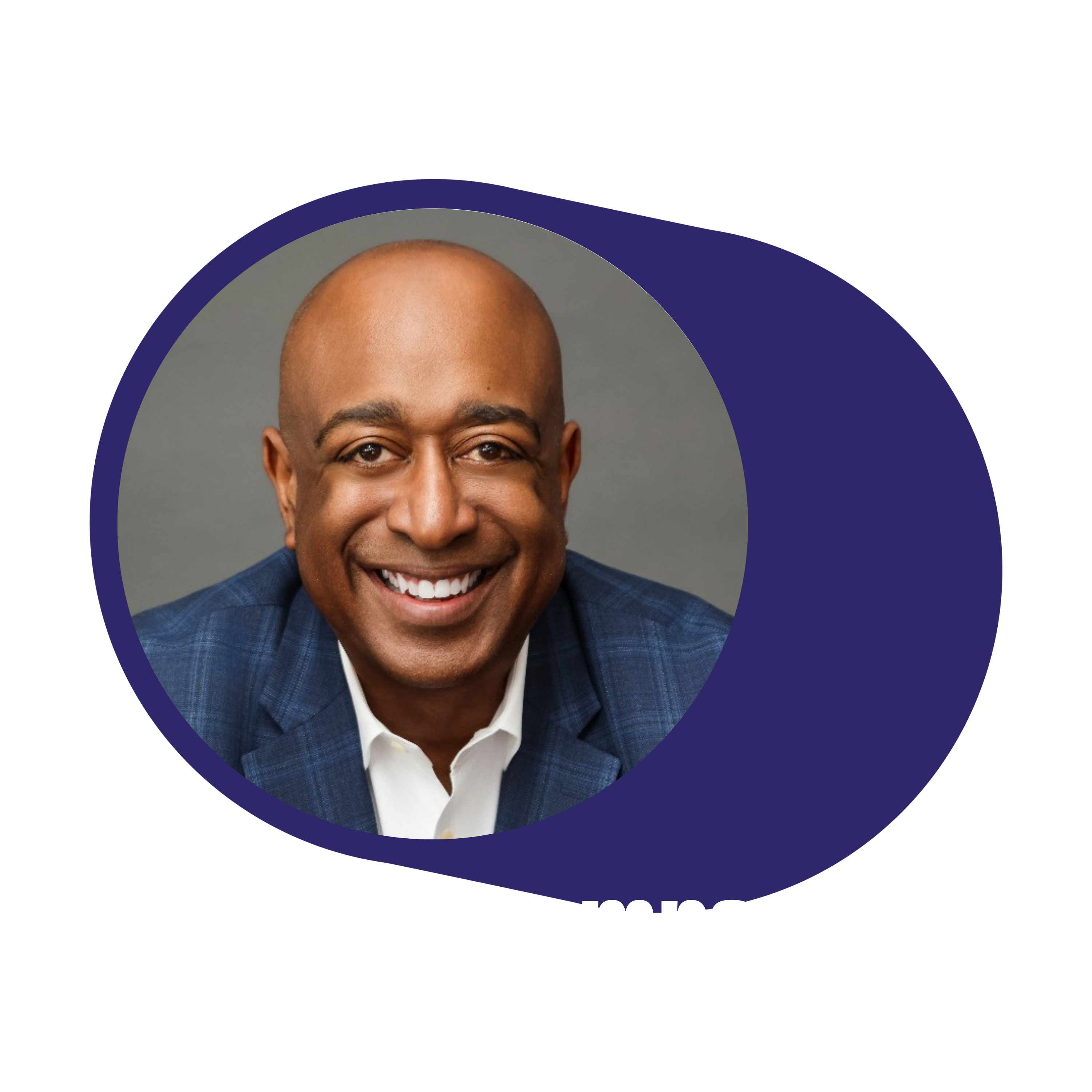
My guest is Donald Thompson, Managing Director of the Center for Organizational Effectiveness at Workplace Options. They're a global provider of employee wellbeing and performance solutions that supports tens of millions of employees across organizations around the world.
Donald works with executives navigating the intersection of leadership, culture, and performance during periods of major change. And right now, AI is creating one of the biggest transitions leaders have faced in decades.
In this conversation, we talk about the AI adoption gap, why technology alone won't drive performance, and what leaders need to do differently if they want their teams to actually thrive in this new environment.
Let's get started.
Steve:
Alright. Welcome to the podcast, Donald. Glad to have you here.
Donald:
Hey, I am glad to be here. Been looking forward to this conversation.
Steve:
I've been looking forward to it too, 'cause it's been a minute since we talked and I've, you know, I've had the good fortune of knowing you for several years now. I always come out of a conversation with you more energized than when I started.
You know, you just have a really great way of just like bringing a lot of energy to the conversation. So I'm really excited about today. And I'm also excited to, to catch up a little bit 'cause you know, obviously you are a serial entrepreneur. You have built and exited many companies. You have a lot of thoughts and perspectives on, you know, organizational effectiveness, building a good company.
And you know, I think that where I wanted to start the conversation really is to talk a little bit about, okay, we're in this AI era. AI is changing everything where it comes to culture and performance. And when you look at the landscape right now, what do you think that maybe leaders are underestimating about the scope of change today?
Donald:
Oh, Steve, thanks for that question and certainly it's a topic I'm excited about. One of the things in my career that I've been able to do successfully, a lot of learning still to go, but things I've been able to do successfully is that reinvention. Of myself and the businesses I work with to align with what's on trend.
And AI is a tsunami event in that magnitude, right? So if we look at the number of jobs that are being transitioned in the software space, right? Software engineers in particular, if we look at the amount of significant investment that corporations are making, they're basically betting the enterprise right on, on AI. One can be really clear that it's something that we can't ignore, so people understand that. So they're talking about it a lot in different things.
To answer your question very specifically, the thing that I think people are missing is the AI adoption gap. We're spending a lot of time on what the tools can do. The amount of innovation in terms of the tools replacing x, y, how to build an agent, what is a workflow? These are all technology-driven conversations and make a lot of sense, but at the end of the day, businesses are still won. Between humans that relate to one another. So that's authenticity, connection, trust. AI does not create trust, right?
In a buying standpoint. And then the second thing that's important is how do you actually take all of this enthusiasm for a new technology and create reasonable time to value in the organization. And so I think leaders are missing the people aspect. And if done incorrectly, you create fear, uncertainty, and doubt, so that actually de-programs productivity. And then if you move too fast, you end up creating unintended consequences because what happens is people start to over-rely on a tool, but at the bottom of every AI prompt, it says this beautiful thing. Claude makes mistakes. Double check my work. Gemini makes mistakes. Double check my work. Grok, whatever it is, right?
It says to you in blinking lights that I'm not to be trusted completely. Yet what we tend to do as humans, right, is we start to fall in love with a new way of doing something and then we put overreliance on the tool versus, and I'll land the plane on this comment, overreliance on what the tool is really good at, which is research, which is thought partner, which is validation of your thinking with other journals or third-party credibility out there. Beautiful tooling for that.
If you're building a website and you want to use Lovable, it'll prototype in a minute. But if you think it's going to implement from ideation to implementation to full launch, you're actually now putting the enterprise at risk. So short answer is the adoption gap, right, from where we are technology-wise, to how we can actually deploy it in practice.
Steve:
Well, you know, and I'm really interested in that adoption gap conversation because when you pick up, you know, the Wall Street Journal and read what's going on there, or you listen to, you know, an earnings call with any CEO out there, you know, everything is just like AI, AI. We've gotta get there now, more faster.
But when you talk to a line employee, someone who is tasked with executing on the AI, there's a lot of fear, there's a lot of ambivalence, there's a lot of uncertainty. You know, are you seeing, when you look at AI, are you seeing cultural accelerant, performance accelerant? Are you seeing stress test?
Donald:
So I'll say all of the above, but let me unpack why. So when I think about a productivity value add, it does it 10x, a hundred x, right? I spent about 12 hours getting a prompt engineering certification, and it saved me a thousand hours. Right, and so the value proposition of learning how to use tools correctly is smart, because what it does is it makes those of us that understand as domain experts in a particular area, it allows us to get to an endpoint faster. But because that experiential level, meaning we know what good looks like, we know what excellence looks like, that means we're using AI as a tool.
If you think about this, if people just take a mental walk with us and think about a push lawnmower. With no machine automation, right? It's a push lawnmower, right? And it dates us a little bit, but I'll just take our audience a little back. Push lawnmower. Then think about that first gasoline lawnmower. You're still pushing it, right? But it's got a motor, sparkplug, all the different things. And you think about a driving lawnmower tractor, right? You're now, you got your headphones on, you got your big golf hat, and you're mowing the grass, man, but you're having a hell of a time, right? Like you're doing good stuff. I think about AI the same way.
Now think about those same tools. If you give them to a 6-year-old and you tell that 6-year-old —
Steve:
— on a riding lawn mower.
Donald:
I do not want a 6-year-old on a riding lawnmower. I don't want a 6-year-old with even a push one, right? All kinds of bad things can happen if you look at these amazing tools, but then you put an inexperienced driver and expect them to do excellent work.
And so one of the things when I talk to CEOs and CHROs and leaders is we have to commit to AI from a functional level. Of how does it help you do great work? If you're a marketer, how does it help you do better work? If you are a CHRO or in the HR stack, how does it help you? If you're in the finance space? And we need to really niche-level educate people about how AI works for them in their daily job. If you educate me about something, you also reduce my fear.
Steve:
Right.
Donald:
If you just throw tools at me and say AI, that doesn't make me more productive or less afraid, right? And so those are the ways that I think about how do we educate folks on doing it? And what's happening in the C-Suite is you're doing Excel spreadsheet cost savings math, without really thinking about how you're gonna implement it in a correct way.
Steve:
Okay. This. Okay, so you're getting to something that I think is incredibly interesting and completely being overlooked, is a lot of companies are deploying AI, but it seems like we have very few, or at least that are talking about it, that are talking about redesigning how work actually happens. Those are two very different things.
Donald:
You are very familiar with the construct of work design.
Steve:
Right.
Donald:
So if you think about, put away technology and just let's look at it from a human standpoint. You have a talented individual and you have 10 tasks on their plate. They're doing five of those 10 things at an elite level. Why are you giving them the other five that they're struggling with? That's faulty workplace design, right.
Because you're getting elite work out of 50% of somebody's work stack, and then five, you're getting okay work, marginal work, sometimes crappy work. Is that employee now rated poorly, or is the work design creating less productivity? And so now when we look at the technology, one of the things as I work with folks and think about AI's impact on culture and performance, it impacts it positively if it's designed well for existing systems that are routine, easy to replace, yeah, and then an accelerant for knowledge work for people that have to do remarkable, innovative work.
Those are two very different use case buckets, right? Very different protocols. One is closer to automation, right, where you're automating routine task and a little bit of logic. And the latter is where you're really doing big strategy work, and now it's a function of how do you train the machine. What content can you put in some of these public domain tools versus what you can put if you have a lockdown box within your organization, right, that has all your restrictions and security and compliance and all those things.
And so we've seen a lot of folks misuse AI from a confidentiality standpoint, from a security standpoint, because they over-rely on the trust of the machine. Right, when we know that OpenAI, even if they started as a nonprofit, right, we absolutely know if you take a $500 billion in investment, somebody wants some payback on that.
Steve:
You think.
Donald:
Right? So, you know, we gotta understand people's motives. So anyway.
Steve:
Let's shift gears and talk about performance more, a little more specifically. I think that, you know, obviously, you know, millions of books, it seems like, have been written about how do you build a high-performing organization, you know, but you know, at its core, it's just like getting to performance. It needs to be something that's repeatable. And so when you look at like performance measurement right now, how does that evolve or change when you're bringing AI into the equation?
Donald:
One of the things I've had to work on as a result of really just having team members that aren't as dialed in as they once were, for all the reasons I described, is I think in the age of AI, we need to show people examples of what success looks like. So in a creative arena, okay, you can build a website prototype in an hour or two now, right?
If you are looking at a content or a research paper, you can create that executive briefing. You can create that table of contents. Now all of a sudden, that team has a framework to work with. If you're having a broader meeting that you're discussing strategy, I'm very big now on creating a one to two page business brief. Required reading before the meeting, because if everyone's on that meeting-after-meeting treadmill, you don't actually know the quality of participation you have, especially when we're not as much in person.
Steve:
All right.
Donald:
But if you have the business brief, now all of a sudden you ask for, in the beginning of that meeting, comment or understanding or clarification on that brief, you then have created direction and now all of a sudden you've created a blueprint for a higher-value interaction with your team. So in the age of AI, I am actually slowing down a little bit to give people a moment to recalibrate so that I can get the best information, innovation, and insight from them in the moments that I'm working.
The final thing that I will say is that expectation for economic value of a new tool or system without education and experimentation is foolish. I want people to focus on the education and experimentation. When you educate and experiment, you let people play with the tools. Then they will come to the table with a foundation to ideate with you of what should change or be structured in the organization because no longer are they scared of the tools. They now can think about the business.
But if you just put the conversation before you get people comfortable with some of the tools, now all of a sudden they're managing what they communicate about AI as to whether it's gonna replace my job, manage whether about AI, whether or not it makes them look good or less smart. Right? What does my master's degree mean now? What does my PhD mean? But if you build from a tool education stack upward, then people will get more comfortable. It's like, I've been watching, playing football for years. I can talk about American football all day. I can engage in a conversation 'cause I'm educated on it.
I think we need to do that from a leadership standpoint with AI.
Steve:
Well, you know, and it's, I mean, don't take me off on a tangent because I can talk football all day. So we'll record that one later. But you know, I think one of the things that's interesting that you bring up is just like, the dual nature of AI. 'Cause on the one hand you have people who are, they're afraid of what it's gonna mean for their jobs and their livelihoods. And so it's just like, is this thing gonna replace me? You know?
And then, you know, something that I think is overlooked, is like AI is training on us too. So it's just like, it's got transcripts. It's learning the way that we as individuals and the individual contributors think. And so that is also going on. I don't think that's lost on people.
What's interesting is then on the other side, there are ways that, you know, for like, I'll use an example from our own organization. We record pretty much every meeting that we're in, and so we don't have to worry about note takers. AI note takers are everywhere and for me, one of the benefits is I don't have to worry about taking notes. I can focus on the conversation and I can be more present. Because I'm not worried about, oh, that was important, I need to make sure that I got all of that. I mean, how do, I mean there's really two different, you know, things going on with AI at the same time.
One of 'em is terrifying. One of them is like, hey, this isn't so bad. Is this just the way work is gonna be right now?
Donald:
I would say this is phase one of what work's gonna be right now. I will give an example that is fun with AI, but also like a little scary, right? So I had Claude that really can scan my, you know, how we all get newsletters and different things. Well, I get one newsletter that has a lot of different links that I may or may not be interested in, right? So I've programmed Claude to look through this particular newsletter for three or four types of content. It then pulls it up into my session. I then can pick the one that I want to unpack a little bit more, and then we dig into that together. That's a simple automation, right, of what we're doing, but that is where we're headed.
Now, let me expand it out a little bit. I was in a two-day AI course at Harvard for AI strategy for executives. And so I took time off, I invested the money, or our company did, so I could spend time with these 45 leaders, right? 19 different companies and a lot of different exchange, right? So here's the example that they gave that was both exciting and a little bit scary for knowledge work.
So they gave us a New York City traffic diagram of like five boroughs and five years' worth of accident data. So this is a pretty healthy Excel file, right? So we dropped the Excel file into our different given LLMs, and I was using Claude for mine, and then they gave us a prompt. So I said, create me an infographic. Three minutes later, I have a beautiful infographic. This used to take a designer, this used to take, think about what it used to take to build version one, not even just to get to a good draft of an infographic, right? So that was the first step. Pull that down, looks good.
Second thing, build me an interactive map so that when I hover over a particular borough, it brings up that part of the dataset. This took about eight minutes.
Steve:
Wow.
Donald:
So now when, so when we're talking about productivity and you learn how to prompt with these machines, I just in a 15-minute time span did work to get to a discussable draft one, right? You can't push it out, but a discussable draft one that would've taken days.
Steve:
Yeah.
Donald:
So the productivity gains are significant and I'm not even doing heavy work like coding or different things. I'm just using a knowledge worker's mindset, right. And it's very significant, the productivity gains that are there, very significant.
Steve:
And what's interesting is there's a nuance there that I think sometimes gets overlooked. You know, because obviously, you know, you can't, you know, wake up in the morning, I start hearing about vibe coding. It's just like, oh, vibe coding's gonna change everything because you don't need to be a software developer. You don't need a software engineer.
And when I'm talking to people who are much smarter than I am about these things, they're like, yeah, but it's just like, it gets you to that first, essentially like that first draft or that first like prototype really quickly. But if you're doing something like you're building an enterprise-class CRM or a global payroll solution, you're never gonna be able to get there with vibe coding. And nor should you, because there's just so much, it's just fraught with risk and danger.
And I think that, it just me or does it seem like maybe that is just, when we read about or hear about the SaaS apocalypse, that's being completely overlooked.
Donald:
I'm smiling because one, I agree. And two, the SaaS apocalypse is real to a degree. Here's my answer to your point. I do think people are missing the integration layer. And the complexity of how business lives from a security posture, right, from an integration posture, from a confidentiality and security posture.
And so I'm a very big advocate of AI, of getting from zero to 70%.
Steve:
Yeah.
Donald:
And then having amazing team members that can take it from 70% to something that's deployable, that you're gonna feel proud of. And then the goal is to keep accelerating the time of getting zero to 70%. And that goes back to my earlier point of there was a lot of junior folks that help get things for leaders from zero to 70%.
Steve:
Yeah.
Donald:
Right? And that job market is shrinking. That is gonna be tough. And for those of us with a little more experience, a lot of mistakes under our belt, it actually is flipping the advantage back to us because we have some level of domain expertise in things we're doing so we can help the machine develop something that's usable versus something that just appears usable. And usability, right, is actually the value prop for AI. Right, not just creation.
You talked about word slop, right? And yeah, there's more bad white papers out there. But I still have my white papers reviewed by Dr. Bob Batchelor, who's written 30 books, who is an amazing author who can't be duplicated by a machine, right? But if I get Bob a better draft, then I'm not paying as much or for as long for Bob's expert-level review. And so those are the workflows and the use cases I think people need to really think through.
Steve:
What do you think is the biggest leadership operating system shift that's required right now for business leaders?
Donald:
It is an oldie but goodie. Don't debate what you can test. I think people are having too many meetings that are too long, that are too high-octane, that are too aggressive. Like we all know the answer when none of us do.
When you realize you don't know the answer, but you know the direction you need to go, that's one point of humility that will aid your strategy, right? We don't know the answer, but we know we need to go this direction. Now, what are the tools, the techniques, the talent we need to win in this new direction? And then don't debate what you can test. Because a lot of times what we try to do is we over-index on how smart we are as individuals and we under-index how smart we are as a team or a unit with test data, with case studies. And so that's the biggest thing when I'm talking to C-Suite leaders is let's figure out what our first four to five tests are. Then let's talk through that.
Steve:
Well, I mean, what I'm kind of curious about, do you see situations where, let me just say that there's a type of CEO that they don't want, they just want to be able to say, go do this. They don't want to have the debate, they don't want to have their authority questioned. Would you say that maybe those aren't kind of the CEOs who typically have high-performing organizations? Do you think that sort of debate and conversation is necessary for great —
Donald:
It's a very good bifurcation. So let's talk about for a minute, the CEO that is still more command and control. Bring me the results. I don't wanna understand the details. I want 20% cost cut. We need to do it with AI, right? That leader, you have to have a risk conversation with. And the reason you have to have a risk conversation is it's really the only thing that concerns the high-octane CEO, reputational risk.
If we deploy this incorrectly, we're gonna look ridiculous. They don't want that, right? Your performance risk, if we confuse the organization and take people too much off task, you miss your number, you miss a quarterly thing, right? And then information risk of what's required when you get something wrong. Right, bad data in the system.
And so with CEOs that have all the answers and different things, I usually try to have a risk conversation and just say, look, we're gonna go that way. We're gonna do it a hundred miles an hour. Just like you said, we're gonna be thoughtful because we wanna manage a couple of risks that could come back and be a thorn in your side.
Oh yeah, what are those risks? I wanna manage those. And then instead of having a thoughtful conversation on AI adoption, I have a fear-based conversation about how they can look bad and, typically I do it with a smile, but typically they slow down because their self-interest is there. And with CEOs and business leaders in particular, one of the things that's super fun for me is I can speak on a lot of different frequencies and I enjoy doing that.
Steve:
Well, man, I mean, those are difficult conversations and it's just like now all of a sudden I'm thinking, damn, I want Donald as my coach on this. He's thinking about this at a whole other level than I am. So, I mean, hat's off to you.
Donald:
I appreciate it.
Steve:
Well, so here's a question. If you were coaching a CEO to roll out AI across the enterprise right now, what do you think is the first cultural lever that you would advise him or her to pull?
Donald:
If this, and I'm gonna say this is a CEO I've worked with and they trust me a little bit at this point. And the biggest thing is what are the things your C-suite and you are doing using the tools? Because you're going to much more authentically, powerfully drive AI, excuse me, transformation through the organization when you're excited about what you've seen as a hands-on user.
And I'll give an example without name dropping, but a global brand was talking to their C-suite leaders for the Americas. So it was the CEO of the Americas. It was their head of HR, it was their head of digital, billion-dollar company. And I'm in an offsite with them and we have a session on AI. And what I did was I talked about the cost savings for them as leaders that sometimes are on call so much they don't have time to eat, forget to go to the bathroom, all of the things when you're on this marathon corporate treadmill.
Right? And so when I used use cases that resonated with the chief legal officer, use cases that resonated with the chief marketing officer, resonated with the team that was looking at distribution and supply chain, now all of a sudden we had a team of folks that were leaning in because I didn't make it about AI, I made it about how they could get off of the meeting treadmill and be more effective and efficient using some of these tools.
And then this is how I knew the meeting went well. They already had scheduled for these C-Suite leaders kind of an AI open house with some of their folks from IT. And the CEO in the meeting said their next meeting was no longer optional. They wanted to move the meeting so they could have a hundred percent attendance from their executive team.
What I did in that moment is I just met them where they are. If you think about the tax of taking on anything new as a leader, it has nothing to do with agreement or disagreement. It has to do with people really don't understand how much pressure and how little time to think that most leaders have in their day in most organizations.
So then if you're asking them to change and do one more thing, it actually doesn't even matter what it is. It's just the fact that it's one more thing. And usually we don't take something away. We just add. And so when I talk to people about AI, I talk to them about how it makes their current portfolio easier to manage. It allows them to delegate smarter and better because they can teach their team to give them better input.
Even something as simple as using AI to double-check the math in a very complex spreadsheet. Just to check the math, right? Because how can you make business decisions if your key data is wrong by a decimal here or there? So just checking the math. And they were like, oh my God. I said, how much time do you all spend as an executive team arguing about the validity of the data? And then I just stopped. I just stopped.
And they were like, hours, before you even get to the point where you're now discussing the data. People are, well, how's that column? I don't think that data's right. Where did you get that information from? And now you have this whole treadmill conversation and no work's being done.
And so those are some of the things, Steve, that I use as action accelerators when I talk to really busy, highly skeptical, really smart CEOs.
Then the final thing, I'll tell you, when someone is, this is one that trusts me, but when someone is a little skeptical, maybe their board made them talk to me or something like that, they're a little skeptical.
Steve:
I doubt they're bored talking to you.
Donald:
Right. Is I'll just ask them, what kind of value do you want from this conversation we're having? Right. If I rubber stamp what you're doing, I still get paid. If I teach you something that you can use, even better. If you and I develop enough trust where I can be a private sounding board, all the better. So I ask that leader what they want from that situation, and usually what I find is I'm talking to them about the wrong use case.
Usually when I create that openness, that leader will say, you know what, I'm really having a challenge with my folks in Canada. I'm really having a challenge with my folks in the Southeast, and here's what we're all working through, is anything we're talking about can be helpful with kind of this pain point I've got? Now all of a sudden we're having a conversation because I'm zoning into something that's in their current care about, right. And that's super important. Whether it's AI, whether it's learning how to talk the language of the C-suite, it's all very similar.
Steve:
Wow. So, so let's try to bring all of these themes together because it just, there's so much going on here, but if you think about, like, you know, if you had to summarize AI's impact on culture and performance in one sentence for a CEO, what would that headline be?
Donald:
I would say massive acceleration from zero to 70% on any of your products across knowledge work or technology work. And then the final thing that I would say to kind of put a bow on it, you're still gonna need amazing people from the 70% to complete.
So I would frame the expectation, not the tools, everybody's talking about the tools. I wanna frame the common expectation underneath the tools, zero to 70% lights out. You're gonna get great results across the things, but you're gonna have to make sure that the 70 to a hundred percent, that you are really unified with your key leaders across the organization of what excellence looks like, 'cause that tool can't deliver the finished product.
Steve:
So final question. What is the question that leaders should be asking themselves right now, but they're not?
Donald:
I am gonna take a second on that. It's a good, it's a deep one. So here's what I say most often is something similar to that. Ask your people how you can be helpful to them. And the reason I say ask how can you be helpful, is because a lot of times leaders will lean into somebody with something we need from them. We'll lean into something that projects something we are excited about, right? There's plenty of time for that in the hierarchical way leadership is set up.
It is a unique question and something your team doesn't hear a lot. Listen, John, I know you got a lot going on. How can I be helpful to you in this moment? And that allows you to get dialed in to the one or two things that team member is really struggling with, and that is the unlock right to the five to seven things that they're doing great. Because the two to three things that are weighing 'em down, that's where all your collaboration, productivity is being drained.
And sometimes the thing that is bothering that employee, I, as the leader, don't even care about anymore. Wait a minute, they're not able to get you the inform, you know what? We'll worry about that next quarter. You're doing these five things. Are these going well? Yeah. Forget these two things that are on your list. Put 'em on my plate. Send me a summary email. I'll get them re-tasked. You stay focused on these five things that you're killing it.
If you have any roadblock on these other five things? Nope, I'm doing good. These two things are weighing me down. Got it. Send those two to me. You keep crushing it on those five, right? But if you don't ask the question, how can I be helpful? Sometimes it's something going on at home. Sometimes it's things you can't control. So I'm not asking leaders to be a therapist. Sometimes you'll hear something from your team member that they need to go to their employee assistance program and you need to point them in a different direction.
But when you ask the question, that's part of the unlock to get that high-performance credibility in a very high-pressure environment. And that's what we're living in right now. A very high-pressure environment. And not everybody's built for that. So those of us as leaders that are built for that airspace, right, then we've gotta make sure that those others that are learning how to operate in this highly pressured, ever-changing environment, that we keep them settled so they can stay productive even under the chaos.
Steve:
Donald, this has been an amazing conversation. Thank you so much for joining.
Donald:
Thank you for inviting me.
Steve:
AI can absolutely make work faster. But speed is not the same thing as progress.
The thread I keep coming back to from this conversation is that AI doesn't remove the leadership job. It sharpens it. If the tools can take you from zero to a strong draft quickly, then the real question becomes what your team does with that draft, and whether the work around it is designed for clarity, confidence, and real execution.
That's where leaders can't outsource the hard parts. Setting the standard. Making sure people know what good looks like. Creating space for learning and experimentation without turning the whole thing into a pressure cooker. And staying close enough to your team to catch the quiet friction before it turns into fear, disengagement, or bad decisions made too fast.
Donald's final point is one I think every leader should sit with this week. Ask your people how you can be helpful. Not as a slogan, but as a practical way to remove blockers and keep the best work moving.
If you enjoyed this episode, make sure to subscribe to Work Tech Weekly on Apple Podcasts, Spotify, or YouTube Music. And I'll see you next time.