David Wilson:
Everybody has this huge wall of noise about their AI roadmap and being AI first. Every vendor is now an AI-first vendor. But the reality, of course, is this is just not true, right? So, some are AI native, some are very AI laggard and adding AI on. Trying to understand that picture and then also translate it for them and what their strategy needs to be is a very significant piece.
Steve Smith:
Hey everyone, welcome back to another episode of Work Tech Weekly. I'm Steve Smith, Managing Director of Growth at Rep Cap.
Every work tech vendor is an AI-first vendor now. Just ask them. The roadmaps are packed and the messaging is loud. But the share of that AI capability that's actually live is still small. The share customers have actually turned on is smaller still. That tension runs through this entire episode.
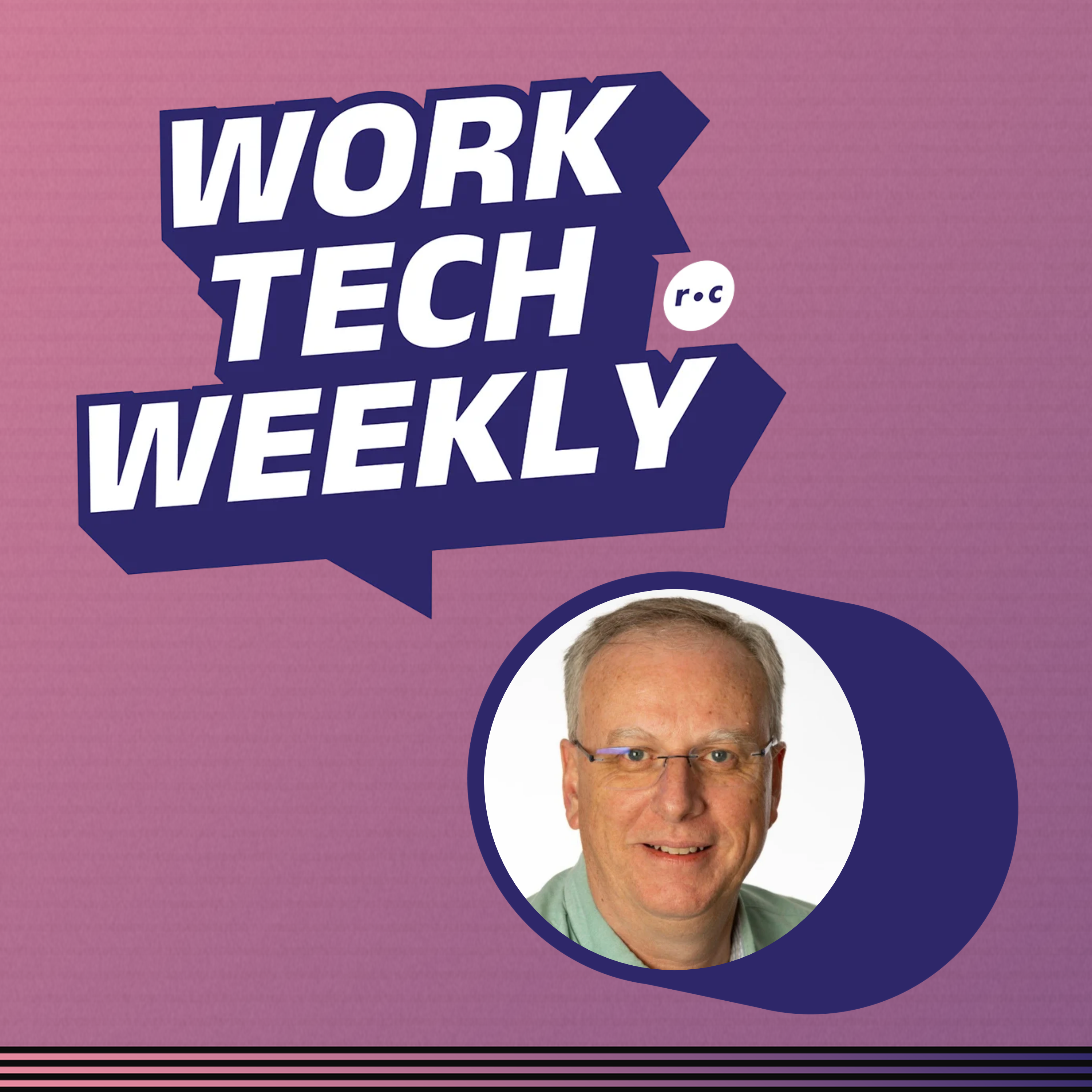
My guest is David Wilson, founder and CEO of Fosway Group. Fosway is an HR technology analyst firm based in the UK. They are also the leading HR and talent technology voice in the European market. David has been tracking this market for almost 30 years. He does not let a claim go by without asking for the evidence behind it.
We talk about why companies can't keep sitting on the fence, and why profitability has stopped being a dirty word for vendors. We also get into the SaaSpocalypse. And why the deep process data inside HR systems is much harder to replace than the headlines make it sound.
And if you're a vendor heading into an analyst briefing, there's a clear lesson here about what to bring into the room.
If you want an honest read on where AI in work tech actually stands, this is a conversation you’ll want to hear.
Let's get into it.
David Wilson, welcome to the podcast.
David Wilson:
Hi. Nice to be with you.
Steve Smith:
It's great to have you here. You know, I've been fortunate to know you for a number of years now, and you're one of my favorite people in the industry to talk to, because as the moniker of your firm says, you are unusually direct. And I don't think I've actually seen you make a vendor cry, but I think that you've certainly shattered a few illusions over the years, and I know from having been in the crosshairs of your questioning, you do not let things pass by.
So I've really appreciated your candor on things and your perspective, because it's just like we're at a unique moment in the market. And you've been doing this a while. You've been doing this almost 30 years.
What is the current energy like, in your perspective, compared to other market cycles we've been through?
David Wilson:
That's kind of an interesting opening question, right? So, and obviously Steve, thank you. I've known you for a while as well. I was wondering who came up with that unusually direct kind of thing. I was struggling to remember, but anyway, yeah.
Steve Smith:
Someone fairly brilliant, I feel sure. But,
David Wilson:
Yeah, from a previous incarnation, right.
So, yeah, I mean, I think it is a bit of a cliché, right? But it's a really interesting kind of time for everything in the sense that there's so much pressure for change on almost all fronts, right? Economic challenges, tech, massive technology change, obviously. The whole kind of AI wave and all the hype and everything that goes around that.
And I'm sure we'll talk about that a bit more. I think the kind of corporates have been through a period where they're not paralyzed by a decision, but they've been sitting to some degree on a fence because of the uncertainty that exists around things.
And the uncertainty seemed to grow, you know, increase, not decrease. And I think there is a sense that sitting on the fence is no good anymore. You have to kind of make a decision and act. So I think on one level you're seeing that, but obviously because of all the challenges that exist. I think also, like, looking at the supply side of the market with the vendors and stuff.
I think, you know, I mean, every 9-Grid report on every segment we've written for the last one to two years has been saying economic challenges in the market. This is impacting not just buyer behavior, but also supply side, right? And so I think all of that's going on at the same time.
Probably the total amount of investment that's going into the market, not least because of all the AI stuff, is at a level that it's probably never been, whilst at the same time, the total amount of private equity and funding available to the market is probably more challenged than it's ever been as well.
So you've got all of these things going on at once, right? So, does that result in energy overall? I think there's a lot of entropy probably going on as well. There's a lot of energy going on as well, so, yeah, I think it's a very interesting time.
Steve Smith:
Well, I mean, it's just like there's a lot of threads to pull on what you were just talking about. I mean, let's start with the vendor side, because we have a lot of vendors in our audience. It's just like, you know, we're in the midst of, you know, as you said, a pretty challenging funding environment where it seems like AI has kind of sucked all the funding out of the ecosystem.
And this is coming after, you know, unprecedented investment in 2021, early part of '22. Just to be blunt, I think there's a lot of companies out there, and probably some of a fairly good size, that aren't gonna make it. They're gonna get, you know, absorbed at fire sale prices. Some of them will end up, I think, you know, winding down.
But, you know, I know that you have some very, you know, blunt behind-the-scenes conversations where, you know, companies are sharing their challenges with you. When you look at this market and you look at kind of the vendor landscape, what do you anticipate seeing here over the next 18 months? Are we gonna see a shakeout?
Do you think that maybe the worst is behind us? What's sort of your perspective right now?
David Wilson:
Yeah, I mean, I think some of what I would call kind of previous-era strategies, and previous era meaning just maybe two years ago, have kind of run outta runway a little bit, right? Because, you know, we've been in a market where kind of two big things have been going on in some ways.
So the HCMs have sucked more of the attention towards them, within the wider HR tech, work tech kind of market. So the bigger players, and particularly the HCM vendors, have kind of obviously continued to effectively win more and try and own more of the real estate to some degree, whilst at the same time almost all of the disruption is coming from, like, niche specialists and things like this, you know, talent intelligence providers.
And, you know, there's a whole range of these kind of specialisms that are really disrupting the kind of real narrative that's going on. So, you know, a good example of that is the talent management market, where, right, the HCMs kind of ripped the heart out of it on one level, and then at the same time it became much more around, you know, we actually re-badged and started talking about talent and people success and looking at how, 'cause all of the old disciplines and the old elements of it, what was the talent management life cycle, were really kind of becoming redundant and replaced by something else.
And most of that was driven by specialists. So you've had that kind of going on. And then the question is, what's the path to kind of fiscal success as well, right, within this? So, and it is pretty clear that quite a lot of the specialists have basically had a strategy which is about being bought at some point, but having somebody pump-prime the growth to a certain point where that valuation becomes attractive.
And there are still a few of those where that strategy is working, particularly if they kind of have a .ai or something like this, because as you say, AI has attracted so much of the funding. And also there are the questions around, you know, what's the future of SaaS and stuff like this.
So I think, you know, the dynamic is still kind of largely there, but it's not obvious who the winners are gonna be now, right? So, and that's resulting in, I think, the need for some to get consolidated and acquired and to be kind of pulled into a wider front, and at the same time the opportunity maybe for some of the bigger players to do that role, but it's not even obvious whether at that macro level they're the winners yet.
Right. So especially because of this whole question around SaaS apocalypse and, you know, what's the value of the application stack within HR or enterprise apps versus the AI hyperscalers, for example, and so on, and things like this. So, yeah, I mean, I think all of these things are in play.
If you are a vendor operating within that, most of them have really probably had, you know, they may be still growing, but that growth has slowed, and they've not got the funding back behind them necessarily to continue to burn cash, to kind of continue to drive growth, right? Being profitable is not a dirty word. It has become a necessity.
Right. Positive cash flow and everything else like this. So, you know, you've gotta sometimes work out how you tread that path through it. And at the same time, the valuations for companies generally are kind of, you know, not where they anticipated they would be, right?
Steve Smith:
Right. Well, and since you brought up the SaaS apocalypse, I'm eager to get your perspective on that, because, you know, we're in an environment where, you know, the Workdays and the ServiceNows are getting pummeled in the public markets because all of a sudden investors stopped believing that they had a future.
You know, when I look at it, just, I think that there has been a broad underestimation of depth of expertise and, you know, regulatory requirements and, quite honestly, the ecosystem and scale. I don't see either one of those companies, you know, folding up shop anytime soon. What's your take on the SaaS apocalypse?
I mean, is it overblown? Is it kind of, you know, in the process of running its course? Or is this just kind of the reality we're gonna have to live with for a while?
David Wilson:
Yeah, I mean, I think it is a bit of a nuanced answer, right? So first of all, and we have these conversations internally, right? And, you know, as we're trying to interpret these things, I think there's a lot made around the ability of AI platforms and agentic AI and stuff like this to really create capability, right?
Or very rapidly, off the back of not a lot, be able to potentially build out functional capability that can kind of replicate what the deeper application stacks have got, right? Whether that's in HR or in learning or recruiting or wherever it's gonna be. But the reality is that building functional capability is not the same as having live customers fully adopted on it, right?
So, first of all, and at the end of the day, the value is not necessarily just in the application and process, but in the data. That's the deeper data that's held within it. And there is no kind of doubt that unless you have the application and process, you don't have that data, right? So, and there's no substitute for it.
You can't magically just kind of invent a set of data around things, even if you have access to maybe a wider set of other perspectives like business data and stuff like this. I mean, part of the criticism of ultimately the HR tech world and the kind of submarkets is that often the bit they lacked was insight around what was actually the business outcome from any of this, right?
Because they were so busy focused on their own HR process data or whatever it was gonna be that they weren't actually looking at the real measures of success, which was, did we sell more? Did we have more customers? Did we innovate faster on our products or whatever it was gonna be? They were too much of an island.
But you can't get rid of all of that HR process data and suddenly go, well, now we can interpret what successful people strategies are, right? Because you didn't have the activity tracking, you didn't have the process model, you didn't have the assessment stuff. You didn't have the training data that they had. You haven't got any of that, right?
So I think overall it's overblown significantly. But I think what it's changing a little bit is the assumption about who the winners might be, right? And take someone like ServiceNow, you know, as a good example. Obviously ServiceNow, you know, has got kind of huge capability and success within the IT community as a whole with all of those kind of transverse processes and IT stuff.
Then getting heavily into the kind of HR workflows, employee workflows, and potentially for a while being quite disruptive around that story. But I think what's interesting there is, you know, because they are now pushing to not just be obviously an IT leader, but an AI leader as well, ultimately, to some degree, do things like the HR and employee piece of the story become very marginalized because they're focusing on innovating on other stuff, right?
And the bet becomes really big, and the numbers around that bet become huge. So I think in some cases, obviously, where somebody's capabilities are very firmly within the HR or work tech stack, they have no choice but to succeed there. It's very hard for them to create a vested interest or position that is beyond that.
So they have to make it a success. But when somebody's capability is wider than that, it's more transversal, then at the end of the day, maybe the HR piece becomes a bit more disposable in their business, right? Maybe the biggest test of this will actually be someone like Oracle.
Steve Smith:
You brought up a great point earlier, just like, I think companies globally have been sitting on people investment, you know, through '23, '24 into '25.
But there's a sense now that you can't keep the pause button on. You have to do something. What are the conversations like with work tech buyers right now in terms of what are they wanting to know from you? What are they asking vendors? Where are they looking to make investments right now?
David Wilson:
So, I think there are certain pressures which are probably fairly common globally, which is around, you know, tougher economic times, pressure around, for example, tech consolidation. You know, hence the continued rise of the kind of full HCM suite, right? The strategic suites and so on.
But obviously, so that's a factor. But obviously now the bets are slightly off as to, you know, who the assumed winners are, as we've said before, and how this fits together on a wider business architecture, business IT strategy perspective. And obviously then, you know, with AI it's kind of interesting as well, because the natural assumption, I think, from those companies that are kind of in the sweet spot around that is they're expecting to be the winner.
Right. But the question is, and that's a really big debate, do large multinationals bet their AI strategy on an HCM vendor and then a finance vendor and something else? Or is that much more transversal, right? So that's a really complicated thing, and I think is a big driver in terms of macro strategy, which is, what does this jigsaw look like?
How does the whole ecosystem fit together? And what are our anchor pillars around which we build? And I still think that HCM vendors are at an advantage there. But as you said, they've not really been the drivers of innovation. It's come much more from these kind of niche specialist players in all parts of the kind of market space.
And actually they're the ones that are providing more transformational value potentially, or the enabler, right? So, you know, skills is a great example of that, where, you know, yes, most of the platforms have a skills capability and expect to be the kind of repository of it, but they're almost never the origin, right?
Something else is coming along and providing that. And they are trying to join up that view across all these different siloed processes across the people life cycle. And that becomes really complicated. So yeah, I think that's a huge factor, obviously. You know, what's real with AI is another one.
So we know that the innovation in the market, I mean, we've done a lot of deep research alongside it. For example, our Fosway 9-Grids looking at the segments, we've also done specific deep research from an AI point of view, looking at the functional model and roadmaps and the AI innovation within each of the segments.
Which we've published a couple of iterations of. We put out the learning ones fairly recently. TA will come fairly soon. HR later on in the year for '26. We did it for '25 as well. That's a massive moving target, right? And the level of kind of growth in how much is really live is huge, right?
Because, so, you're looking at more than doubling the percentage in one year of stuff that's actually live. By the way, most of it isn't. It's still roadmap, right? And yet, at the same time, so corporates are sitting there going, like, well, this is a massive moving target. But which bits are real, and which bits do we get value from?
So they're trying to work out how, you know, the whole story needs to go. They're also trying to work out where to make bets which are much more targeted, but potentially with a more transformational impact, because the transformation generally happens within the fringe, not in the core.
Right. So, and at the same time, they're trying to then work out, like, you know, in terms of their vendors, who really has it, 'cause everybody has this huge wall of noise about their AI roadmap and being AI first. Every vendor is now an AI-first vendor. But the reality, of course, is this is just not true, right?
So, some are AI native, some are very AI laggard and adding AI on. Trying to understand that picture and then also translate it for them and what their strategy needs to be is a very significant piece.
Steve Smith:
We've obviously been friends for a while. You know my colleague Tony Spangler really well, and we spent a lot of time working with companies on analyst relations and basically preparing them so when they sit down with, you know, a Fosway or someone else for 30 minutes, they come prepared and they don't waste your time.
I think that, and this is my take and I'm curious to get your take, I think that the acumen of most vendors has increased over the years. I think that vendors are doing a better job of understanding the distinctions between different analyst firms and what an analyst wants to see, and coming prepared.
That said, it still blows my mind some of the stupid things that I hear that happen in briefings, and just a lack of common sense that some vendors still bring into a room. If you were going to give advice to vendors in the work tech space right now about, you know, coming into a briefing at this particular moment in the market, whether they're sitting down with Fosway or somebody else, what do you think they need to do to make the 30 minutes or an hour they have with you successful and get to a successful outcome that helps their brand?
David Wilson:
So I agree with you on what you said. I think there is a spectrum of how well those companies are prepared and perform in that situation. I think, as you know, there's certainly been an improvement in certain parts of that, but sometimes that can go back the other way.
Right? So, you know, there's also the sense sometimes that analyst relations teams can be kind of gatekeepers to access back the other way, which is incredibly counterproductive, I think. It generally doesn't serve the companies well. I would say the main thing is try and understand what the analysts are actually looking for, rather than necessarily just the story you want to tell, and then understand how you then tell your story within that, but at the same time serving the purpose of what the analyst is trying to find out.
Because a lot of the time, I think sometimes people come in, they're so busy kind of telling what they think is their kind of unique story and their unique message. When in reality, often the analysts have heard pretty much the same story from a bunch of others, but they'll be completely oblivious of that because they're so busy just kind of going through the party-line rhetoric, if you like, and everything else, that they just kind of miss that point.
The other thing, I think the key thing is, you know, expect to provide evidence. You can't just claim something, right? You've gotta provide the evidence to it. And, you know, one of the other challenges, it doesn't matter who you are, right? I mean, often we find, obviously, when we're dealing with smaller businesses, they kind of are more expecting to have to provide that. With the big ones, they just wanna make a claim about leadership or whatever it is.
And, you know, there's often very limited evidence. And sometimes, obviously, 'cause we're doing a load of our own research, right? But your input to us is really important because it helps us cross-validate what we're picking up from elsewhere. It may help identify new parts of the story, forward roadmap and some of those things.
But you kind of need to substantiate it. You can't expect just to be believed as the gospel truth and then claim, you know, well, we don't disclose that information around things and stuff like this. Because at the end of the day, we may have more counter-evidence the other way, and we'll always give that more weight unless you can provide some real evidence to go with it.
And whether that's around, you know, customer wins and, you know, who you're replacing, whether it's around roadmap delivered rather than just roadmap promised, whether it's around customer adoption. You know, I have a statement, a comment I made a few years ago, where I talked about innovation in the product being irrelevant unless it lands in the customer, right?
So we have lots of situations where there's loads of innovation story within the product roadmap. But actually, when you talk to almost any customer, none of them have adopted it. And you go, like, well, so kind of like in reality, how useful is this, right? And the question is why as well. Because often it's not about the vendor, it's actually maybe a dependency on third-party consultants or whatever it is, you know?
But if nobody's consuming your innovation, that's not really much use. So definitely I would try and understand the mindset of the analysts better and be prepared to provide more evidence. Because you can often do that confidentially as well. It's not like if you tell us stuff, we're gonna disclose that to the world, right?
If you actually look at what we publish around vendors, it's very limited and very controlled. But obviously we still expect to have a point of view. So yeah, those are some of the things I kind of would talk about. But definitely preparing to have to justify and to be able to prove and provide evidence for that is a kind of huge thing.
Steve Smith:
I do have one last question for you. You've mentioned a lot of the research you do. I think the research that Fosway Group does is fantastic, insightful, and incredibly relevant. What is maybe the one research finding that has surprised you the most in the last six to 12 months?
David Wilson:
Oh God. So in the last six to 12 months, obviously we're in a world dominated by the whole kind of AI explosion story and everything else like that. And I think the thing that probably, I'm not sure whether it surprised me the most, but I still think is like one of the most profound things is just the lack of readiness and understanding within the customer to work out how to engage with this.
You know, as we said before, every vendor now has an AI roadmap story. Everybody has claimed to be AI first. It's dominating the R&D investment in most companies, just to the point of actually damaging sometimes their ability to be functionally better, right? Because they're so busy focusing on adding AI, they're missing the fact that they're actually missing underlying capability.
But, you know, very few customers are really able to consume that yet and engage with it. They're struggling to work out their priorities and strategy. But there is a massive degree of belief that it's true. It's real, right? So there's kind of an assumption set around it. And I think this is the question.
So, I mean, and ultimately going back to one of the very big questions in the market, right, is all this money that's being invested in AI, how the hell do you monetize the value out of it? Right? And who's gonna pay for that, right? So, and you know, we're now getting lots of stories about people spending all their token budget for R&D, like, in weeks, not a year.
Right. So, and I think the thing is, how do you navigate through that, you know, as a customer organization, and understand where to make your bets, how to execute on it, who to believe and not. And I mean, that's why we've done specific research to really drill into it.
I think that our AI research, like the market assessments we're putting out, like, I haven't seen anything close to that from any other analyst firm really, just because of that ability to actually understand the reality of that. And then part two of that process is gonna look at value, adoption and value. So, you know, which is obviously probably an even bigger question, again, is how much of this is getting turned on?
And I think we still are in a market where intent outstrips reality, and it's true on the vendor side, but rapidly changing. It's still a long way from being true on the corporate side, and I think that's still possibly the biggest thing that we've got to kind of work our way through.
Steve Smith:
David Wilson, thank you so much. It's been a great conversation. It's always great talking to you, and let's do this again sometime.
David Wilson:
Thank you. Lovely to talk to you as always, Steve, and hope that's interesting for your listeners.
Steve Smith:
It will be.
Intent is running well ahead of reality in this market. That's true for Work Tech vendors. It's even more true for the companies buying from them.
The amount of AI capability that's actually live has grown fast. But most of what vendors are talking about is still on the roadmap. And buyers are struggling to consume what already exists. They believe it's real. They just haven't worked out where to place their bets or how to execute on them.
There's a cost on the vendor side too. When this much R&D goes into adding AI, the underlying product can fall behind. A feature nobody adopts doesn't help anyone. Innovation only counts once it lands with a customer and they’re actually doing something with it.
That puts a premium on proof. The vendors who pull ahead will be the ones who can show customers actually using what they built. Everyone else is telling a story the market has already heard.
If you enjoyed this episode, make sure to subscribe to Work Tech Weekly on Apple Podcasts, Spotify, or YouTube. And I'll see you next time.