Musical accompaniment for this week's newsletter.
Congratulations, recruiters! You got three new coworkers this week. Unfortunately, they're all the same guy.
Joveo launched Tandem, an autonomous recruiting agent that drafts job descriptions, sources candidates, screens them and books the interviews, all from one chat window. They're calling it "vibe recruiting." (Sit with that one for a second.)
Eightfold rolled out its AI Recruiting Teammate. Fountain launched Orchestra, which lets frontline employers build agents by describing the work in plain English.
Read the three press releases back to back and try to tell me which is which. I know I can’t.
And it's not just recruiting. Agents are everywhere. RedThread's Stacia Garr counted 29 "agentic" announcements from 20 HR tech vendors in October alone. Her verdict: the word told her almost nothing about what any of them had built. Oracle, Workday, SAP and Dayforce all used it, to mean four different things.
I'm not here to dunk on the agents. They're real, and somewhere a recruiter with 47 open reqs is quietly relieved. But when every vendor ships the same coworker, the coworker becomes a commodity.
The market is also earlier than the keynotes let on. In RedThread's 2026 study of people analytics vendors, only 16% said their agentic AI automates most complex workflows. Meanwhile, five of HR Executive's 14 Top HR Products winners were agents built for one narrow job. As Garr notes, the narrowness is part of what makes them credible.
So, in this market, what’s differentiated and defensible? Two unglamorous places.
1. What the agent knows. Workday's most interesting move this week wasn't a launch. It was agreeing to buy Honeydew, a semantic layer that makes sure "what's our headcount?" gets the same answer whether you ask a dashboard or a bot.
Garr flags the same problem from the other direction. As HR systems open up to outside AI tools, two leaders asking the same headcount question in two different tools should get the same answer, and she’s not confident they will. Workday is paying to make sure they do.
2. What you pay it for. Fountain says that when Orchestra hits general availability in early 2027, customers will pay for the work each agent completes. Not seats, but finished tasks. HubSpot already went there by moving its AI agents to outcome-based pricing, and warned it could slow sales cycles.
Most of the debate stays stuck on the CFO stuff: surprise bills, and what even counts as ARR anymore. That's the overdone part.
Here's what's not overdone: the buyers are getting ready, too. Gartner's newest strategic predictions say that by 2028, 60% of global enterprises will embed "AI FinOps" controls at inference, meaning they'll govern AI costs in real time. So just as vendors move to usage pricing, customers are building teams whose job includes making them use less.
I was talking with a longtime GTM leader from the recognition world, a category that's been usage-based forever, told me the real story is what happens after you flip the switch. How you launch customers changes. How you sell and expand them changes.
And the line that stuck with me: customers aren't churning, they're just using less. The logo stays and the revenue leaks anyway.
Under seat pricing, a disengaged customer is a renewal risk next year. Under outcome pricing, they're a revenue problem this month. Time to value stops being a customer success KPI and becomes the whole business model.
So what are the key takeaways for GTM leaders?
-
Stop leading with "AI teammate." Answer Garr's buyer questions instead: What does it do without a person? What's generally available today? Who's running it in production? Who's accountable when it gets something wrong?
-
Sell the layer underneath: your data, your definitions, your governance. That's the part nobody can copy-paste.
-
Rebuild onboarding and customer success before you rebuild the price sheet. Your customer's FinOps team is going to measure value whether you do or not.
The agents are coming. That part's settled. What's still up for grabs is who gets paid when they actually do the work, and who notices when they stop.
What else is going on this week?
Anthropic Goes Public, Wall Street Goes Wild
Anthropic priced its IPO at $83 a share, above the expected range, then closed its first day up 17%. Including a private placement, it raised roughly $106 billion. Gary Marcus says it won't save tech. Wall Street says hold my latte. The WSJ says that there could be a wave of other AI IPOs in the coming year. They quoted Sapphire Ventures co-founder Jai Das as saying: “The Valley is probably going to over-rotate and waste some capital.” Seems like a safe bet.
Mailchimp: Some Assembly (and $8.3B) Not Included
Bending Spoons is buying Mailchimp from Intuit for $3.68 billion, about $8.3 billion less than Intuit paid in 2021. Mailchimp's revenue dipped 1% last quarter while Intuit grew 12%. Add Airtable and Miro, and Bending Spoons is running a clearance rack for 2021 SaaS darlings. Stings a little bit, doesn’t it?
This Week on the Work Tech Weekly Podcast
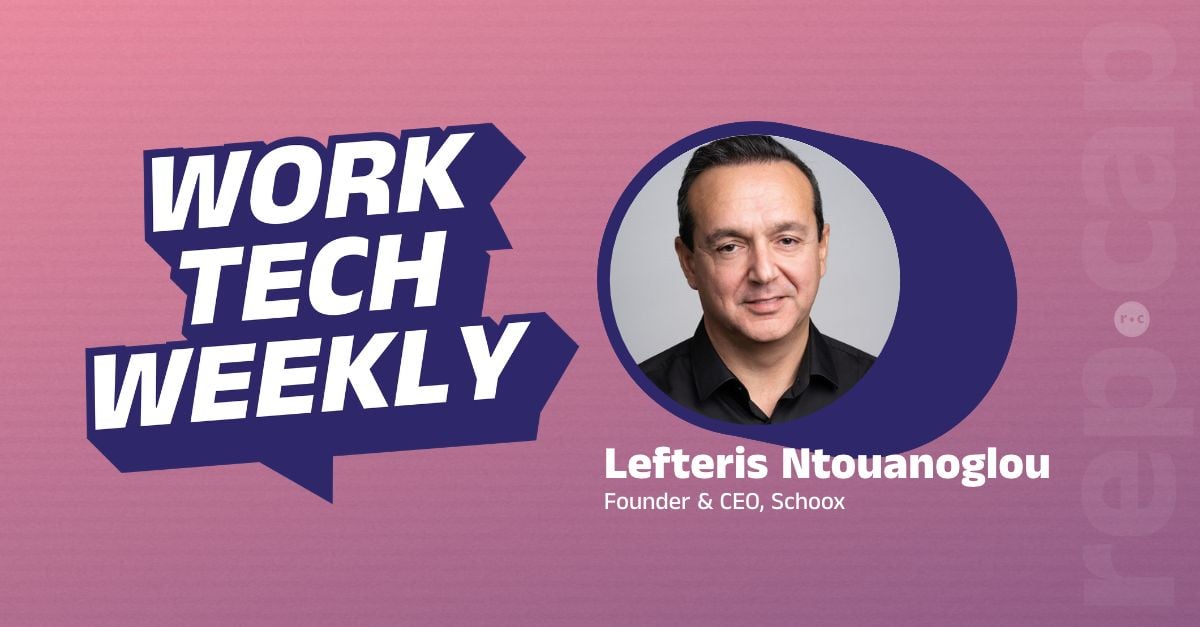
A restaurant keeps getting orders wrong, so it sends the staff through communication training. Odds are it’ll never be able to prove the training worked. Schoox founder and CEO Lefteris Ntouanoglou argues that skills are an intermediate step, and that frontline training should start from a business outcome like order accuracy. LISTEN NOW
Transactions
-
ADP acquires ZenBusiness. ADP now meets small businesses at incorporation, before they have a single employee to pay. With more than 980,000 small business clients already, this is a customer-acquisition play wrapped in a "full lifecycle" bow. Terms weren't disclosed. (ADP)
-
Payhawk raises $280 million Series C at a $2B valuation. Goldman Sachs Alternatives led the all-equity round as Payhawk moves beyond spend management into an OS where AI agents, payments and enterprise controls run finance together. (FinSMEs)
-
Revelio Labs acquires job posting data provider SourceStack. SourceStack captures job listings directly from employer ATSs and supplies that data to hundreds of recruiting and HR tech products, so Revelio now owns a pipe that a lot of its rivals drink from. In the labor-data wars, owning the plumbing beats renting it. (HR Tech Feed)
-
GrabrFi raises $6 million. GrabrFi lets people outside the U.S. receive, hold, spend and transfer dollars, and more than 1,000 American businesses pay contractors and employees directly into its accounts. It's quiet infrastructure for the global contractor economy. (FinSMEs)
-
Valeria raises €5.5 million in seed funding. The Barcelona startup's payroll engine fully automates the process for logistics and delivery clients, and the new money will take it into hospitality, retail and cleaning. High-turnover frontline payroll is where the churn and the compliance headaches live, which makes it prime territory for AI. (FinSMEs)
-
SD Worx agrees to acquire German payroll specialist Deutsche Personalmanagement. The deal strengthens SD Worx's position in Germany's SME and mid-market segment, and it lands the same week Everest Group named SD Worx a Leader in EMEA multi-country payroll. (SD Worx)
Industry Notes
-
ServiceNow built an AI tool aimed at Salesforce customers, per a report. The tool automates the search for where a customer's data lives across systems. The platform wars have moved from features to data gravity. (Seeking Alpha)
-
AI-discovered bugs are piling up faster than Microsoft can patch them. Anthropic's Mythos model has been finding security holes far faster than companies, particularly Microsoft, can patch them. AI's productivity boom fills up the bug backlog, too. (GeekWire)
-
Workday expands native payroll to seven new markets. Hong Kong, Malaysia, Mexico, the Netherlands, New Zealand, Singapore and Spain are getting native Workday Payroll, with rollouts staggered into 2027. (Workday)
-
Workday and The Josh Bersin Company bring the Galileo agent to Sana. Galileo draws on more than 50,000 pages of research, and the integrated version is expected for Sana Enterprise customers in February 2027. (Workday)
-
Payscale launches JobNav to bring governance to job architecture. It replaces the spreadsheet graveyard of job descriptions with one governed profile per role, and it includes an FLSA questionnaire and dashboard to flag classification risk early. (Payscale)
-
UKG names Patricia Harris chief marketing officer. Harris was most recently CMO at Blue Yonder, and before that held senior roles at Workday, Hitachi Vantara, IHS Markit and SAP. (UKG)
-
Maritz CEO David Peckinpaugh to retire. CFO Holly Francois, who has spent nearly three decades at Maritz, becomes CEO when Peckinpaugh retires effective Jan. 1, 2027. (PCMA)
-
ZipRecruiter's revenue rises 8% and it swings to a profit. After two years of job-board doom, a raised forecast is the plot twist nobody had on their bingo card. (HR Tech Feed)
-
Recruit Holdings' first-half net income jumps about 66%. Whatever you think the hiring market is doing, Indeed and Glassdoor's parent company is doing just fine. (MarketScreener)
-
Tapcheck and LIFELENZ bring on-demand pay to more than 60% of US McDonald's locations. Activation is a single configuration step inside LIFELENZ's workforce management platform. That's how frontline fintech wins: by disappearing into the tools managers already open every shift. (Tapcheck)
-
Payouts Network lets Visa send relocation reimbursements straight to employees' debit cards. It's a small fix for a universal annoyance: waiting days for your company to pay you back. Expect "pay me now" to spread from wages into every reimbursement flow. (Yahoo Finance)
-
Gift card cyberattacks raise security concerns for rewards and recognition programs. Recognition platforms hold stored value, run on third-party rails and usually belong to HR instead of security, which makes them an easy target. (Rewards & Recognition Network)
Worth Reading
-
The Buddhist AI sect that wants to take over Silicon Valley. Silicon Valley has always mixed enlightenment with enterprise sales, and this New Yorker feature looks at a group taking that literally. It's a worthwhile weekend read on the belief systems shaping the people who build the models. (The New Yorker)
-
Offices are finally half full again, but workers aren't using them the way employers expected. Occupancy rose above 50% for the first time since the pandemic, and workers are shifting toward quieter spaces instead of traditional desks. RTO won the attendance battle and lost the floor plan. (Inc.)
-
Silicon Valley is suffering from model collapse. The Atlantic asks why tech leaders sound so illogical and off-putting. An echo chamber training on its own takes? Sounds about right. (The Atlantic)
-
ChatGPT now shows brand mentions: five steps to take right now. This is practical homework for any GTM team still tracking only organic rank. (YouTube)
