Musical accompaniment for this week's newsletter.
This week’s edition of the newsletter comes to you from Gate A2 at Louis Armstrong International Airport in New Orleans after this happened in Baton Rouge. Turns out resilience is a highly underrated quality. But now, just like millions of other flyers in the U.S., my travel plans are in a holding pattern after some routine maintenance work went sideways and pretty much shut down American aviation for four hours and is proving difficult to untangle.
The single point of failure has become kind of a theme of the week.
We all depend on a bunch of boring stuff to run in the background. When boring stuff breaks, it gets your attention. You know, real FAFO stuff. The FAA found out.
Microsoft FAFO’d too. Outlook went dark for nearly a day in more than 70 countries. Per Microsoft, the problem came in with a network capacity upgrade and turned into a full-blown global crisis after a later network change. Translation: someone made the pipes bigger, and the water stopped.
Then Workday. At more than 11,500 organizations, including Walmart and Target, employees couldn’t clock in, check their pay, request time off or file for benefits. The cause was a glitch during backup-system testing. The safety net tore the trapeze.
The Microsoft thing got most of the headlines. In Work Tech, Workday is the bigger story. A bad email day is annoying. But if you’re paid by the hour, “can’t clock in” is more than an inconvenience. It’s your paycheck.
Consolidation is the strategy du jour in tech. Fewer vendors. Bigger platforms. One data layer to feed the AI. Oppenheimer just surveyed 449 IT buyers and named Microsoft, Oracle and SAP the AI winners as spending shifts toward ROI. Fair enough. The incumbents own the data and the contracts.
But concentration cuts both ways. When the platform runs pay, time and benefits, a failed software update might end up being a major operational failure and not just a minor IT incident.
And nobody demos uptime. Watch any HR tech pitch this fall and count the minutes spent on agents versus failover plans. I’ll wait.
Resilience is a differentiator that nobody is marketing. What will you say when buyers start asking? “AI-ready” doesn’t mean much if the system can’t make it through shift change. The real AI readiness test isn’t whether your platform can run agents. It’s whether it survives someone making the pipes bigger.
But let’s not lose sight of the big picture. Texas won. And I’m pretty sure I will escape Louisiana without getting tackled by Mike the Tiger. Thanks to Mary Ellen Slayter for her hospitality.
What else is going on this week?
This Week on the Work Tech Weekly Podcast
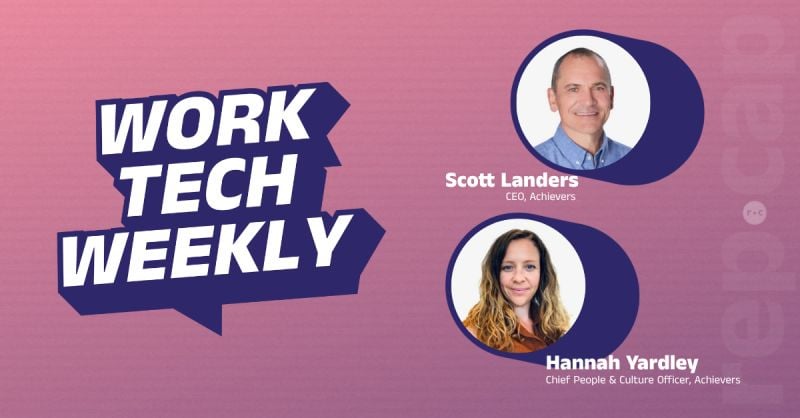
AI spending has had a free pass on ROI for a couple of years. Investment in people has had to justify every dollar. Achievers CEO Scott Landers expects that to flip. He thinks the HR leaders who held off on people investment will come back to it once AI budgets face the same test, because they expect to keep most of their people. I sat down with Scott and Achievers’ Chief People Officer, Hannah Yardley, for this episode of Work Tech Weekly to talk about what the AI replacement story cost companies, and why Achievers doesn’t have a Chief AI Officer. Give it a listen.
Funding, Acquisitions, and IPOs
-
Mercor raised $750 million at a $20 billion valuation. The new money goes into evaluation and post-training infrastructure so enterprises can test AI on their own data. The hottest labor market in tech might be humans teaching the machines. (Yahoo Finance)
-
saas.group acquired Aplano, a Berlin shift-planning app used by 2,500+ businesses. Unglamorous tools for deskless workers keep quietly attracting the steady M&A money. (HR Tech Feed)
-
Jens Bender’s October European HR tech investment and M&A roundup. A good overview as always. (LinkedIn)
Industry Notes
-
Only 16% of organizations have a strategy for how tech is reshaping their workforce, per Deloitte. Nearly half of boards leave people out of technology discussions entirely. That explains a lot about how AI rollouts keep landing on employees. (Deloitte)
-
43% of workers save 3+ hours a week with AI, but only 19% spend it on higher-value work. Payscale also found 56% think AI skills should mean higher pay, and just 16% have actually gotten a raise for them. The productivity is real. Who gets the gains is still unsettled. (Payscale)
-
Nearly 40% of US workers fear AI will replace them within five years. Gen Z and millennials are the most anxious, but the bigger problem may be trust: 38% don’t believe their employer is being straight about what AI means for their jobs. (HR Executive)
-
SD Worx says growth held up in Q3 despite geopolitical and macro headwinds. The European payroll giant is pinning its next chapter on WorkAI. It’s the same script as every US HCM earnings call this quarter: steady numbers, AI in every paragraph. (SD Worx)
-
Paylocity grew recurring revenue 12% to $424.5 million in its fiscal Q1. Note the $152.5 million in buybacks in a single quarter, the classic mid-cap HCM move when Wall Street won’t pay up for growth. (HR Tech Feed)
-
ADP raised its quarterly dividend 11.8% to $1.90 a share. That’s 52 straight years of raises. While the rest of HR tech frets about AI breaking seat-based pricing, the payroll machine keeps mailing checks. (Seeking Alpha)
-
Inspiring Workplaces named its 2026 Inspiring Leaders Awards winners. The judging criteria were belief, trust, belonging and empowerment, which reads like a polite rebuttal to the 996 crowd. Worth a scroll if you’re hunting for leaders who treat culture as more than a slide. (Inspiring Workplaces)
-
Ceipal launched Ceipal Ora, an agentic AI platform for staffing firms. The pitch is agents running on one data layer across ATS, VMS and workforce management, not bolted onto a Frankenstack. (HR Tech Feed)
-
Rolework launched 154 niche job boards, one per profession. The Paris startup is betting the cure for AI-generated application spam is smaller ponds. (HR Tech Feed)
Worth Reading
-
Much of HR tech still charges per employee. What happens when headcount stops growing? Jonathan Goodman riffs on Josh Bersin’s point that BLS projects US employment will grow just 3.5% from 2025 to 2035. Moving to usage or outcome pricing is really a GTM problem disguised as a pricing problem. (LinkedIn)
-
RIP: The Danish designer who designed a bunch of space-age furniture. You’ve almost certainly seen his work on Hollywood sets, even if you never knew his name. (The New York Times)
-
What happens when the cruise to end all cruises actually ends? TL;DR: It’s not good. (The New Yorker)
-
What happens when you feed 32,000 of your text messages into ChatGPT? Well, you may not like what you find out. (The Atlantic)
