Sarah White:
My favorite quote that I hear is like, "The market just isn't ready for us," or "Buyers aren't interested in us." And I'm like, "No." I mean, if you've ever said that or somebody on your team has said that to you, then you have a go to-market issue. So the market is ready. You just have to be able to explain it to them in a way they understand, which means removing all the buzzwords.
Steve Smith:
Our guest today, Sarah White, has heard the excuse a thousand times. "The market isn't ready." Her response is simple. "The market is ready. You just have a go to-market problem."
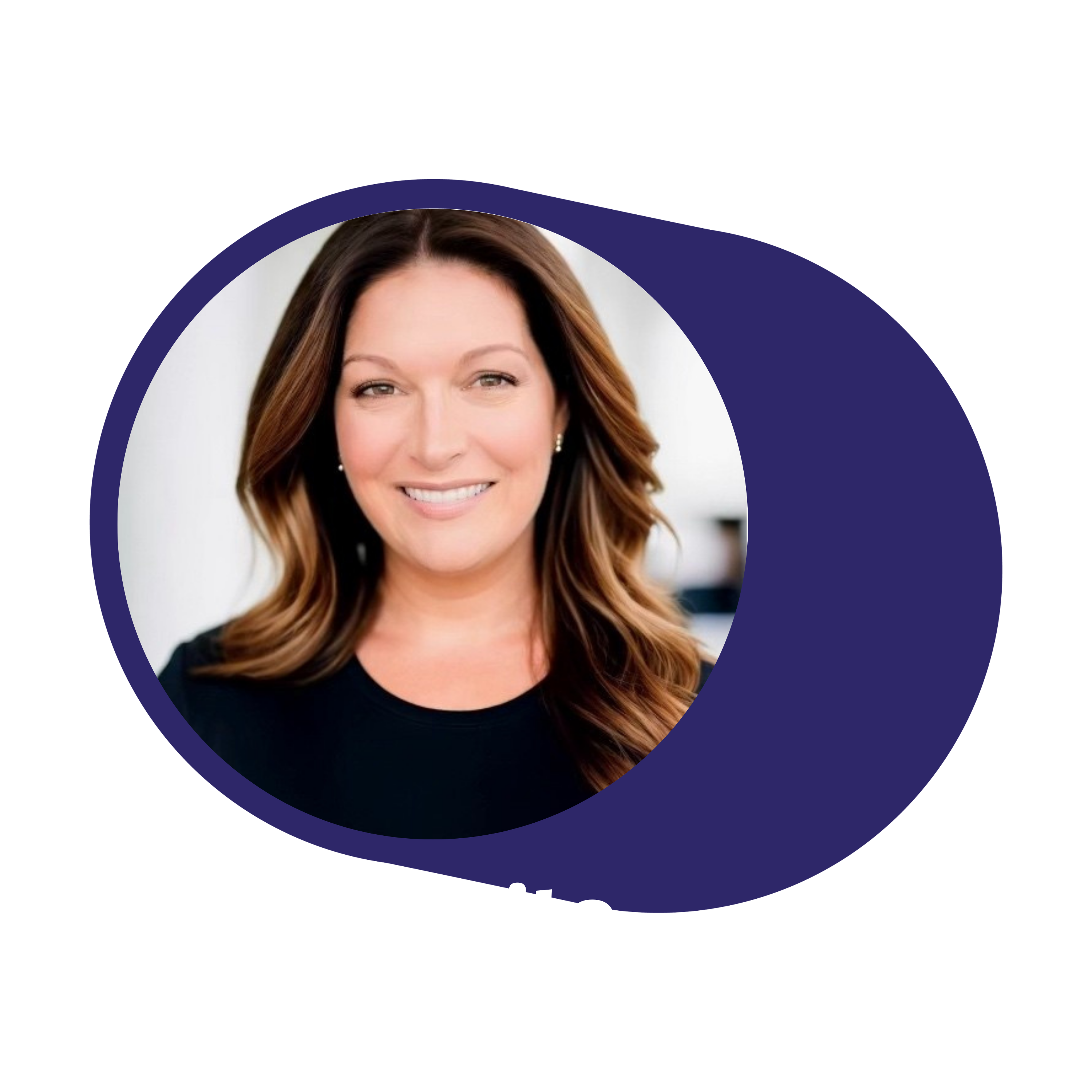
Welcome everybody. I'm Steve Smith, Managing Director of Growth at Rep Cap, and you're in for quite the conversation today on this episode of Work Tech Weekly. My guest today, Sarah White. She's a strategy consultant and advisor at Sarah White Strategic Advisory. She works with leadership teams, founders, and investors to create strategic clarity, align around it, and turn strategy into decisions that actually move the business forward. In this episode, Sarah and I talk about why so many companies stall out, even when their strategy looks solid on paper. We unpack how unclear positioning quietly kills growth and why acquisitions fail long before a deal ever closes. We also dig into what Sarah is seeing across founders, leadership teams, and investors right now, where internal alignment breaks down, why go-to-market clarity matters more than vision decks, and how AI is reshaping parts of the work tech stack faster and more unevenly than most teams realize.
If you're trying to understand why growth is slowed, why buyers aren't converting even when pilots succeed, and how to translate strategy into decisions that actually move the business forward, this conversation will give you a sharper lens. Let's get into it. Sarah, welcome to the podcast. Glad to have you here as a guest.
Sarah White:
I'm excited to be here.
Steve Smith:
Well, it's been an interesting ride over the past couple of years, and there's an interesting year ahead that I can't wait to talk to you about. Why don't you catch us up a little bit about where you're at right now? I know that you've spent the last year at SAP. You've been focusing on a lot of the things that are of interest to our audience around the M&A environment. Why don't you tell us a little bit about some of the things you had been working on there, and then kind of what's next for you in 2026?
Sarah White:
Yeah. I think what I did over the last year is very similar to what I was doing for a lot of the strategic acquirers. For the last decade, I was just in a much more public way as an actual employee at SAP, but really evaluating overall product strategy, product vision. I always assess about 75 categories at HR tech. So when we're looking at any type of suite vendor, PE firm, anybody looking kind of at a broader perspective. We evaluate to make sure they have a clear position or strategy across the board for all of them on whether that is we should own this, we should partner on this, we already have this and really make sure there's a clear understanding and then start moving strategically towards filling those gaps, whether it is really cleaning up how we do partnerships, whether it is doing kind of some acqui-hires or some actual large acquisitions, as you saw, and really making a big shift for what, at the end of the day, matters to the client and the customers.
Steve Smith:
So one of the things I wanted to ask you about, Sarah, was the acquisition of SmartRecruiters. It's a brand that I've been passionate about for a long time. Big fan of Jerome Ternynck, had a chance to work with him when they were a three person startup. And to see this sort of an exit is really exciting for him and a lot of the other folks who had a chance to meet and work with over the years. But it also seems like it's a great acquisition for SAP and bodes really well for the future. How much can you share about the work that happened on that?
Sarah White:
Yeah. Honestly, it is such a huge move and so great for the entire SAP ecosystem and honestly for the industry. It changes the dynamic and it really puts a lot of pressure on full suite vendors to do better in an area that has been historically neglected with just talent acquisition. And hopefully we see that move into the talent management and some of the other areas that are just kind of like weak compared to core. I think how that came together is just really exciting and fast. The whole thing obviously was completed in under six months, which is unheard of for deals that size. And coming in, I knew we were going to have some things to be looking at specifically around talent acquisition. And first thing that I did was get on the road. So I actually went to five continents last year, 20 plus countries.
I met with hundreds of corporate HR teams, solution implementers, partners around every continent and consistently just asked them if we can do anything, if we could buy anything, if we could build anything, what would it be? And across the board, SmartRecruiters kept coming up. Like you, I have a legacy history with the brand. I remember being on site within their first offices in San Francisco. I was actually a judge at a startup competition when they were part of it. And so, and I first met Rebecca when she had just graduated and was coming in as a product manager. And so I knew right away what the direction was and just kind of crossed my fingers and hoped that everything would be able to align because I also knew the market was getting a little bit spicy with some other M&A and we had a lot of competition going on in the space at the time.
Steve Smith:
So obviously you have seen a lot of acquisition activity over large swath of time in our industry. I think that one of the things I'm curious about is the why acquisitions fail question. And just in my experience, kind of what I've seen is there's a variety of factors. It could be culture. It could be product integration. It could be just the business fundamentals of the acquired company. Looking at this moment in time we're at, especially kind of going forward, are you seeing any of those factors or different factors emerge as more common reasons that you think acquisitions either fail or don't happen in the first place? And should we be thinking about it in companies who may be looking at being acquired, should they be aware of maybe some different things today than they would've been say five years ago?
Sarah White:
Yeah. So this is my 20th year doing M&A in the space, mostly behind the scenes. I think we've surpassed like $3 billion at this point over the time with some of the larger investments also that I've helped support. And so I've literally seen it all, I feel like at this point. But I think if you are a company that is looking to sell, I think one of the biggest mistakes that you make is not being really clear on your product strategy. And then on top of that, not being clear on your positioning and messaging, because I can't tell you how many times there would be a product where I was really excited. I knew it was the right fit for the buyer, brought it in, presented it, and then somebody on the product team or somebody in the corp dev team went to, I don't know, their website or some video of them talking about what they do and they mentioned one little thing that was competitive and it's not even what the startup does. They just misspoke. They don't understand the terminology in the right way.
And so that was it. They were completely cooled out of the process and not even considered. So they're like, "We can't buy that. We can't buy that. Our board already said we can't buy anything to do with this." And I'm like, "Right, but they don't actually do that. I think that's an aspirational thing they'd like to do and they're not talking about what they're actually doing." They're like, "Too bad it's out there. Our board's going to deny this right away. We need to move on and look at somebody else." And so those type of conversations happen a lot. And when we're talking and when I'm talking to founding teams and smaller Series A, Series B that are looking at acquisitions, so commonly, like again, back to the misalignment conversation, they're not using the right terminology for the market.
And so they haven't quite adjusted to what got them to where they're at has been fine, but like now how do we actually grow? How do we actually scale? How do we actually see visibility? It's for a strategic acquirer. Quite honestly, in most cases, it's far less about your customer count. They have customers, right? It's not about that. It's about what else and kind of how it rounds everything else out. And if your team doesn't understand the basics about the market, the basics about the buyer, the basics about what their own product does, it raises a lot of red flags about what that's going to look like post-acquisition or quite honestly, it doesn't and it just changes the valuation significantly down.
Steve Smith:
So let's zoom out again a little bit and talk about what are you doing now? And I know that you are having more conversations than just about anybody I know in real time. What are you hearing about what's going on with market dynamics right now?
Sarah White:
Yeah. So what I'm doing now with strategic advisory, working with companies that are looking to buy, companies that are looking to sell, companies that are looking to grow and scale or that are just trying to figure out, why aren't we selling more? So a lot of turnaround work or just kind of the, "Everything seems fine, but it seems weird that we're not doing more," as well as investors, VCs, is anybody looking at their portfolio and trying to figure out like, "Hey, how do we take kind of the bottom half and make them perform better, get into the top half? How do we make our investments better? Can we evaluate full portfolio and see whether maybe we have gaps and how we can kind of round this out or how do we bring these together?"
And so that's where I'm spending a lot of my time right now, probably 50 conversations between last week and this week with all different types of companies from VCs and PEs and buyers and sellers and companies that are just quite honestly like, "We just think we could do better, but we're not sure what's wrong." And that's probably the most common conversation point that I'm getting at this point.
And so what specifically I do is obviously the strategy and advisory and all the goodness, but we're doing alignment check marks, alignment benchmarks where we can really come in and check how well aligned an organization is. I've been running these for well over a decade. The second part is doing market alignment. And so that's like, we know where we have gaps internally, but how well are you actually aligned to the market? Going back to our earlier conversation, if our language, if our product strategy is not actually aligned to what the market is looking for, what our buyers are looking for, we're not using the right terminology, we're trying to sell the wrong product to the wrong people or the right product to the wrong people. We really need to have a really clear understanding of what is happening. And that seems to be probably the second most common issue that we see with organizations.
And then kind of other like one-off type of deeper dive projects are going to be around that overall product strategy, like what is our broader product vision? What should we own? What do we need to acquire? What is maybe not as strong that we should be building out? Where do we need to develop better partnerships? And then spending a ton of time on the M&A and helping build up kind of investor side of things. How do we make investments more profitable? How do we do some turnaround work there? How do we do some scale work, some growth work to make sure that what they're investing in is not lagging behind the rest of their portfolio?
Steve Smith:
So there's so much in there to unpack, Sarah, and so many really good points. One of the things that you said that was sort of a good reminder for me is just the first alignment piece about internal alignment. The strategy component is almost less important than having team alignment, because at least if you're aligned, you are moving in the right direction or you're moving in a direction, which if you do it well enough, can be the right direction, even if the strategy isn't as optimized as it could be. Does that kind of map with ... Did I hear you right? Does that map with what you're saying? Has that been your experience?
Sarah White:
Yes. Yeah. So I'll give you a real life example from a couple of years ago. We had a company in the 50 to 100 million dollar range growing 10%-ish a year. So I mean, they were doing fine. Board was happy. Everybody was happy. The CEO was like, "I feel like we should be growing more. And I know that's crazy. Can you just check? Can you validate? Am I off? I'm thinking we should be doing more or is there something going on to kind of be holding us back? I'm getting a little bit of mixed messaging. Something feels off." And so we went in and did a internal alignment and met with their board, met with their leadership team and very clear they had an ICP that was 1,000 to 5,000 employee companies in a couple of very specific industries. So it was a very clear, direct area.
We went through our benchmark exercise and we kind of opened up across the board. The way we run this actually goes through all levels employee. From IC across six departments, we do a benchmark across everything. So we could figure out exactly where the strategy is broken down and where we're seeing gaps from misalignment happening. When we got the results back, it was absolutely fascinating. So the executive team and marketing 100% aligned, not even a hint of anything different. The product team all the way down to product manager level and the manager, product manager level was fully aligned. So director level and up, completely aligned. On the sales side, director level and up fully aligned. That director level and down in both sales and product was off. And this is where it gets really messy. And so on the sales side, we saw that the director manager gap, the managers thought the ICP was 1,000 to 10,000.
And so probably because they're trying to hit numbers, like sell a couple of the bigger ones. When we got down to the rep level, it was 10 to 25,000. So it was drastically off what they were actually chasing and trying to close deals for. The reps that had been there a long time still had the right one. All of the newer reps had basically been trained and informed to do this kind of newer strategy. On the product side, as we went down, one of the things we asked about is like, who you think your competitors are, who are you using? What we found is the actual product manager and the manager product managers that were directly doing the product day to day had completely different competitors that they were using. So while they were using the same words, what it means was drastically different because all of the products they were using as competitors were for sub-100 employee companies.
Steve Smith:
Oh, wow.
Sarah White:
So we're building products for early under a 100 employee companies. We're trying to sell to enterprise companies and we're marketing to the market. So the fact that they had 10% growth was amazing. We were able to come in and figure out where that alignment was, do a little bit of cleanup on their overall strategy, and they were hitting significantly higher growth numbers within 18 months. And so it's not rocket science. Right?
Steve Smith:
Right.
Sarah White:
But it is an understanding of the nuance of where this is. And a lot of times we're like, "Yeah. My entire executive team is aligned." And it's getting in and doing the conversations at all different levels that really makes the difference. And these are fast. I mean, we can turn this around. I mean, it's a program, right? It's a little process that we do. It's $10,000 in 21 days. It's so fast and so quick and such an easy way very quickly to figure out what you need to be doing and where the health of your org actually is.
Steve Smith:
And you know what's crazy about that example, Sarah, is that the areas of misalignment were really pretty small things.
Sarah White:
Very small.
Steve Smith:
And it's funny how people can be in the same meetings and having theoretically the same conversations and be so dramatically off base. And I've seen it happen, I think more often than not in organizations.
Sarah White:
About 80% of companies we find it. So doing these across every size company, I have seen it so bad when we've done it on founding teams. So companies that have under five employees, we've ran the same exercise with their founding team where we've actually exited one of the co-founders.
Steve Smith:
Wow.
Sarah White:
Because the misalignment was so bad, they were never going to be able to move forward. And in those cases, it's always very interesting where they just have either fundamentally different views of what should be, what should exist, or we find they have a personal situation that happened in college at a party years ago, something that is very random. And so there's a complete loss of trust in the situation that is going to constantly and forever hold them back.
Steve Smith:
And that's the other thing that's sort of interesting about these dynamics is, for one, that they can occur when it seems like everyone should be talking and should be aligned, but then there's also the dynamic of everyone knows what the problem is and no one wants to really rip the bandaid off and address it. It's like, no, we know we need to exit a co-founder, but we just don't want to do it. And how they let that go on for years on end potentially to their detriment.
Sarah White:
Yes. Or you see, I see a lot of like the emperor new clothing where I come in, I'm the bad guy because I'm like, "Hey, these things aren't working right now. Nobody's ever told me this before.
We've been paying these advisors. We've been paying these consultants." I'm like, "Okay. And your investment team is who brought me in. Something's not right. You're losing money in a rapidly growing market. It's not that the ..." I think my favorite quote that I hear is like, "The market just isn't ready for us," or "Buyers aren't interested in this." And I'm like, "No." I mean, if you've ever said that or somebody on your team has said that to you, then you have a go-to market issue. We have a market alignment issue because the market is buying some stuff where I'm like, "Oh, I can't believe they're buying this at scale."
I'm seeing some of these early stage startups that I'm absolutely obsessed with that are doing some of the AI type of stuff that have gone from one to $9 million in under 18 months with a team of five people selling to large enterprise, selling to mid-market. I haven't seen this ever. The growth and the speed and the scale of how small the teams are that are able to do this is just unheard of and it's really pretty amazing.
Steve Smith:
Well, so let's dive into that a little bit. So when you're looking at the market right now, what parts of the work tech stack do you think are being reshaped by AI and automation faster than the market realizes?
Sarah White:
I think everybody would assume that I'm going to say something to do with talent acquisition and I think that's not. I think learning is absolutely about to be turned over because of AI. How we do learning, how we approach it is just completely going to change. There's a small handful of companies in the market that are starting to really, I think they're going to pop this year if they don't get acquired. And so the other side of this that I think is going to be what I call quiet AI. And these are the things that are not sexy. These are not the things that are cool, but this is going to be things around payroll and benefits and these things that are actually taking up most of the time within our HR orgs. You go to the conferences, you sit in any of the expert panels, nobody talks about payroll, nobody talks about core HCM, nobody's talked about this because it's not like we kind of have to have this. It's not something that moves very rapidly. It's moving rapidly.
And so what could be coming in payroll just to be able to catch and clean up errors and really small things on timekeeping and thinking about scheduling and workforce management. And I think a lot, and I've spent a lot of time over the last couple of years thinking about if we can get this basic stuff done, if we can really get scheduling organized and do this dynamic scheduling, we're almost there, but almost the leapfrog of where we're at as a market right now, and we can understand really clearly how this works, carry this back into the C-suite around cost and how this actually impacts financials and budget and being able to get the right people then understand our gaps, understand where we need to open new buildings, understand where new offices, when we're doing layoffs, we could be much more targeted and specific versus asking a manager, "Who should we let off?" And just hoping they actually have any clue what their employees are doing.
And so we can get way more prescriptive and predictive with what is about to happen. We're not quite there yet, but I think that is going to be revolutionary. And I think on learning, I think we're going to see the same thing, completely changing the dynamics of how we are educating and training, but I am still on the bandwagon of, I think I'm 10 years in beating the drum on, we're going to see a shift to pre-hire learning and pre-hire certifications. So by the time that you actually are a recruiter and you're looking to hire, one of the ways we're going to be able to validate instead of going through and checking like, is it AI? Is it not AI? We're going to be able to see if somebody actually has particular certifications around some of these areas. OpenAI is already starting to do this, Google is starting to do this.
LinkedIn kind of started to do this, but then they kind of went sideways on it. So we're almost getting there. I mean, years ago there was a company called Brave New World that was getting a little bit of traction and then they went in a different direction. And so I think that we're going to be really kind of changing the dynamics and changing conversation, especially as the entire concept of education is changing and college and post-college and the value, quite honestly, of a degree and what that actually means in society in 2030 versus 2010.
Steve Smith:
Again, you say a few words, but you've said a lot in that. There's so much, so many threads to pull on. I mean, number one, I think that, yeah, I totally agree with what you're seeing. There's some really interesting things going on, not just in kind of the learning and development area, but in some of the boring parts of the industry, I'm seeing in benefits, in payroll, in workforce management, some really exciting AI innovation that's going on. But one of the things that you brought up right there at the end that I think is incredibly important right now is just the, what is the connection between employers, vendors, and then really educators, whether it's the higher ed or K-12, because it does seem like the value of a degree is lower than it has been any time in my lifetime, and some of that's the speed of the market.
And I guess really the question, is this a bad thing for employers that all of a sudden they're going to find themselves increasingly in this part of the skills conversation that they weren't a part of? It was just like, give me a ready workforce or is this worse for them? Because I can make an argument that this is actually a really good dynamic for employers.
Sarah White:
I mean, I think we are at a turning point on the skills conversation. We've been talking about skills as if it's been real for a decade and it has not been. In fact, it's barely real right now. Skills is one of these areas that everybody talks about, the very few people actually do effectively. Maybe 5% of organizations are doing skills effectively, and I'd still argue if they are. And so I think there's still some fundamental conversations that have to happen around skills and should they be validated? Should they not be validated? Do we look at soft skills? How do we actually measure these things? Where do we go in order to make sure these things are accurate? Do we trust a manager? Do we trust the employee? How do we recognize skills from outside of work to come into work? Do they have to do their training with us or can they do it?
Does time actually count as skills? Because I know a lot of people that have been doing something for a decade and still aren't very good at it. And I know people that have been doing it for two years that can run circles around somebody that's been doing it for a decade. And so I think the broader conversation is how do we mix the conversation of skills with passion? Because I have such severe ADD. I'm really good at a lot of stuff, but I hate most of it. I don't want to do a lot of it. Could I do any of these things? Yes. Do I want to? No. And I think that's the part that we're missing in most skills conversations inside of work. We're looking for like, "Oh, do they list it on a resume?" Yeah. I could list a bunch of stuff. That doesn't mean I want to do it.
I'm forklift certified, right? I can go work in a warehouse. Do I want to? No. Right? And so we're completely missing, but in a skills conversation, my skill is that I was forklift certified, right? That has nothing to do with my career path, where I want to be. As we kind of take this down, I think one of the most exciting things that we're going to see is a direct connection with companies to high schools and K-12 ed.
Steve Smith:
Yes.
Sarah White:
And I started working on this in Wisconsin, probably at this point, 15 or 20 years ago. We started working with companies that were wanting to do a pipeline of students where we would actually go in very early and at that point, the conversations are almost as much parents to confirm that it's okay they don't go to college. If your kid isn't interested in college, there is another path. We'll pay to go do a two-year program. We're going to guarantee them a job if they come do an apprenticeship with us. And I think those type of conversations have to happen more and more because the career counselor is somebody who has two kids and have gone through high school and one is in college right now and one decided college wasn't for them, and I completely support both. The guidance they are given, both at the high school and the college level is not the same as what any of us were given.
And I would argue what I was given was poor. And so it's gotten worse. And so if you have to go to a school that has an amazing program for your students, your kids are an outlier. That is not the norm. Most people are not getting the education around what their options actually are. And so it is going to fall on companies to come in and do some of this type of education. And so we're seeing in the Boise area, we're seeing in this area where you have some of the plumbing companies, some of the electrician companies, some of the blue collar companies are going direct in and almost doing information days. If you want to do this, what does this actually look like? What are the realities around this? In Wisconsin, we saw this with a lot of the manufacturing companies that were long lifetime manufacturing type of roles and jobs.
And I think we're going to start seeing that move on within the tech industry. By the time you graduate with an IT degree, I mean, what you learned three years ago isn't necessarily relevant. Again, are there some schools that are doing a really good job? Yes. But are most? Probably not. And so our graduation readiness as you talk to managers and executives, depending on the study you look at, they're saying somewhere between 15 and 20% of kids graduating college right now are actually ready to come into the workforce. And it's not because the kids are soft, it's not because they're lazy, it's because they're still being taught the same way we were taught in the 2000s or in the '90s or '80s or whenever. Education hasn't changed to evolve and match this. And it's why we're seeing such a big push at that K-12 level to move into homeschooling and pod schooling and some of these really unique things that are happening around. The degreed executive team is very involved in this.
There's a very high focus between people that are in the learning space in this industry and there's philanthropy in the K-12 area for a reason.
Steve Smith:
Yeah. And I think, I mean, that's a great point because I talk about this with my friends, my Gen X friends, just like when we graduated from high school, a lot of us didn't even know that not going to college was an option because most of our parents were either first generation college students or didn't go to college at all. And so that was the aspiration. I will have made it if my kid goes to college. And so I don't know so much that it was at that time brainwashing, but I think that there certainly was an element of, yeah, you don't want to get into an apprentice program or go into a skilled trade because you're settling for something less, even though you look at if you're a skilled auto mechanic or a master carpenter or a welder or a plumber, you are making a serious six figure income if you are 10, 15 years down the career path.
And so I think that there is a lot of sort of recasting of what do we need in the workplace today just in terms of that basic education level. Yeah. So I mean, it's going to be really interesting to unpack that question.
Sarah White:
Yeah. And quite honestly, I think a lot of what is happening with the Gen Z is that they're learning how to do this on TikTok. And so they're learning how to build their own business. They're learning how to start freelancing, how we can start consulting, and they're not even going into corporate Americas because they don't trust it. And so they've learned that I can go and build out a business. I could build out any of these other areas through peers or slightly older people that have actually done this and are now training them in a completely different way.
And so a lot of the education, a lot of the learning, like, "Oh, you want to learn how to do X, Y, Z? Great. You want to be an artist? You can actually sell your art and build a completely large platform." I ran across a guy. I just moved into a new house. It's empty. I found a guy yesterday who goes and just paints murals on people's walls. And so wallpaper, he hand paints the murals and that's his whole career. And so he works two weeks a month and then he spends the rest of his time at home daddy with his family and just making social media about the stuff he's built and painted and doing all of this. I mean, we've opened up areas of opportunity that also didn't even exist outside of corporate America at a scale that never seemed possible.
Steve Smith:
Well, I think that's a great place to wrap everything up. Sarah, you are certainly a super connector. I've met probably more great people because of you over the years, so thank you for that. Never felt like networking. It just felt like just being a good human and a friendly face. Another thing I do want to also thank you on and express some appreciation is I've had the good fortune to work side by side with you in the room as a consultant, and I think that you're one of the best in the industry. I don't think there's anybody better in the room. So for everybody out there, if you're interested in talking about these topics further, I highly encourage you to connect with Sarah. She is one in a million. So Sarah, thank you so much for joining us today.
Sarah White:
Thank you. Thank you for having me. My first podcast back.
Steve Smith:
Great. Let's do this again sometime soon.
Sarah White:
Absolutely. Anytime. Thank you.
Steve Smith:
That's it for this episode of Work Tech Weekly. Huge thanks to Sarah for a sharp, honest conversation. Sarah's perspective is that she doesn't let teams hide behind buzzwords or vague strategy. She pushes leaders to confront where alignment actually breaks down and how often growth stalls, not because the market isn't ready, but because the story's not clear. This episode surfaced a few critical truths. Strategy only works if teams understand it the same way.
Go-to-market issues are usually alignment issues in disguise. And while AI is reshaping parts of the work tech stack quickly, the real advantage still comes from clarity, execution, and solving problems buyers actually recognize is urgent. If you're a founder, executive or investor wondering why traction is slowed, why deals aren't converting or why everything looks fine, but results say otherwise, this conversation was a strong reminder that alignment is not optional. It's the work. If you enjoyed this episode, be sure to subscribe to Work Tech Weekly on Apple Podcasts, Spotify, or YouTube Music.
And if this sparked a new way of thinking about strategy or growth, share it with someone who's wrestling with those same questions right now. Thanks for listening and I'll see you next time.