Scott Maguire:
Human skills not only matter — I think they're more amplified now, given the introduction of the agentic workforce and just what we're seeing again with the velocity of change in this space. And so, you know, I think AI is actually increasing the value of certain human skills, not decreasing them.
The premium today is shifting towards judgment, communication, stakeholder alignment, change leadership, like you mentioned, governance, strategic thinking. Those are all tenets of a very strong executive.
Steve Smith:
Hey everyone, welcome back to another episode of Work Tech Weekly. I'm Steve Smith, Managing Director of Growth at Rep Cap.
Every time AI takes over another piece of execution, the assumption is the human role shrinks with it. My guest spends his days placing executives into companies mid-transformation, and he's watched the answer flip. The less of the job AI does, the more the human part has to carry.
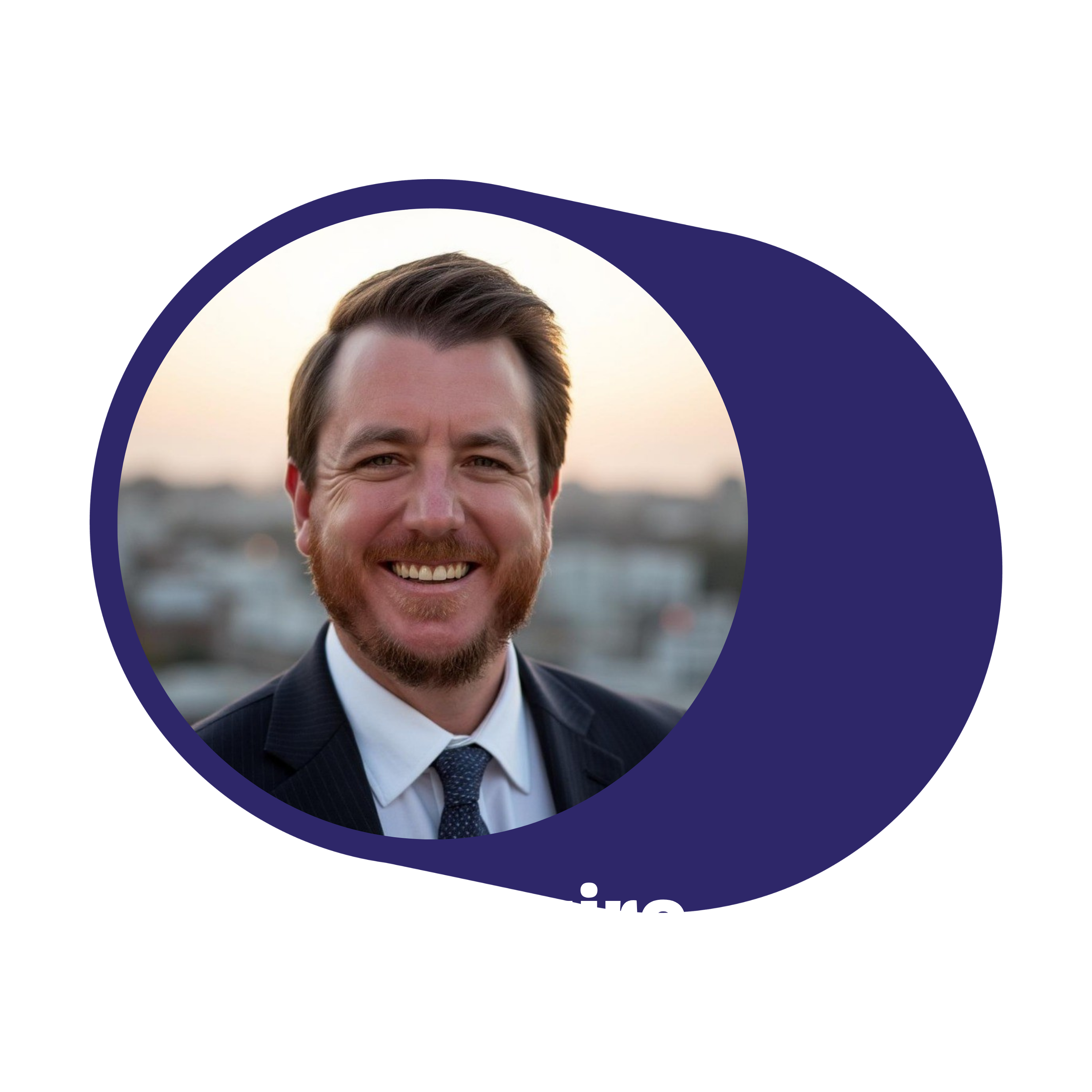
Scott Maguire is an executive at Korn Ferry where he is leading the build-out of interim and flexible workforce offerings for technology clients across North America.
That job used to carry a stigma. Bring someone in for six months, keep the train on the tracks, don't touch anything real. That framing is gone. Companies now ask for interim leaders on purpose, not as a fallback, and Scott's watched AI accelerate the technical side of the job while making the human side matter more.
In this conversation, we talk about why the interim stigma disappeared and what it takes to lead a team you didn't build and won't keep forever. We also get into how AI is changing what companies actually mean when they say they need talent.
Enterprise AI adoption is nowhere near as far along as the headlines make it sound. Scott makes that case too.
Scott, welcome to the podcast. Great to have you here.
Scott Maguire:
Thank you, Steve. Appreciate the opportunity to be here.
Steve Smith:
Well, you know, it's interesting because, you know, what you're building inside Korn Ferry, it's almost like you have a startup inside a multi-billion dollar company. What surprised you the most about building this practice from inside a firm as big as Korn Ferry is?
Scott Maguire:
You know, it's so funny you say that, Steve. I have that feeling day in and day out, and I have had that sense, you know, had the fortunate opportunity to join the firm last January. And to your point, it was a true build. As I was having discussions with some of the leadership team at Korn Ferry before making the move, I was previously at RGP Consulting for a little over a decade, and, you know, having been somewhere for so long, with the familiarity for both internally and with our client base, it was a big career and personal move.
But the reason for the move came down to what I always used to say is the two Bs. It was the brand and it was the build. And so, to your point, such a wonderful opportunity from my perspective to have kind of the conflation of the uniqueness and the reach of the Korn Ferry brand and the excellence associated and quality associated with that type of marquee brand, coupled with the opportunity then to build, but to build in an ecosystem again, that is well known.
Highly respected, differentiated in the professional services space. And so that was really what drew me to Korn Ferry and the opportunity around that. Now, to answer your question, you know, a bit more directly around surprises or, you know, what have I seen? I have been surprised that with many of our clients and within the firm itself as well too, the level of education and edification that we go through, you know, on a day-to-day basis, and just constant conversations and discussions around the capabilities and the solutions that we offer at Korn Ferry.
Many individuals that I meet with every day jokingly say, "We know you for executive retained search and the golf tour, right?" And so, "Are you calling me about, you know, a spot on the tour, or, you know, for an executive retained search potential engagement?" And really, you know, the conversations that we're having, of course, on the interim side of the house, is neither, and it is all around again how we can look at the entire talent agenda for our clients.
And as we look at the fixed workforce, the flexible workforce, and now the ENT workforce, how that ties in together. And of course, we sit at the center and the nexus of the flexible workforce as a solution, you know, again, in our offering in the marketplace. So, you know, I think the biggest surprise was, again, the level of education and edification in our daily conversations that we're having.
A surprise, though, on the build side of the house, has been the channel ignition and the acceleration around that, you know, the network and relationship capital that many of my colleagues at the firm have, again, is second to none. And so the opportunity to, you know, work through those channels, ignite them appropriately.
You know, leverage the relationship capital to bring value-add solutions to, you know, those clients and to the great people that we place in very high-impact roles at, you know, leading organizations globally. That's been a fantastic surprise, you know, in the positive too, and I knew that would happen.
But I don't think I had an appreciation before joining for the acceleration around it and, frankly, the scope and scale of it as well too. So, so that's been, you know, a wonderful, welcomed surprise.
Steve Smith:
So what are some talent conversations that you're having with tech leaders right now that feel different from maybe a year or two ago?
Scott Maguire:
Ha. Well, I think I'd be remiss in not throwing out the two letters of AI — that is, you know, the bedrock of every conversation right now. And so, you know, what we're seeing and what has been changing so dramatically over the last 12 months, from my perspective, in the interim tech and digital space, is that, you know, our companies and clients are no longer just buying labor capacity.
They're buying acceleration, and they're buying value-add impact, and they want to work with professional services organizations that can really show the return on investment capital that they've spent in the AI space. And so, you know, historically, organizations brought in interim leaders or consultants or project teams because they needed expertise.
Maybe it's additional horsepower, bandwidth, you know, in a specific area of their team. But now with AI, and as I mentioned, kind of the agentic tooling and workforce, you know, now arriving and disrupting a lot in this space, it's the question that they're asking is now: how much faster can this team move?
So it's not necessarily an output-capacity-kind-of-generation-per-dollar-spent question anymore. It's more so, again, an acceleration and an investment question. And so that is, from my perspective, fundamentally changing the interim and project consulting landscape as to how, you know, projects are not only framed but then subsequently executed as well.
And it's changing the labor profile and dynamic and the flexible workforce space on the daily.
Steve Smith:
Well, you know, you've been very vocal about sort of the interim talent model, and I think that, you know, it's fairly — I don't know — a widespread belief that the interim title carries a little bit of stigma. It seems like it's a gap filler, maybe not a strategic choice. But, you know, when did you kind of personally flip on that point of view, and was there a moment that made the light go on and make you think about it differently?
Scott Maguire:
Yeah, absolutely. And I would frame it in more of a project consulting type lens for the deployment of interim talent. And that's really where we had a client that we worked with that was going through a major ERP implementation and, you know, they had run into a lot of headwinds.
They hit many roadblocks along the way, and they were at risk of their go-live date. And we brought in a project consulting-based team that was, again, comprised of all interim resources. So they were there for a finite period of time to help with execution of said deliverables for our clients to get this project across the line.
And, you know, fast forward eight months ahead after, you know, we deployed the team, integrated, you know, into our client's ecosystem, and helped get the project back on track. So the go-live date was hit for their new cloud-based ERP, and we had a debrief feedback discussion with our key executive stakeholder of the project.
She mentioned that without the interim team coming in and making the impact that they did, the ripple effect across the organization, not only from a human capital standpoint but also with her CFO from a cost standpoint, would've been wildly material. And this was many years ago, but that was kind of my aha moment around —
Again, it's back to how we truly see value generation in these types of projects with our clients, and, you know, how we can assess that on the backend of these types of engagements. So I think, again, in the project consulting space, I had a few ahas along the way — that just because the workforce is interim, or there for a finite period of time, in the project consulting space, you can return a lot of value to an organization, make a great impact.
Do it in a flexible and fungible way that allows for creativity, both on the client side as well as on our side, and with our great consultants. And then, you know, what we're also seeing a lot more of right now is the interim executive demand and opportunities filling up in our pipeline, you know, day in and day out.
And I think, to your point, it is a dilution of that stigma over time. And so before, I think there was a bit of a stigma around it, or, "I'm coming in the interim just to keep the train on the tracks. I'm gonna touch nothing strategic. I'm not gonna be involved with any sort of transformation with an organization," et cetera.
That, now, from my perspective, couldn't be farther from the truth. And a lot of our clients view it that way too. So, for example, we work with many private equity funds and many of their portfolio companies, and many times they look to us at the interim executive level to bring in executives that have those ex-operating chops.
It may be a specific, you know, sector depth or niche kind of industry experience. It might be, you know, functional transformation experience that they can bring to the table, and they might be going through, again, a transformation, a transaction, a large-scale implementation, operationalizing the business in a different way from a go-to-market standpoint, whatever the trigger point might be.
The reliance on an interim executive with the chops, the experiences, and the EQ to handle those types of dynamics and that type of transformation is not viewed in a diluted fashion or minimized fashion anymore. And the impact that, in this case, you know, by example, the private equity funds see from putting the right person into that type of operator role at the right time to help them get through a period of transformation or a specific transaction — the risk associated with that, and getting that right, is so high that.
You know, they cannot take any chances on it. And so that, again, from my perspective, translates back into value. And the value that even someone in a quote-unquote interim role, that was previously maybe looked at in a lesser capacity, has now changed. And, you know, we've just seen it over the last, at least, decade if not more, and it continues to write the demand of the gig economy.
Steve Smith:
Well, you know, and within the context of that framing, that completely makes sense. You know, it's just like, I think a lot of people look at the interim title as, "Oh, we're going to put you in this position, but we don't have the confidence that you can do the job, so we're just gonna give you the interim title." But what you're really saying is, you know, there are certain specialty roles that, like you're talking about — okay, so you're gonna do an ERP integration. Having expertise within that sort of specific talent use case is very specific, and it's something that a lot of individuals don't get a chance to kind of cultivate that skill set because it might be something you only do once in your career.
If you have someone who's really good at it, it makes sense that, you know what, we're just gonna bring in this person for six, twelve months. Get through this period of transition. We need to have this initiative executed with the highest degree of quality, so it makes sense — let's get a specialist to fill that role.
Scott Maguire:
Yep. Absolutely. And in this day and age, we spoke briefly about, you know, AI transformation earlier. There's so much more we can, you know, obviously expand on that topic. But with the velocity of change right now, especially so much of it, you know, at the core of the nexus of this being driven by AI, our clients require flexibility, fungibility, creativity in their operating models.
Human capital operating model included. And so we're — I think we've seen a nice rise on the interim side has been our interim structure is exactly that. It's fungible, it's flexible, it's very adaptable. It's malleable to pivot very quickly. And so, you know, we're doing a lot of work developing what we call AI tiger teams right now, which is, you know, a cross-functional solution offering that's made up of AI/ML engineers, data governance and management, project management, risk and compliance, et cetera.
And so the deployment of those teams in a cross-functional manner — the skill sets that are needed now may look very different than six months from now. But while a lot of our clients love that model is then we can make commitments to say, "Okay, you know, we'll sunset after we complete the work we need to complete with you and your team."
Over month five and six, and then we can redeploy new teams in a flexible, agile manner with the new skill sets that are needed based on where you're at in the journey of your transformation. And so that, again, just agility, I think, is something that our clients can utilize as kind of like a Swiss Army knife, you know, at any point in time.
And that seems to really match kind of their speed of change and pace right now.
Steve Smith:
Well, and to me it also seems like it makes sense just in terms of when you think about just the pace of change that we've seen accelerate over the past three or four years. When you think about, like, product development cycles inside of a software company — it used to be, okay, we're looking at, you know, rolling out product over a twelve-to-eighteen-month timeframe, and now it's just like sometimes you're thinking about like a three-month timeframe.
You know, and it just seems like, if you extend that to the talent conversation, you know, it seems like the needs are greater because the consequences of, you know, not getting the right person to fill a role for 90 to 120 days, you know, having an empty seat or having the wrong person in that role — it just seems like the consequences and the stakes are higher than ever. And so, you know, that interim framing seems to make a heck of a lot more sense.
Scott Maguire:
Absolutely. Absolutely. Well, and like what you just said, from my perspective, is as we look at how AI is integrating into this velocity of change — we're moving beyond AI is just a chatbot or an assistant. To your point, you know, our clients are beginning to deploy semi-autonomous agents that can handle documentation, QA analysis, reporting, code generation, testing, workflow orchestration — I mean, you name it, right?
I mean, it's a very broad swath and continuum now. And so that doesn't eliminate the need for talent from our perspective, but it absolutely changes the composition of those teams and what they look like, and it changes them very quickly. And so, you know, the highest-value-impact teams and consultants that we can deploy right now are those that can orchestrate humans plus the AI together.
And so it's really interesting. I feel like the future interim consultant, right, has to be part strategist, part operator, and now, part increasingly, AI workflow architect along the way. So the conflation of those skill sets coming together, and kind of the hybrid needed around that, is very unique and still very new.
And so it begets an interesting expertise-versus-experience conversation as well too, both with the consultants, and our talent ecosystem, as well as with our clients, just given the newness of this space.
Steve Smith:
You know, when you think about, like, the interim CIO role, I mean, one of the things I know you've talked about is describing an individual in that role as someone who steers a ship, scores some quick wins, and establishes stability without overstepping. It seems like that last part is incredibly loaded.
What does "not overstepping" mean in practice, and how do you do that? Where do you find the line, I guess is what I'm kind of wondering about.
Scott Maguire:
Yeah. Yeah. And it's, you know, the phrase I was gonna use is, it's a balancing act. And so to your point, the line is a great visual for that, right? Because it's almost like if you envision, you know, you're tightrope walking that line, you know.
And that tightrope is high up, as a balancing act, especially, you know, at the executive level, operating as an interim CIO.
And so, you know, to my quote, I very much believe that it's about execution and keeping the train on the track and ensuring acceleration of the initiatives that were laid out for the interim executive as they step into the role and take on that opportunity. And at the same time, you know, providing strategic advice, counsel, perspective from the prior experiences that clearly led to them being qualified, you know, to be placed in that interim executive role.
Doing it in a white-glove approach way, and with an EQ, you know, surrounding that, to not completely disrupt, you know, during a finite period of time in an interim engagement — which is a very delicate balance to strike, and it's a hard thing to do. But that, candidly, is what makes certain interim executives so great, is that a lot of individuals have the technical chops, have the experience, have the know-how or understanding, but so much, especially in the executive interim space, is where we see engagements go off the rails potentially, or fail, is the EQ side of the house. It's the cultural fit with the team. It's the ability to navigate change in a compressed timeframe on an interim engagement, but do it in such a finessed — and again, I'll use that term, white glove type way — to where you effectuate change through influence and through impact, but without necessarily command or control.
Because you're stepping into a team that you don't have the history of working with, and you lack the trust with that team, right up. And that's not to say an individual isn't a trusted person — it's, you know, situationally, that's the truth, and that you haven't been working with someone for many years to develop those relationships and that trust to be able to then, you know, lead and operate in a certain way, you know, to see the same kind of commensurate impact on the backend.
So I think it's a huge challenge for interim executives, but that, from my perspective, is also why the demand is so high, because there — anyone can, again, approach a situation with the technical chops or expertise around that, but to be able to navigate and walk that tightrope as an interim CIO, in this instance, and to be able to lead and influence change and impact in a very pragmatic, thoughtful, and strategic manner, is a tough thing to do.
But why we're proud of the work that we do is we take a lot of time to ensure that the professionals that we bring into our talent ecosystem fit that mold.
Steve Smith:
Well, and when you think about it, success in an executive role has always come down to emotional intelligence, communication, change management, you know, knowing how to best leverage the team that you already have. So do you think that maybe in this AI moment that we're in, that emotional intelligence has actually become even more valuable as an executive competency and skill?
Scott Maguire:
A hundred percent, if not a thousand percent. You know, human skills not only matter — I think they're more amplified now, given the introduction of the agentic workforce and just what we're seeing again with the velocity of change in this space. And so, you know, I think AI is actually increasing the value of certain human skills, not decreasing them.
The premium today is shifting towards judgment, communication, stakeholder alignment, change leadership, like you mentioned, governance, strategic thinking. Those are all tenets of a very strong executive, but it's also helicoptering up and down from an organizational altitude standpoint. So it's not only at the C-suite level — you know, it again is on a continuum from, you know, mid to lower levels of an organization, all the way through to C-suite.
And the amplification of the human skills is even higher now, from my perspective. And so, you know, AI can accelerate analysis and execution, but our clients and enterprises still need experienced operators who understand organizational complexity, politics, risk management, you know, truly translating then technical outcomes into business outcomes.
And so, especially in the interim ecosystem, and specific to interim leadership, you know, trust and decision-making on some of those soft skill areas still matter enormously.
Steve Smith:
So you're talking to tech leaders across North America constantly. In your opinion, what is the honest state of enterprise AI adoption right now? Is it mostly hype? Is it a lot of reality? Is it somewhere in between, or is it just a whole big mess right now?
Scott Maguire:
So from an enterprise, the reality check around that — and, you know, I always caution that enterprise adoption is happening slower operationally, from my perspective, than the media narrative sometimes suggests right now. And so I think there is some overhyped, you know, media narrative right now that's driving some of the perspective that change is happening quicker than it operationally is affecting some of our large enterprise clients.
Again, I won't obviously name specific client organizations here, but you know, with clients — what you read in the journal, and you know, what you see via the media, the expectation would be you pop open the hood, and that, from a maturity curve standpoint, they're well up the curve. And, frankly, that's just not the reality right now.
And so, you know, most companies are still dealing with governance, and there's major security and compliance, you know, implications, right, as far as AI transformation and adoption throughout, you know, various functions and workstreams in a large-scale organization. There's data quality, there's change management, and organizational readiness issues around that.
So while the speed of change — you know, I don't take back my prior statement — is high and happening on the daily, and it's probably one of the times where we're seeing the fastest velocity of change, you know, in the last 20 years when it comes to AI adoption, and it's real. We're still — I would say, you know, I was at a baseball game last night, so I would say, you know, we're still kind of in the early innings of enterprise operational maturity when it comes to all things AI.
And so that's, again, why, you know, I think interim and the consulting market still has, you know, stayed afloat and held strong in these times, is that companies need experienced people to bridge that gap between AI ambition and what the vision looks like versus enterprise execution and bringing those two things together.
Yeah.
Steve Smith:
So, so companies keep saying that they need AI talent. But, you know, what does that even mean within this context? 'Cause it seems like, you know, you're getting into, from a talent acquisition perspective, kind of a purple squirrel phenomenon where it's just like, by the time they write a job rec up, it's just like, great, there's like two people in the world that could fill that role. Just because AI is so new, there's so many people that don't have the depth of experience. What are companies really asking for when they say they need AI talent, in your observation?
Scott Maguire:
Yeah, this goes back a bit to kind of the five whys and what we were talking about earlier, right? If we, you know, get into a conversation where we need AI talent — okay, is it AI/ML engineering? Is it, you know, data flows for governance or data management? Is it more AI around cyber and risk and regulatory compliance?
And, you know, you can, you know, ask a number of technical questions to continue vetting and scoping for what they really mean. But from my perspective, if you kind of zoom out a little bit on what our clients are truly asking for in this space, they're asking for consultants that will become force multipliers to their business.
And the consultants that I have seen make the highest impact to our clients, and those that will thrive over the next five years, ten years, again, are gonna be those force multipliers, meaning they'll combine the deep domain expertise that they have coupled with AI-enabled execution. And so it's taking, again, the legacy technical experience and expertise that they have, and combining it for that AI amplification and multiplication effect there.
And so those that, you know, manage workflows that previously required entire analyst teams, but now it's a high-performing single consultant that can do that today. That's really the underlying ask from our clients. And so, yes, there are the technical skill sets that they're asking for. Really, what we see that they're truly asking for is, again, it's back to that amplification and acceleration before.
So it's less around, you know, cost per head and leverage and only capacity modeling. It's more around how do you accelerate some of my impact here that it used to take me, you know, weeks to do, that I can do in days now. Or it used to take me a team of 20, that now I can have a high-performing consultant that can work with the ENT workforce that I have launched, you know, within my organization.
Can get me similar profile results. So again, it's back to that key word — and this is even outside of the executive level — those that can do that are wildly adaptable. So, you know, those that can adapt very quickly and are intellectually curious can learn and apply said learnings then. So it's not just theory, but it's applicable on a day-to-day basis.
Those are the consultants that our clients are really asking for, and, frankly, it's raising the bar right now of what talent looks like in the market.
Steve Smith:
So, one more question for you. Is there a belief that maybe you had about talent or leadership, you know, three, four, five years ago that you've moved away from, or rethought over, you know, the recent weeks and months as we're in this really swiftly moving talent market?
Is there anything that you're maybe rethinking?
Scott Maguire:
I mean, many years ago, you know, I was probably a little narrow in my thinking that, you know, to be the best leader in the space, you had to be the most technically proficient, be the, you know, be the expert, right, know the most, you know, have that kind of command. I think now, given — again, I overused this term and have used it a number of times in this chat — but I think the best leaders that I see are the ones that are most adaptable.
And have the highest EQ that can surround themselves with the right experts at the right time to then lead through change and make impact accordingly. And so it's gone — you know, my perspective, again, was, you know, has shifted a bit from, you know, "you have to be the domain expert in X, Y, or Z" to be the best leader, and more so to.
I think in my personal leadership journey, coupled with, you know, what we see with, again, placing great interim leaders at our clients and working with many of our clients who are wonderful, you know, very high-impact, well-respected leaders in their fields — it's, again, it's that adaptability.
It's the ability to influence, to lead through change, to, you know, make the human impact on their teams, and even in a world of massive disruption and all the aforementioned things we discussed around AI. And so that's probably been the biggest perspective shift that I've had, if you'd asked me that question, you know, five years ago versus today.
And I think that will only, you know, become bigger and amplify over the next number of years as well, too, because, again, we're relying more on agentic workforce to be the experts in specific places. And so, you know, the need for that, in my opinion, is becoming, you know, a bit more minimized in certain pockets of enterprises.
But the leadership aspect of that then only is maximized now in certain areas and amplified. So I think that's probably the biggest shift.
Steve Smith:
Well, I think, you know, I think that's a great place to end it. I mean, we've talked about AI and a lot of the workplace disruption, but we're ending it on: what do humans bring to the equation that is essential in this moment? I think that's a, you know, the highlighting judgment and humanity and emotional intelligence is a great place to land the conversation.
So, Scott Maguire, thank you so much for your time today. It's been a great conversation, and I look forward to chatting sometime again in the future.
Scott Maguire:
Sounds great. Thanks so much for your time as well, Steve. It was a pleasure to connect, and hope you have a great rest of your day.
Steve Smith:
There's an old idea that the best leaders are the most technically proficient people in the room. The ones who know the most.
That idea is dead. It just hasn't been buried yet.
The leaders who actually succeed in an interim role walk into a team they didn't build and earn trust fast, without forcing an old playbook onto a new situation. That's not a technical skill. It's harder to teach, and it's a lot harder to fake.
AI is only accelerating that shift. The more execution work gets handed to agentic tools, the more the job comes down to judgment calls and reading a room in the middle of change. That's the part nothing automates.
And enterprise AI adoption is nowhere near as far along as the headlines make it sound. Governance and data discipline are still catching up at Korn Ferry's own clients. Getting there takes people, not more tools.
If you enjoyed this episode, make sure to subscribe to Work Tech Weekly on Apple Podcasts, Spotify, or YouTube. And I'll see you next time.