Nataly Youssef:
It was a four thousand dollar visit for sepsis and cellulitis, which is a true emergency. People that are working from nine to five, and likely this is not their only job, don't have time to go and call and, you know, try to get a resolution in place. What they start looking for is ways to just pay it because they're worried that this would be on their credit.
Steve Smith:
Hey everyone, welcome back to another episode of Work Tech Weekly. I'm Steve Smith, Managing Director of Growth at Rep Cap.
My guest today came to healthcare technology from operations research, working on data and systems design inside hospital systems, long before she ever thought about building something for employees. That background changed what problem she noticed, and eventually what she decided to go build.
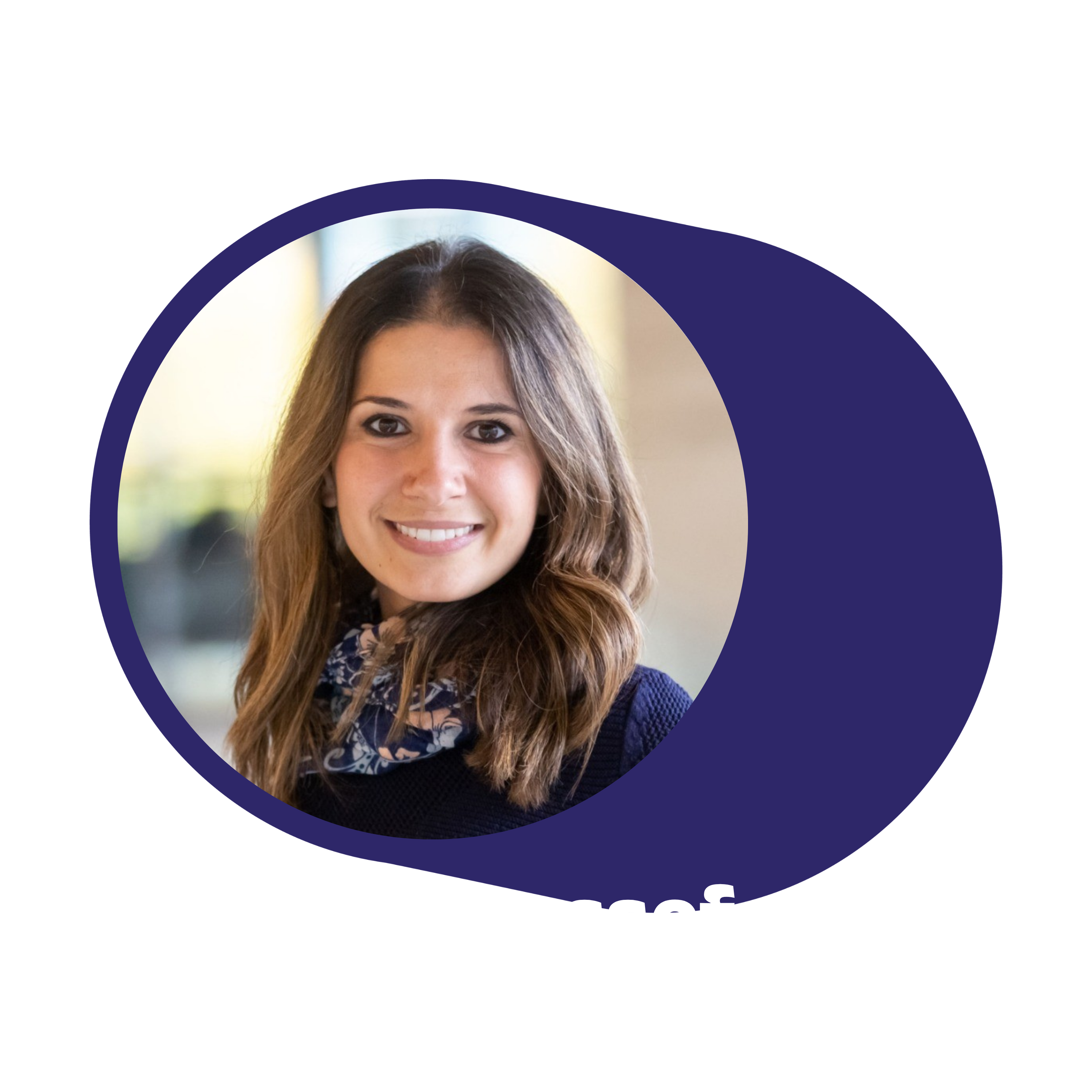
Nataly Youssef is founder and CEO of Reclaim. Reclaim uses AI and claims data to uncover money owed to employees and employers, and to surface benefits people aren't using but should be.
Somewhere along the way, while she was optimizing patient flow inside hospital systems, Nataly realized the real problem wasn't efficiency. It was that ordinary people were losing real money to a system too complex for anyone to fully understand, let alone fight.
In this conversation, Nataly walks through the moment that made the problem personal for her, and shares a story about one Reclaim user who was wrongly billed thousands of dollars for a true medical emergency. We talk about what Reclaim actually does day to day, how the company thinks about trust and privacy when it's handling people's most sensitive financial and medical data. We also talk about why she believes AI's real value isn't in giving people information, but in taking action on their behalf.
If you've ever stared at a medical bill with no idea whether it's right, this episode is for you.
Let's get into it.
Nataly, welcome to the podcast.
Nataly Youssef:
Thank you, Steve.
Steve Smith:
It's great to have you here. I'm really excited to have the conversation with you today.
Nataly Youssef:
Thank you for having me.
Steve Smith:
So, you know, I mean, we were talking a little bit in the green room before this about employee benefits and how over the years the more things change, the more they stay the same.
You know, the... I think I've got a curious to kinda how you came at this problem. And when you think about a lot of what goes on in employee benefits, a lot of times, well, people approach it from different angles when they're building solutions. We hear a lot about kind of the people angle, but you're coming at this from an operations research background, which to me is fascinating.
What I'm kinda curious about is like how did you kind of get here? Because this is not where you kind of started in technology companies. What was sort of the aha moment that made you realize, "Oh, this isn't a people problem, this is an optimization problem"?
Nataly Youssef:
Yes. You know, I started, as you mentioned, on the operation side of things, especially inside of healthcare systems. Before that, I was a mechanical engineer, Steve, but let's not go all the way back. Yes. I was the queen of finite element modeling for another time. But
Steve Smith:
Another conversation.
Nataly Youssef:
Yes. And you know, when I started operations research, since you mentioned it, five percent of healthcare data was digitized.
By the time I got out of my PhD, ninety-five percent of healthcare data was digitized. And the first problem that I decided to tackle was that of an operational problem in healthcare systems. At the time, they were dealing with bundled payments. There was the rush of acquiring other hospitals and practices, so they wanted to understand how to optimize the inflow of patients and the outflow of patients, but they were also on the hook for any readmissions within a certain number of days.
And it's interesting because it all really revolves on people and patients, but you're kind of designing around them. And at the same time, I started advising a claims data warehousing company and I saw the billing side of healthcare. So in the hospital, I saw the complexity of care and just how many specialists in a given hour touch a patient.
And then on the billing side of healthcare, I just saw the three-sixty data view of all the transactions out of a certain hospital system that was really amazing. But really both sides they were all designing around an individual, a family, and over time, I became more interested in the complexity that happens in real life on employees and families.
And I shifted from optimizing institutions, if you will, to helping people navigate these complex systems. And that's really how I ended up with Reclaim.
Steve Smith:
Well, I guess I'm kind of curious 'cause you were building, you know, data tools for helping cardiac departments optimize patient flow, and it's very different than, you know, kind of what you're doing at Reclaim. What happened that made you decide, "Okay, this is where I need to focus now"?
Nataly Youssef:
I found the urgency when I started observing the claims data. At the time, going back to twenty sixteen, twenty seventeen, we were talking about healthcare shoppers and price transparencies, the rise of high deductible health plans. And you're able to see in the system, first of all, the complexity of care, that not even hospitals knew what cost really something, you know, what negotiated rates they should be negotiating in the first place because it's just so complex.
And then now you bring it to the fact that there was this conversation about cost shifting and financial risk moving over to the patient. There's so many assumptions of rationality and how they behave, et cetera. And so that was very intriguing to me. I remember telling the data science team that I was helping build at the claims data warehousing firm that I was advising that a line of claim that you're seeing is a bill in the mail that hits an individual that may change not just the next few minutes of their lives, but could really disrupt the rest of their month, the rest of their year.
And that really created for me the urgency to focus on the financial burden of the problem, not just the efficiency problem of it. It's not just an efficiency problem. It actually really results in missing dollars that people and you know, whomever is covering them, are entitled to. And, you know, it moved from being a data line, an observation and a data set to just people's lives.
And that's really what moved me to urgently move and tackle that problem with Reclaim.
Steve Smith:
Was there a moment where it became personal? Because it seems like if you talk to anybody who is an American who's had experience with the healthcare system, you probably have more than one nightmare story, either personal or something that's happened to a friend or family. Was there any moment like that for you?
Nataly Youssef:
Yes. I mean, you probably realize from my accent, I'm not originally from the US, so I've experienced other healthcare systems before. But also when I came to the country, my deductible was a hundred dollars. You don't think about more than your premiums in any decision-making that you're taking.
Fast-forward, this is just, you know, add zeros
Steve Smith:
Yeah.
Nataly Youssef:
To that deductible and out-of-pocket max of what I'm currently carrying with my family. And so, yes, certainly, you know, a personal story of moving from a cushiony MIT plan to the ACA system as I was starting P2 Analytics at the time. The complete change of how one plan versus another at the same institution, it was a six months follow-on of the same exact procedure at the same exact place that was negotiated differently, and that my patient responsibility was completely different.
We're talking about anywhere between a fifty dollar copay to paying eighteen hundred dollars for that procedure out of pocket. So yes, this is my personal story. If I tell you the stories of the Reclaim users or anybody I talk to, that I tell them what Reclaim does, we can spend the entire hour on this together, Steve.
I mean, from you know, denials, from I don't understand what I'm billed, to just basically I paid it because I don't know what else to do, and I don't want it to go to collections, right? The biggest interest for me was, and this is how Reclaim begins, especially at open enrollment, is do you know how much you spent year to date?
And the answers are, "No. I have no clue." I mean, this is just how, yeah, how deep the problem is.
Steve Smith:
Well, you know, when you think about, you know, your-- you mentioned those customer stories. Is there one that you go back to and you think about and you're like, "You know what? I'm glad I started this company. That's exactly what I wanted to solve"?
Nataly Youssef:
Oh, every day. Every day. Early on in Reclaim's journey, there was this. It was a very sophisticated plan, by the way. So they had created a plan with a preferred network with very sophisticated rules of who is in the network, who is out of the network, of that preferred network, and a lot of true emergency versus non-true emergency for co-pays versus deductible applying.
And there was this one of the users of Reclaim that we were able to detect that there was an issue. It was an over four thousand dollar bill. This is a person that is making thirty-five thousand dollars a year, right? And it was a four thousand dollar visit for sepsis and cellulitis, which is a true emergency.
But the emergency bill that came first was adjudicated on the basis of the diagnosis being a symptom, pain in the left leg, which is not a true emergency.
Steve Smith:
Right.
Nataly Youssef:
But in the same day, they got hospitalized, and in fact, it is a real emergency. And not only should they have paid the five hundred dollar copay that was for true emergency, actually, that copay should have been waived completely because of the serious admission.
And they went to a preferred network. So they did the right thing, right? This is really what hurts. They did the right thing, and they were hoping for a hundred dollar inpatient copay. And this is what we did. We immediately communicated with the third-party claim administrator.
They were more than happy and welcoming to actually correct the adjudication because it was a very complex adjudication case and a very complex plan in the first place. And, you know, it just gives you a whole lot of gratification to just get a thank you note from this user that said, "I was just looking for ways to pay four thousand dollars."
Because people that are working from nine to five, and likely this is not their only job, they don't have time to go and call and, you know, try to get a resolution in place. What they start looking is they start looking for ways to just pay it because they're worried that this would be on their credit.
Steve Smith:
Wow, that's a great story and a really human one, and it's just like... When you think about that sort of angle to things, that bill is probably more than they were making an entire month, and they don't have any way to know how to handle it. But because of what you were able to bring with Reclaim, you were able to...
I mean, that's a dramatic change in a person's life circumstances because of something like that.
Nataly Youssef:
Oh, absolutely. Absolutely.
Steve Smith:
Well, why don't we talk a little bit about specifically what Reclaim does. What's the, you know, in a nutshell, what is the company all about? And, you know, walk me through kinda what happens, you know, when an employer brings you in.
Nataly Youssef:
Yes. So Reclaim in a nutshell utilizes AI and claims data to be able to uncover owed dollars to the employees and their employers that are insuring them and to uncover any benefit opportunities that employees can benefit from that would lend itself to more money in their pockets and more money in the employer budget.
The easiest way probably to think about it from a member perspective or a user perspective is Reclaim is a financial concierge for your healthcare purposes. So it helps you manage your bills and your financial responsibility, make sure that everything is correct, sees and detects if you are owed any money in terms of reimbursements from the benefits and the insurance packages that you have enrolled in.
And then there is a prospective view as well, which is a planning view that sees all the eligible benefits that you have available, estimates what your care needs are likely gonna look like over the coming future, and helps you sort of determine the financial impact of all these benefits on yourself as a guidance to help you make decision and, you know, save prospectively, not just on bills that have already happened.
Now, when you roll out Reclaim, and coming from a data background, I think one of the things that I had to solve for is how to get access to the data. And I didn't really want people to have to upload their bills, you know. I wanted to really remove that funnel that drops quite quickly with people questioning something and taking action as they're questioning something.
And so we work with larger employers where the rollout of Reclaim basically looks like Reclaim connecting the claims data across all the covered lives on that plan and the benefit data streams together. And so that way, when an employee or their dependent, a covered member, comes to Reclaim, their data is available at their fingerprint.
Already they will be able to see anything that is in the past that is owed to them that still can be recoverable or reimbursable and action item that Reclaim is taking on their behalf. They'll have the ability to see clarity, how much they have spent to date, what they should be estimating for the rest of the year so that they plan accordingly, and guidance if there's anything that they could optimize, like, you know, putting a little bit more into their HSA to be able to have enough until the end of the year to cover their expected costs.
Now, over time is where Reclaim becomes a lot more powerful because everything then becomes proactive, meaning that we're not waiting on people to come in and ask a question. I have a bill, I have a question about it. No. As the claims are coming in the AI is immediately detecting opportunities of owed monies, immediately creating action items, and starting the recovery.
And then human advocates close the loop on especially the most complex cases. And so the experience to the member is notification that tells them, we reviewed your bill or claim from so and so, and we're working on a reimbursement for you. And so that becomes really powerful because it just really demonstrate the frictionless the realized value of the benefits that I have, and now hopefully the plan is working the way that it was designed by the employer to work for the members.
Steve Smith:
Well, help me understand. So if I'm an employee, you know, what's the experience like? Am I automatically opted into Reclaim if my employer decides to go with it? How does
Nataly Youssef:
Yes, that's a very good question. There are two models of Reclaim. We have been primarily an opted-in kind of situation where people sort of electively elect to wanna have Reclaim and interact with Reclaim. Normally, this happens with a question, is it, "Would you like to review how your recent bills are performing?
Are you owed any dollars? Make sure that you benefit from the benefits that are available to you." And you can imagine a high percentage of people say yes to this. So we have on average seventy-nine percent of people that opt in from the first year of asking that question, and that is the easiest way to do it.
You and I were talking about annual enrollment. Is that annual enrollment? As people are electing their benefits that question pops up, and this is where you can collect that opt-in, if you will. Now, as we are talking to employers, employers started asking us and challenging us, "Well, why isn't this an extension of our claims and benefit administration?
Why would it have to be opt-in, right?" And so they challenged us to work with our compliance team and create an opt-out model that now nine out of ten employer groups elect to be their preferred route. You know, barring for any conservative culture maybe of an employer where employee is consenting and ensuring that they are in complete understanding of where their data is going and how their data is using.
But there's a majority of employers that are really appreciating the opt-out version.
Steve Smith:
Well, you know, what's interesting is that you know, when I hear this, I get excited about it because I think about, you know, all of the medical bills and the EOBs and, you know, the weird letter you get about a claim like
Nataly Youssef:
It's not a bill.
Steve Smith:
"Yeah, this is not a bill, but you're gonna owe us a bunch of money," you know?
And it's just like, so when I hear this, I'm like, "Hey, great. I'm, you know, I'm glad there's something like this out here," because a lot of times it feels like you're working against kind of the medical industrial complex, and you're one person. So there's a, I think, a really positive way of looking at this.
But we also know with employees and AI, there's a huge trust issue going on. You know, so I think there's also a way of looking at this that if I'm an employee and I'm mistrustful of AI, I might look at this and say, "Okay, what do they really wanna know? How are they trying to get me?
What are they trying to get... What are they gonna do with my personal information?" How do you think about the trust and privacy side of this?
Nataly Youssef:
Oh, first of all, very seriously. Privacy and trust for Reclaim is well beyond a branding layer. It's actually part of our technology, our platform, and the entirety of the company culture. Bottoms up. You're dealing with benefits data and claims data, which are highly sensitive information. And the test for us is always simple on the outset.
As a company, it makes you make decisions as a result of that, that are very useful, I would say, which is, number one, does the member understand why their data is being used? And number two, are they getting real value back from how their data is being used by Reclaim? First and foremost is, does it really generate positive outcomes to the members?
So there is absolutely no selling of information. We don't make money by selling insights about the population. Nothing in what Reclaim does in every lens that we take with every feature, every conversation is, does it compromise how the use of that data is because it's supposed to be only to the benefit or primarily, like only it has to be as a result of the benefit to the member or to the covered employee and their dependents.
Steve Smith:
And, you know, one of the things that really stands out about what you're doing with Reclaim is when you talk to buyers of workplace technology system, everything is a blur to them because it's just like, "Okay, so I'm looking for this solution," and then what they're leading with is it has AI in it.
It's AI blah, blah, blah, is what they're hearing. And, you know, it seems to me that the companies are doing it right, like Reclaim. You're starting with the problem. Okay, so here's the problem. A lot, there's a, you know, self-funded plans and individual employees lose millions of dollars every year because of misclassified claims data.
We use AI to help get it back. It's just like there's AI in it, but it's not, it has it's not there.
Nataly Youssef:
A tool. It's a tool. It's not the end, right? It's not what defines the product. What it really helps us is, as I said, the scalability. It's going down to the small dollars, right? You know, not missing a $75 that is owed to someone, right? This is what it helps is that scalability, that ability to track 100% of items.
But the end is not just stopping there and utilizing AI, right? So again, this is not an interface where you feed it data, and it nicely organizes insights for you, right? This is not just AI for insights. This is AI that is helping take action and that is removing the burden of taking action on employees that are working long hours, and any action they have to take means getting out of work, right, to take care of these actions.
And for benefit leaders, this is AI that is making, you know, in conference board the last week, one of our clients basically said, "This is AI that works on behalf of our employees, that makes sure that they get the benefits out of their benefits, and it's not AI that gives information to our employees so that they work to get the benefits of their benefits."
And so I think this is really the main piece is, you know, keeping focused for a company that is utilizing AI, that at the end of the day, you have to really resolve a pain point, and it's the outcomes that matter. And in a, you know, day and time like today, with healthcare affordability being a big pinch for both employees and employers, you have to be able to demonstrate measurable ROI.
And great information, nudging, and engagement, it's a very difficult move then to come up with an ROI methodology. And so the more you are close to it being a zero-one function, either you have, you know, the dollars or you don't, the easier you make it as a conversation for benefit leaders, consultants, and brokers.
Steve Smith:
And it's, I mean, it's like you think about it, it's like an employee... It's hard for an employee to think about being a benefits expert. You don't have the tools, and it's just like part of me wonders, is this, I guess, the company vision, are you gonna fix the broken system, or are you giving people a workaround to handle the system that's broken knowing it's not gonna get fixed?
Nataly Youssef:
I look, it is a broken system. There's a lot of creative people that are trying to fix, you know, aspects of the system. It's too complex, right? And I'm a very pragmatic person for one entity to resolve the whole complexity, right? It's a tandem effort. Here's maybe a simplified view to give.
Think about taxes. I remember when... I'm sorry. April twenty-two, a week after the deadline of fall.
Steve Smith:
Fresh.
Nataly Youssef:
I know, it's too fresh. But I, you know, when I first came to the U.S., it was just this strange thing where I'd just get like... I remember printing all these instructions and going through them and making sure that everything is right, et cetera.
And then TurboTax came to my life. It's not like the tax code
Steve Smith:
Yeah.
Nataly Youssef:
Has been fixed, right? It's just the fact that now my life is easier, and there are dollars that I would have never thought that would be, you know, returned back to me in a tax return now are being able to be returned back to me. Now, you remove TurboTax from my life or from my accounting accountant life today, you go back to the same issues, right?
I see Reclaim in that vein, right? And then this is like, think about the past bills that you've already incurred, right? We've got this system that is just always looking. Are you owed any money, right? What can we do to make it better? What can we do to make it better? And then you've got now, and you probably see a lot of these accounting tools are now also linked to some financial planning tools, back to, you know, the Credit Karmas, et cetera.
And now that you kind of fixed the past, right? Year to date or the past, now you can, you know, with more trustworthiness, be able to help people navigate the future. Because then if you saved someone a few hundreds of dollars, they're gonna listen more to you when you tell them, "This is probably a better path.
Here are the reasons why." You give them the data. They're more likely to actually make smarter choices when it's just something that is based on, you know, not just trust, but actually realized benefit that they have felt, that they have recognized. I think that is where I see our role in this and the ability for people really to focus on what matters most, which is your recovery.
And back to our annual enrollment question, you know, if we do this dump of communications at open enrollment of telling you about all your benefits and how they should be working and try to make you the expert on benefits. And the reality then, really, when benefits matter, is throughout the year when you need them and when you're in a pinch, and at that time, you're a patient. You're not a benefit expert.
Steve Smith:
Right.
Nataly Youssef:
I think this is where the connection, it's just making these tools the benefits really available, but just basically proactively working on behalf of someone rather than having them to have research it, getting information, getting guidance, and then a checklist to go chase after the dollars.
They should just be there.
Steve Smith:
Yeah. Well, let me ask you a question. You talked a little bit about your journey. And, you know, it's gone to a lot of different places. So began Lebanon, took you to Texas A&M, MIT, now you're running a company in Cambridge. How has that journey kind of shaped the way that you approach building a company and building a product?
Nataly Youssef:
Let's go back a little bit to Lebanon for a second. My background there is that of a pragmatic consideration, right? You live with uncertainties every day. You embrace them, and the culture is that of thriving under uncertainty. We have a saying in Lebanon that, you know, if I wanna say see you tomorrow, we say, "See you tomorrow, if I'm still alive."
That's how the culture thrives back home. And it really sets a certain mindset where generally I see uncertainties or the quest for information or risk in a very different lens. It's something that I am familiar with, have a very pragmatic way of navigating. So this is the Lebanon component, if you will.
The rest of my journey, I mean, I... It's less linear than it looks on paper.
Steve Smith:
It always is, right?
Nataly Youssef:
You got a mechanical engineer back home that comes in, turns into operations research, works on commercialization of medical devices and risk management, then moves and doesn't even know it, that it's moving into machine learning and optimization. Later, it's called data science. You know, gets herself into all these things.
So I think at every probably point in time, I was kinda handed, you know, opportunities, and I just basically embraced the flow and the movement, right, within it. I think this is how probably I characterize those various different movements that I have done. And I must say, at every point in time, you can point to the specific circumstance or the specific fortunate event that happened that led me to the next phase.
I mean, for someone that is coming from where I'm coming, winding up at MIT, winding up in the US to begin with for higher education, but let alone winding up at MIT, was something that I would have never dreamed of, right? It's not something I'm like, "Oh, I know I'm gonna be there." No. Never. Never was for me.
And that really, I think, leads its way to starting Reclaim and building Reclaim. And you know, and there, I think the journey for me was... is interesting, the move from an academic and kinda technical where you're looking for correctness and accuracy to then really starting to move towards more of you know, the timing, the urgency, the iterations, the decisions that you make under, you know, lack of information sometimes.
And I think the biggest component is focus. And that, you know, has been a learning journey until today. I keep on learning it every day, so
Steve Smith:
Well, you know, it seems like with, when you look at founders, it's just like either they fall on sort of the technical and product side or they fall on the business side. How is... I mean, you've, you know, you came out of the technical side and you've moved into, you know, the lead role.
How, you know, how has that journey been for you, and have you had to kind of find a different gear as you've made that evolution over time?
Nataly Youssef:
You know, my founder, who's also my mentor, has basically said to me, because I did my PhD under his supervision and mentorship, is like you have a right and left brain. And has probably noticed from the get-go from the first day at MIT that you are going to go out in the world and do something.
You're not gonna be a professor. And I think primarily probably comes back to, again, I'm a mechanical engineer by training, and I chose mechanical engineering not because of I like to run finite element models or anything like this, because I like to do things with my hand. And so that sort of translated from, yes, great, you know, proving-- you know how science goes.
You have an intuition, you have a hypothesis, and then you start working on proving it, right? And in my line of work, it was a lot of theory behind proving it because you have to, you know, prove the theory of converging to an actual solution. But it was always very intriguing to me as to how to solve it in practice.
And I remember it was always like the why, interviewing people. Why does it make sense to do this? What is the problem today? What is the hope that this would change? It has always been, I think, a level of excitement that I have. Now, that doesn't mean that this is the skill that you need to lead a company or to build a business, I must say, right?
So that was interesting to have to learn how to morph the expectations. And I would say at some point in time, especially in the early days of the company, zoom in, zoom out, zoom in, zoom out was really... Like context switching was really a challenge that just I've learned to navigate over time, and I, you know, I still sometimes struggle with it.
Steve Smith:
Well, I, you know, Nataly, I really appreciate you sharing your story and sharing information about what you're building at Reclaim. Certainly it's a needed solution and I'm glad that there's people out there approaching this and trying to tackle this problem because Lord knows that the average, you know, employee and the average consumer of healthcare can't figure it out on their own.
Nataly Youssef:
Oh, yes. I think it just gives me a lot of persistence, a lot of patience because the problem is real and persistent and extremely important. So it really is what keeps everybody, not only me at Reclaim, working from all of our hearts. And, you know, I hope one day we are in the hands of all covered folks around the country, all healthcare users.
Steve Smith:
Well, thanks for joining us today and thanks for sharing your story.
Nataly Youssef:
Thank you for having me. I really enjoyed our conversation.
Steve Smith:
There's a pattern showing up across work tech right now, and Nataly's conversation is one of the clearest examples of it I've heard. For years, most workplace software sold companies on information. Things like dashboards, insights, checklists, and more visibility into problems people already knew they had. What's changing now is that AI is letting companies skip the checklist and go straight to fixing the problem.
Reclaim happens to do this in healthcare benefits, but the same shift is showing up in HR, in finance, in operations. The tools that win over the next few years probably won't be the ones that tell employees the most about their situation. They'll be the ones that quietly resolve things on an employee's behalf, without needing their attention first.
Nataly's story about the misclassified sepsis bill is a good test case for why that distinction matters to a real person. It was a four thousand dollar bill, a true emergency coded as something minor, and someone making thirty five thousand dollars a year who had no way of catching the error on her own. That patient needed someone acting for her, not another notification telling her she owed money.
If you're building or buying workplace technology right now, that's probably the question worth asking about any AI product in front of you. Does it tell people what's wrong… or does it go and fix it?
If you enjoyed this episode, make sure to subscribe to Work Tech Weekly on Apple Podcasts, Spotify, or YouTube. And I'll see you next time.