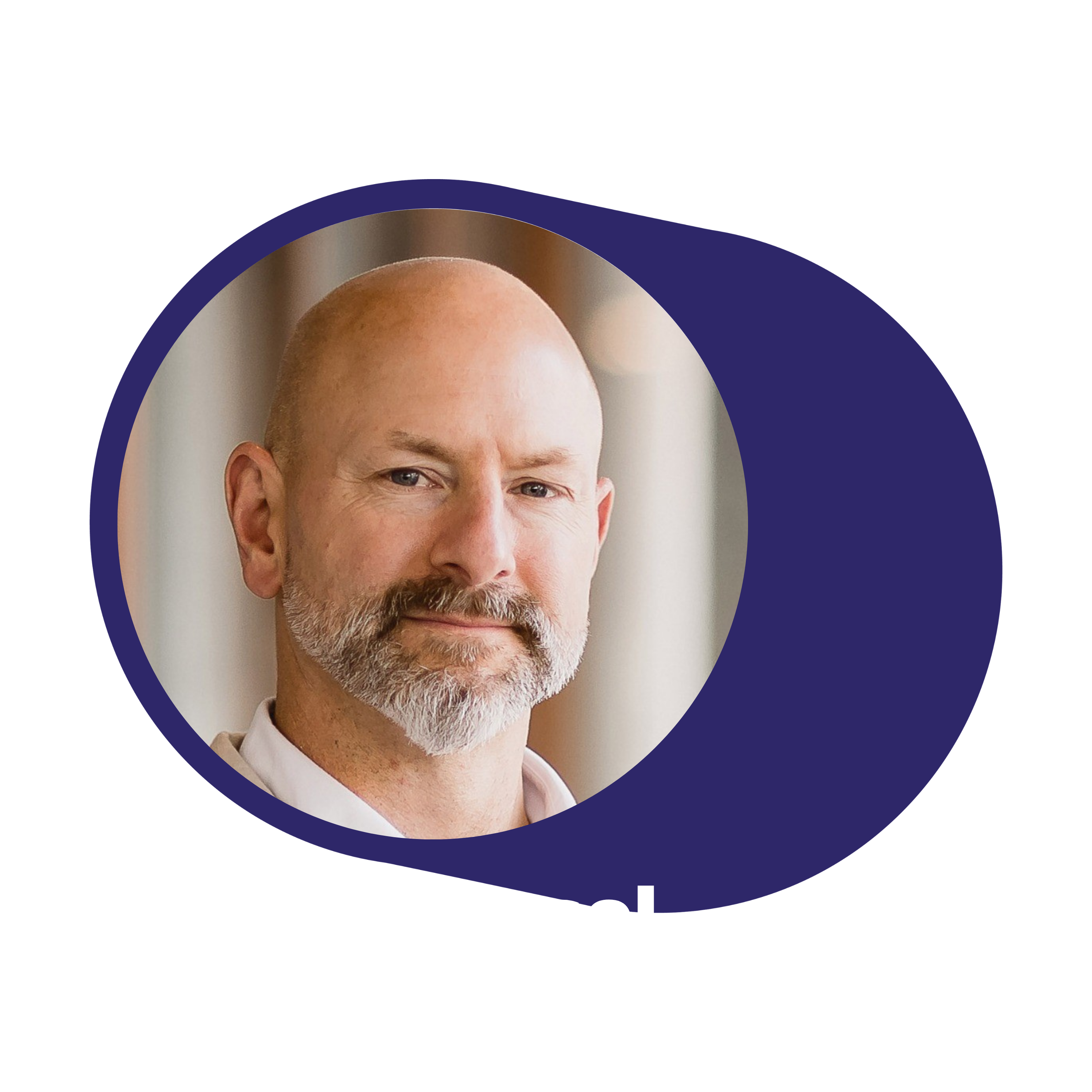
Matt Poepsel:
I had asked a question, what percentage of the overall bandwidth or oxygen is going toward technical matters versus human matters when it comes to introducing AI? And the audience largely agreed it was 80 to 90% technology as opposed to only 10 or 20% people.
And I think then it's no wonder we're getting so much resistance and seeing projects that fail to realize their potential because every business problem is a people problem. And every business opportunity, therefore, is a people opportunity. And we're squandering that opportunity if we don't understand how people are wired and get them, you know, the interventions that they need.
Steve Smith:
Hey everyone, welcome back to another episode of Work Tech Weekly. I'm Steve Smith, Managing Director of Growth at Rep Cap.
Most AI conversations right now are about speed. How fast can we deploy it? How quickly can we cut costs? How soon can we see returns? But inside most organizations, the people side of that equation is barely getting a fraction of the attention. Executives are pushing hard. Employees are overwhelmed. And managers are stuck in the middle, expected to hold everything together with almost no support.
In this conversation, I’m talking to Matt Poepsel, Vice President & Godfather of Talent Optimization at Predictive Index. We’ll get into that title a bit later. Predictive Index has been in the business of understanding how people are wired at work for 70 years. At its core, the idea is simple: align your people strategy with your business strategy. In practice, that means giving organizations the behavioral data and tools to make better decisions about who they hire, how they manage, and how their teams work together.
In this conversation, we talk about why AI deployments are failing, what managers actually need to lead people through uncertainty, and how behavioral data changes the quality of advice you can get from AI tools. We also get into what's happening to early-career workers right now, and whether HR has a real shot at becoming a strategic force inside organizations.
We recorded this one at Transform 2026 in Las Vegas, outside on the deck at the Wynn - overlooking a golf course that, sadly, neither of us had time to play. Matt was busy speaking and running sessions. I was busy talking to guests like him.
But with all of that said… let's get into it.
Steve Smith:
Hi, I'm Steve Smith with the Work Tech Weekly podcast, and I'm joined by Matt Poepsel, the godfather of talent optimization from the Predictive Index. Welcome.
Matt Poepsel:
Thanks, Steve. Appreciate you having me.
Steve Smith:
Alright, so I wanna start with the title. The Godfather. Yeah. Where did this come from? I assume that it's not, you know, making an offer you can't refuse. It's more hardest working man in show business kind of thing.
Matt Poepsel:
Exactly right. Exactly right. About 2018, we decided to codify talent optimization as a formal discipline. And at that time I had my hands on a pretty important architectural role within that. And so the title just stuck. People loved the energy behind it and I'm more than happy to represent it.
Steve Smith:
Talent optimization, how do you define it?
Matt Poepsel:
Yeah. Basically aligning your people strategy with your business strategy to produce a superior business result. That's how I define it. And when we think about it, there's so much looseness when it comes to, well, how do you get the people part right in a business? Oh, you'll get 15,000 frameworks, right? So we wanted to really codify something that lives at that intersection between the HR discipline and people practices that are so essential, and then also the business function of what actually creates value.
Steve Smith:
You know, I had the good fortune to attend your session here yesterday, and I thought it was a fascinating conversation on a lot of levels. I think that one of the things that jumped out at me in that conversation was — and I think this ties back to a little bit of what the Predictive Index does — is understanding what is it about, you know, people, behavior, motivations, communication styles. Do you find that that's typically a missing element in this conversation? And do you see Predictive Index customers better able to dial into some of these changes because they have that data available to them?
Matt Poepsel:
I really love any chance I have to talk to HR professionals because I think they have a very challenging existence, if you will. And it comes down to the fact that when you think about how much the tectonic plates of work are shifting, they're really caught in the middle of these two grinding forces, if you will. Executives that wanna go fast and change things, and an employee base that's already overwhelmed. So it's never an easy environment. Right now it's particularly challenging.
But to your point, the average manager doesn't get a lot of training anymore when it comes to how people are wired, really what their natural preferences are. And that's where we find that clients of the Predictive Index that have data and analytics to help demystify the people process — that's a powerful thing.
Steve Smith:
Well, and it's interesting because it already seems to be kind of an emerging theme at this conference to talk about, you know, the plight and the responsibilities of the line manager, because they're really kind of bearing the brunt of everything that's going on, from downsizing and cost efficiency to AI deployment. What are you seeing and experiencing with your clients regarding that? And has there been a change in their awareness on what's going on with line managers?
Matt Poepsel:
Yeah. I think it's always been hard to be a manager because you're trying to juggle so much at once, and in this frame it's particularly challenging, especially if people are absorbing a lot of these workplace tensions, if you will. And so when you look at how fast we're moving, or the nature of the uncertainty that's in the environment, then they just absorb that.
And so the reality is that for a manager, if you don't have real insight into how people are going to respond to your leadership style, for example, it's not gonna turn out well. So when they turn to HR as counterparts, that also doesn't happen as regularly as we might like. And I think that a lot of times business people have this misinterpretation that HR is a support function. They're transactionally there to help me when I need, you know, very administrative things. And that couldn't be further from the truth.
Steve Smith:
Well, I think what's kind of interesting is that points to several of the problems that are occurring in real time right now, which is number one, access to the data. There was someone who was sitting at my table and we were — you had the question about the previously high performing team that's going through some turmoil — and it's just like, how do you kind of synthesize all of this data? And one of the people said, usually the problem is not that there's not enough data. It's how do you get the data into something that's actionable with the manager at that point in time. So, like, how do you think HR needs to be approaching that question?
Matt Poepsel:
Yeah. The HR team owns the entire employee lifecycle if we look at it as a process. So when you think about the selection time before they're employees at all, we collect a lot of data about candidates. We want to understand their work history, we understand their behavioral types, we wanna understand lots of things, their values perhaps.
But then as soon as they get hired, it's almost like we discard all that stuff. And you're like, well, wait a second. This was very important information that doesn't need to go away. But now we have new information about what are their relationships like with their colleagues, with their manager, on their teams, whatever it might be. And all that's a very rich understanding to paint the context in which that person's operating.
So if we have a previously high performer who's not performing so well, maybe AI's chipping away at a part of their job that they really enjoyed, then we need to understand, well, what is it about this person's wiring that can help us understand why they might be having some challenges? That also holds the key to how we can get them back to high performing.
Steve Smith:
And so tell me, how did this become a passion for you? Why do you do what you do? What's your origin story that got you to this point?
Matt Poepsel:
It effectively came courtesy of the US Marine Corps. Six years in the service. Because of the nature of what that organization does, there was a lot of emphasis on leadership from day one. And so I really respected how much investment we got in terms of how to lead people in very challenging situations.
So when I became a civilian, I transitioned out of the military, I thought, okay, I'm ready for more leadership training. And the civilian world basically said to me, yeah, I don't know what you're talking about. We don't really do that here the same way. And I thought that was a real big disappointment. So I ended up with a lot of self-study at my time, a lot of books on tape during my lengthy commute, trying to learn the ropes when it came to these things.
Eventually got my PhD in psychology to study coaching and leadership at the highest levels. Because what I came to realize is we spend so much time at work, and for everything we know about people and everything we know about work, it's almost non-existent — how can we create workplaces that make work better so that people feel better, they go home to their families better, they're excited about the work they do every day. That's very much possible, Steve, but it doesn't happen very often.
Steve Smith:
And what's getting in the way right now, other than just everything?
Matt Poepsel:
Yeah. A lot of it comes down to the natural tension that's taking place, whether it's an executive team that wants to move fast, employees who are losing trust — they might go on LinkedIn and see companies laying off thousands of people at a time in the name of efficiencies — or if it's a Gen Z person who can't get their first foot on the rung of that corporate ladder because people are hesitant to hire now, because let's see what AI can do first.
All these things create this sort of fear and anxiety, this distrust, and in many cases I call it a misinterpretation about the nature of work itself. So we have to cut through a lot of that if we're going to get to a more productive place.
Steve Smith:
Well, I think what's interesting is when you look at a company like the Predictive Index, you know, we're talking about AI and we're talking about release cycles that are, you know, measured in weeks rather than months. And so there's sort of this idea that all of the innovation is coming from these companies that just sprout out of Silicon Valley, but Predictive Index is a 70-year-old company with a rich heritage. You're very much on the forefront of what's going on with AI. Tell us a little bit about that. How has a legacy company made that transition?
Matt Poepsel:
Yeah. Really excited to take advantage of all the AI capabilities that we have today, but without moving away from that 70-year history. As you mentioned, you're talking about millions and millions of assessments that we have done over that 70-year period, understanding hundreds of thousands of jobs. So we have this great purview from which we can build.
And now when these new AI tools come in and there's a lot of excitement around the ease of use that comes with being able to have a more conversational mode — saying, I'm about to go into a meeting with this coworker of mine, based on who they are, based on who I am, how can I really make it the most productive meeting possible? Those things used to require specialized knowledge or access to data in a certain way, and now we're finding that our clients are able to open that up to managers, to the HR person themselves, who can start to operate a little bit more at scale.
And I think that the future is very bright. We're investing heavily in trying to understand how to unlock the insights and the value to really create better workplaces.
Steve Smith:
When you're seeing it done right, you're seeing your customers that are approaching this and you're like, they've really got this figured out, they're really doing some things. What are they doing well? How are they getting that information in the hands of the manager or the person who needs it at the moment of need?
Matt Poepsel:
Yeah. Over the last 10 years, we invested heavily to try to create reports and other sorts of outputs, deliverables, formats that you could easily share with a manager who didn't need to have a PhD in goodness knows what to be able to be a better manager. And so that made the consumability of the insights so much better. It's like, well, I can read this and I can understand about my employee, I can accelerate that onboarding process.
AI now takes that to the next level where we're able to ask more insightful questions. It's not just a static report, it's now a conversation that we can start to gain more of that context. So I think the most successful customers are the ones that don't leave behind that foundation of the behavioral rigor, the understanding of that deep people science that goes into all of our products and really needs to be a part of a responsible workplace, but builds on top of that this layer of usability and the dynamism of being able to have a conversation and really start to unfold, like, what's the best response?
We have to remember that every aspect of management is about a decision. How do you make a better decision based on the available data and based on the context of that situation?
Steve Smith:
And I think that usability and accessibility of information is what everybody is, I think, equal parts excited by but also frustrated on how to do it. It's just like, okay, if I'm having a conversation with one of my coworkers in Slack or in Teams and obviously there's some disconnect, how do I get coaching in that moment to say, okay, you're talking to Michael, you need to keep in mind X, Y, and Z. Are you seeing companies that are cracking that nut and figuring that out and deploying it in ways that — I think you brought this up yesterday — AI is not a place you go. It's just embedded.
Matt Poepsel:
It just gets embedded. Yeah. And so we're actively working and developing and testing a lot of those different modalities to try to say, how do we take the best of what PI has always done and start to embed it into the flow of work? That's an important thing to do.
So being able to, you know, for example, we've had for some time AI that helps write better performance reviews in our platform. And that's an important thing because managers are notoriously averse to sitting down at a blank sheet of paper and trying to write up a performance review. So that was an early example. And now we're starting to really look at the flow of work and saying, how do we take — it's almost as if you could have a coach in your corner at all times, trying to say, based on everything that we know about the situation, here's some guidance for you about how to really make the best of this relationship, this opportunity, this communication, whatever it might be.
Steve Smith:
Well, and you brought up this example in the session, you know, when you were talking about when you were a young manager and bringing your Marine Corps experience and your MBA experience and running into a situation where you were deploying the skills that you knew and you felt were universal, but it wasn't being heard the way you thought it was being heard. What is the opportunity you think, maybe not only as a reminder that context matters, but also how to effectively use that in the moment?
Matt Poepsel:
Yeah. There's a three-part methodology I always go back to. It's called awareness, insight, action. I have to start by raising awareness. That could be self-awareness for a person like myself in that situation, who didn't have the awareness that the things I was doing by instinct and even by training weren't suitable to the context I found myself in later. But also then the insight is, how's this showing up and affecting our relationships, our work product? If people are starting to retreat from me a little bit, then how's that working? And then the action is, what can I do differently based on what I now know?
And so I wish I could tell you that was the last time I made a management mistake. It wasn't. But I came to learn, through being exposed to a tool like the Predictive Index, that I have a very specific set of personality drivers. We each have our own set. Mine tends to be to talk things out, to move very fast. I'm pretty facile when it comes to change. But there are people on my team who I need — who are more detail oriented, more stable, more steady. And so it helped me to accelerate being able to navigate those situations.
And now the question is, how do we do that in even more complex ways? Because AI can help us see into very subtle relationships around team dynamics when we think about a very diverse team in terms of personality types, but also being handed a very diverse mission in terms of the requirements of a strategy. There's a lot of complexity in there that AI is helping us see into.
Steve Smith:
Well, and I think that there's also a lot of complexity that AI is introducing because of speed. And some of it is organizations saying, we need to deploy AI. Well, what's the use case? We don't know. We need AI. Are you seeing a lot of that in your conversations right now?
Matt Poepsel:
A hundred percent. And I think that it comes down to a very understandable thing, which is we don't wanna fall behind. Because the executives read HBR and they read all these things too. They understand what's happening out there, and they're afraid of falling behind. So there's this natural push to say, how do we get good at AI really fast? Okay, great. But how do you do that if you haven't earned the trust? If you haven't established safety within your teams, if you don't know how they're wired, then you're gonna run afoul of their own interests.
And that's where I feel like understanding — if we have a part of the team that really needs high-detail communication and we don't give that to them, we are shutting ourselves down prematurely. And I see a lot of that happen. In the room yesterday you saw that when it comes to AI deployments. I had asked a question, what percentage of the overall bandwidth or oxygen is going toward technical matters versus human matters when it comes to introducing AI? And the audience largely agreed it was 80 to 90% technology as opposed to only 10 or 20% people.
And I think then it's no wonder we're getting so much resistance and seeing projects that fail to realize their potential, because every business problem is a people problem. And every business opportunity, therefore, is a people opportunity. And we're squandering that opportunity if we don't understand how people are wired and get them, you know, the interventions that they need.
Steve Smith:
So when you come to a conference like this, I mean, I know this is not your first time at Transform. What do you like about coming to this event?
Matt Poepsel:
This event is a very strong community. People really enjoy seeing one another. There's a lot of collaborative exchange. If you come to a session like mine that's facilitated, there's a lot of opportunity at your table to meet people you've never met before and understand that somebody might have a different point of view on a topic that you're wrestling with, maybe they're a little further along on their HR journey than you are. So I think that's part of the appeal for sure.
Additionally, I think there's certainly this balance between the solution providers and then the solution consumers, but the relationship seems to be pretty well understood. And I think there's some curiosity on the part of the Transform audience in particular to learn about what's available to me, what should I be considering, and then if they're gonna see a lot of things that aren't really a fit for them right now, understandably, they move on.
Steve Smith:
Well, and I think what's interesting that I've seen come up in sessions is just sort of the vulnerability of people to say, I don't know what's going on, and I'm expected to know. And I think there seems to be a sense of, okay, I can say that here and it's okay. Because I — and I don't know if you're seeing the same thing in your work — it's just, you know, people are overwhelmed and they don't want to say that they don't know something, especially when it pertains to AI.
Matt Poepsel:
Yeah. And I think that it's always been true that it's one of these things. But I would say the stakes have never been higher because before, not being able to articulate HR's value in business terms was unfortunate. It was a little bit of a missed opportunity. Today I say it's career limiting. And the reason is because AI is taking over so much of all jobs, HR jobs included.
And so a lot of the aspect that we have as an opportunity is to really show the value of the HR field. But we have to do that in business terms. And so we're gonna find that, of course, there's gonna be pressure on executives to say, where can I cut costs? Some of that's gonna be, look at automating important parts of the HR field. We have to understand that that's neither good nor bad. That's just the natural evolution of business. But the opportunity to now be more strategic and more consultative, and to really be more of a translator of people terms into business reality, that opportunity is very much there for HR, and we're excited to be a part of it.
Steve Smith:
And so you're not only working at Predictive Index, but you're also an educator. You're teaching future HR professionals in Boston. What are the conversations that are coming up, the themes that you're seeing in your classes and in your coursework?
Matt Poepsel:
Yeah. Right now I'm teaching a course on the future of work, which is very timely. And as you can imagine, there's a strong demand by students to take that course because they see everything is changing so rapidly. So it's within the HR function, taking a look at the traditional employee lifecycle and asking these questions of, is this still relevant? Is this really how the employee experience unfolds? But then looking at major trends, everything from talent shortages in specific regions and industries, all the way through that human-machine interface, on into the flexible workforce and the fact that a lot of workers are dropping out of the traditional workforce and looking at gig work, for example — what we call the liquid labor market.
So all these things are sort of combining. And I think what my students walk away with is this understanding that, first of all, there's a lot happening all at once. The second is there are new opportunities that just weren't there for us before. However, the role of HR to make sure that we have a responsible and appropriate people practice — one that treats individuals with respect, that meets their needs, but still drives that outsized business result like we talked about — that part is non-negotiable.
So I think that by understanding what's happening to people dimensions of business, I think that we're giving them a leg up to be able to understand, like, how can I be a part of this to the good and not succumb to sort of what's likely going to happen.
Steve Smith:
Well, you know, I think another thing is when you think about, you know, young people moving from university or military, whatever that stage, into the workforce for the first time, it seems like I'm having a lot of conversations when I'm sitting down with people in our industry, there's a lot of I think legitimate concern about, you know, with everything going on with AI, is this age group gonna have a chance to get that first step on the first rung of the ladder? Do you share those concerns right now?
Matt Poepsel:
A hundred percent. And I think the reality is that it is a challenging time because there's so much unknown. And I think right now we're in this — I don't wanna say a hype cycle, but we're in the early days of AI. We don't know its limitations. And when it's evolving so quickly and its capabilities are more and more, if you're a CEO and you're thinking, do I really need to hire a hundred of this specific role if AI can do it, can we redeploy those resources and investments elsewhere? So I think that part's natural.
But the reality is that there's always going to be an opportunity for people to come in if they can add value to the economic output of any firm, basically. So I think that the nature of how that happens is going to change. But the reality is that right now I think there are a couple of confounding factors. One is the fact that the AI investment is undetermined in how much it's going to impact what we need. The second is that Boomers and Gen Xers are not retiring as quickly as before because our lifespans are being extended. There's a lot of uncertainty. People are staying in the workforce, which means that the middle of the organization isn't able to be promoted and move up. So then all of a sudden we're like, okay, you're clogging up the pipeline, so to speak.
So there's a lot of this perfect storm happening against people who are trying to transition into the workforce. In certain ways this can happen to mothers who stepped away for a bit, who have to come back to work and decided that they want to get back in. And so there are so many different sort of populations or subgroups that are being impacted and having a hard time reengaging. And I look forward to AI helping us solve part of that problem as much as it's creating that problem right now.
Steve Smith:
Well, you know, another thing I guess with the youngest cohort in the workforce is it's become fashionable to bash Gen Z as not ready for the workforce, or not having the soft skills, or this, that, or the other. What's your take on that bashing?
Matt Poepsel:
Yeah. I think whenever there's a new generation to enter the workforce, there's always some level of agita about absorbing it. And so I don't think that part of it is new to Gen Z. I continue to learn from Gen Z leaders around me every day, because the reality is that they also — if you look at the transcripts and you say, what do you want, they say, well, I wanna balance my work and my life. I don't want to, I wanna have healthy boundaries. There's nothing there that you would really argue with. It's just that we haven't figured out how can you have those things and still meet kind of our outdated standards of what work looks like, right.
So I think there's gonna have to be a lot more of what I call partnership. And I love reverse mentoring, where people that are more experienced like myself can learn from Gen Z and vice versa. And I think that we have to be honest too that Gen Alpha's right on their heels. It's only going to continue. The first Generation Beta babies have been born. So it's like the train never really stops.
But I think that it's more healthy to understand, like, how do we meld together all of these generations in a constructive way and make sure that we can honor the values that each brings, but we can find a more harmonious way of working together. I don't think Gen Z bashing, or the reverse — we see that can happen the other way too, of saying, well, Boomers and Gen X, they're not very good at this new technology, or they're not agile enough to adjust to these changes. Also not patently true. However, the way we do it might be different. So I think there is an adjustment and there's a need to work together on that.
Steve Smith:
Well, and it seems like a lot of the conversation that I'm hearing regarding AI is like, okay, we don't want it replacing the judgment and the experience in our workforce, but we want to kind of automate the rote tasks that used to fall on junior members. My first job was in a newsroom as a clerk, and there wasn't one thing that I did other than reloading the fax machine that AI probably couldn't do faster and better. Now, how do young people get that start if we're automating all of the opportunities out of the way?
Matt Poepsel:
Yeah. I think that the need for creativity, for innovation, for that critical thinking, that human judgment is going to be the nature of the jobs that are still very much in vogue in the future.
I mean, we can look to the history of robotics too, because a lot of people that were on assembly lines bristled at the fact — well, first of all, we treated them during the Industrial Revolution like they were machines. And we started to measure every aspect and ergonomically tried to optimize every aspect of what they do. And then eventually I think we found a way of introducing robotics but still having valuable other jobs that kind of surround that. And now even in heavy industry, they talk about how did we take somebody who worked on the assembly line to now address the robots that work on the assembly line. So I think it'll create new jobs too.
But for young people, I think always follow the money. Always understand where is value creation. And the seat of value creation has shifted. Whenever we find that a robot can do a physical task, or a generative AI can do a certain — currently a lower class, but it'll get bigger — of cognitive work, then I feel like there's still value that's just being shifted and translated in different ways. I think going after yesterday's jobs is a losing throw. But I feel like there will be new opportunities to get our workforce working again.
Steve Smith:
Well, another thing that seems to be coming up in a lot of conversations is there's a sense among some business leaders that the type of skills that we need to succeed with AI are different than the type of skills in the pre-AI era. Like, think you need the creativity to come up with an effective prompt, to think things through. Do you agree that maybe some of the skills that we didn't value as much five or 10 years ago are becoming more mission critical now? Or is it, you know, skills are always gonna vary by seniority, role, job type, and industry, and this is just another take on this?
Matt Poepsel:
Yeah. It's kind of a mixed bag, isn't it? I mean, when did we stop teaching typing classes in high school? Because the reality is that what was new at one time — like even computers were at one time — it just got absorbed into the fabric of how work is done.
And I think the employers have to carry some of the blame here too, because the reality is we don't necessarily do a great job of defining the actual work that needs to get done. When you look at the future, the most important and dangerous work that gets done is team-based work, because it's the more collaborative knowledge economy than we've ever seen. You can throw as much technology as you want, but humans are the remaining competitive differentiator.
So when you start to see the complexity of tasks going up, when you start looking at the cross-functional nature of what we produce, when you look at the need for collaboration, that means there's valuable skills just with people who know how to have strong interpersonal skills. And a lot of, so one aspect of those people's jobs may be going towards writing tasks that can be done by AI, but the opportunity to get humans working constructively with other humans, you know, that's now at a premium. So I feel like there's this opportunity to really do a better job as employers of saying, here's what we actually need, here are the opportunities that we're seeing, and then look at the behavioral tendencies of people to do part of that matching, because skills can be learned. And information is plentiful, and access to AI is becoming pervasive. But who you are and how you're wired, that's not gonna change. So I feel like when you know that, then you can start to make better choices about who can succeed in this role.
Steve Smith:
Well, in speaking of making better choices — one of the things you brought up in the session yesterday is using data that's tuned to your context and your organization versus, I'm gonna go to ChatGPT free version and say, okay, I've got this coaching thing, go. And then maybe that's not the best way to approach that.
Matt Poepsel:
Yeah, a hundred percent. And I think it's true too that if you think about it, the AI is only going to know what I put into it as input. Well, my read of a situation or a team dynamic is really from my view. I don't know scientifically the nature of the people who are around me. So if I'm feeding the AI my slanted view of the situation and it's responding, give me advice, that's not good advice.
So I feel like this is where a more responsible set of context would say, okay, if you could have an AI that had the understanding about the players involved — for example, in our world this would be behavioral insights — if we know the behaviors and the drives, the needs of everybody on that team, that piece of advice is gonna have a lot more context to it, and it's gonna be better advice for that reason. So I think that's why we're such stewards of honoring what we know about people. And the reality is that generic AI can't do that.
Steve Smith:
And you're seeing your customers handle that better because they have the insights that you're bringing to the table?
Matt Poepsel:
Exactly. And so then you can think about the advice that you get. I think it's great that they're using AI tools to do that because it really accelerates the application side. Help me word this email to Bob. Okay, well you have to tell me a little bit about Bob. But in PI's world, no you don't. Because we already know about Bob. We know which team he's on. We know so much about the organizational context. The advice you get is therefore gonna be that much more accurate and useful.
Steve Smith:
I really appreciate the time that you've given us here today. As you're looking at the rest of your conference and going from here, what's something that excites you about the possibility or opportunity right now? It's easy to kind of get caught up in the negative that's going on around us, but what are you excited about?
Matt Poepsel:
Here at Transform specifically, the opportunity to elevate HR. I think I'm seeing HR in too many organizations getting pushed to the boundary, which is saying, well, we're here to talk about business. We don't need to invite HR to this meeting. And I'm like, oh man. You're talking about every decision that's gonna impact the people dynamic. HR definitely needs to be in this meeting.
But I think it's gonna require a different approach and a different conversation coming from HR, bringing a different set of data, being more of a translator about how people dynamics are showing up in the work. So I think there's a lot of work to be done, and this is why I have the tough love when it comes to HR professionals. Because I am excited about the opportunity, but it's gonna take something very different than what historically the field has brought to the table. But I know we can do it.
I know that the opportunity to really lean into the people side of it, but using tools like these new AI capabilities and grounded science that's been proven for 70 years — I'm excited about that opportunity to really elevate HR to where its rightful place is.
Steve Smith:
That's great. Well, I'm glad that the theme here is humans plus AI, and I'm glad that, you know, not letting the AI take over the entire conversation and let's not lose sight of the humans. And I'm glad that there's someone out there with your depth of experience that's taken that on.
Matt Poepsel:
Thank you, Steve.
Steve Smith:
Matt, thanks so much for joining us. Hope you have a great rest of the conference.
Matt Poepsel:
Thank you.
Steve Smith:
There's a stat from Matt's session at Transform that's really interesting. When he asked the room how much of the energy in a typical AI deployment goes toward technology versus people, the audience landed at 80 to 90 percent technology. Maybe 10 to 20 percent people.
And yet every business problem is a people problem.
Organizations are investing heavily in the tools and almost nothing in the conditions that determine whether those tools actually get used well. The trust. The communication styles. The team dynamics. The individual wiring that shapes how people respond to change.
Matt's argument is that behavioral science doesn't get weaker when AI shows up. It gets more important. Because the quality of the advice you get from any AI tool is only as good as the context you feed it. And most of that context… who people are, how they're motivated, what they need to perform… that's not in your CRM or your HRIS. It lives in the people data that too many organizations have already collected and quietly set aside.
That's worth paying attention to.
If you enjoyed this episode, make sure to subscribe to Work Tech Weekly on Apple Podcasts, Spotify, or YouTube Music. And I'll see you next time.