Lana Peters:
AI is everywhere. Every booth, every conversation is focused around AI. But not all AI is the same. There's a real difference between AI being layered onto an old system — in the Midwest we call it putting perfume on a pig — or an AI built into a foundation. That's a very different system and it fundamentally operates differently.
Steve Smith:
Hey everyone, welcome back to another episode of Work Tech Weekly. I'm Steve Smith, Managing Director of Growth at Rep Cap.
Performance management has been dying for thirty years. Every generation of HR tech promised to fix it and none of them really did. The question now is whether AI is just the latest thing layered on top of a broken process, or whether something actually different is happening.
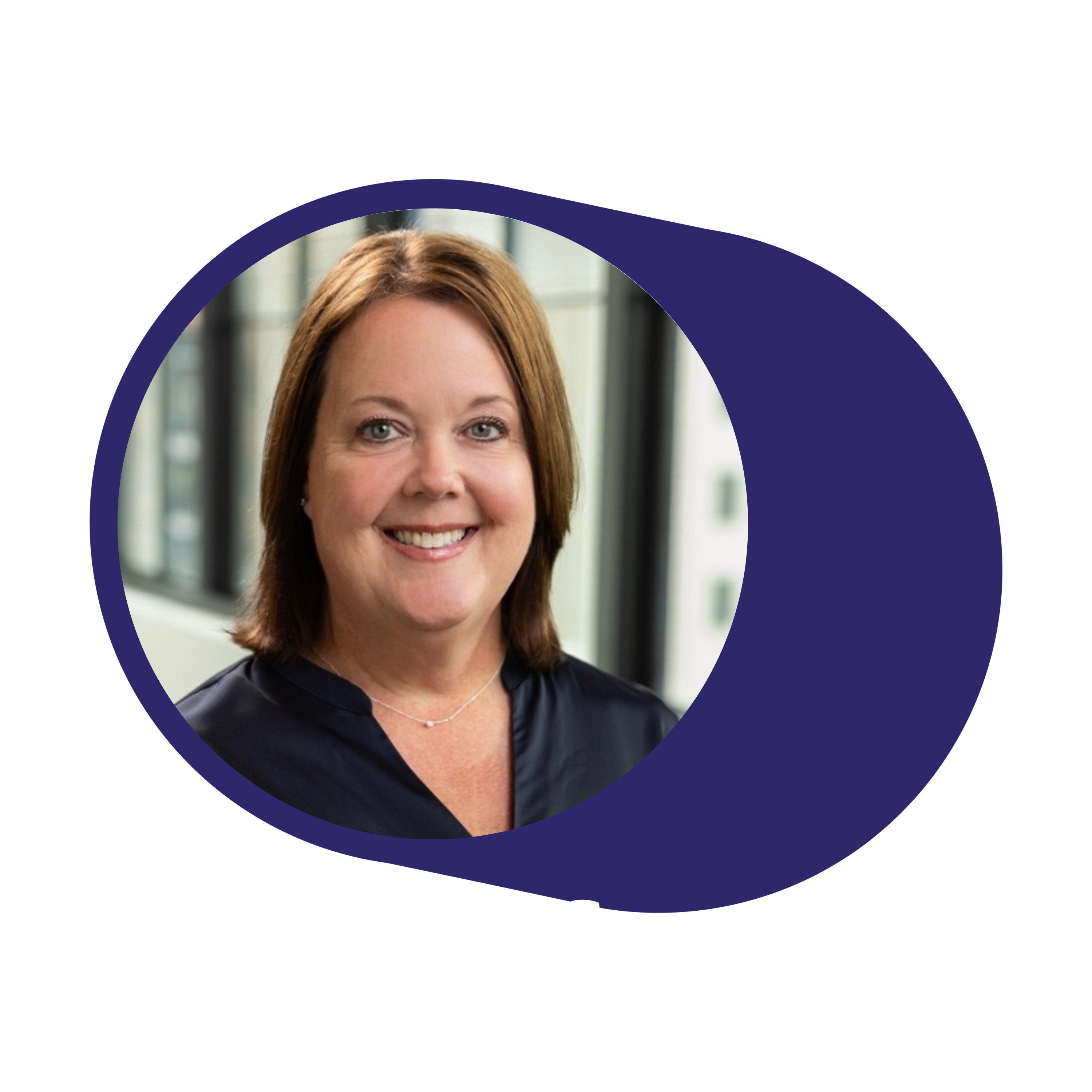
My guest today is Lana Peters, Chief Revenue and Customer Experience Officer at Klaar. Klaar is a modern performance management platform built for predictive insights, and they launched here in the US in September.
In this conversation, we talk about what it actually means to move from reactive to predictive, why AI is fundamentally different from every previous wave of HR tech, and what it looks like in practice for managers on the ground. We also get into the pulse of the market: what HR buyers are focused on right now, how the role of HR is shifting, and why line managers are at the center of all of it.
If you have been wondering whether predictive performance management is real or just a rebrand, this conversation, recorded live at Transform 2026, will sharpen your thinking about this topic. Let's get into it.
Hello and welcome back to the Work Tech Weekly podcast. I'm Steve Smith from Rep Cap, and I'm joined today by Lana Peters, the CRO at Klaar.
Tell us about Klaar real quick.
Lana Peters:
Hi Steve. Thanks for having me. Klaar is a modern performance management platform built for predictive insights. We launched here in the US in September. We've been in business about four years and we're really, really excited to bring this to market.
Steve Smith:
Well, I'm, you know, I'm excited to have this conversation today because obviously here at Transform there's been a lot of conversation about, you know, AI in the workforce. And so, you know, tell me, how does implementing AI in performance management have an impact on business results?
Lana Peters:
It's a great question, and it's where we're seeing the biggest shifts right now. The simplest way to say it is that AI moves performance management from looking backwards to looking forwards. So traditionally companies find out about problems after the fact, so missed goals, disengagement, attrition. But by then it's already really costly.
With AI, you can see early signals that are developing and act sooner. And so the business impact is pretty, pretty direct. Teams stay aligned, managers course correct earlier, and you retain people that you might not otherwise retain. So instead of reporting on performance, you're actually improving it in real time.
Steve Smith:
Well, and it seems like that's what people really want out of the process anyway and what companies really want. I mean, you know. So tell me a little bit about some of the, kind of the clients and industries that you're working with.
Lana Peters:
Yeah. This is something people often expect to be industry specific, but actually it's more broad than that. So we work mostly with mid-market and enterprise companies that are scaling, growing rapidly. That includes tech, professional services, financial services, healthcare.
But the common thread is actually the complexity of the organization. So these organizations with distributed teams that are often growing rapidly and are placing significant pressure on managers. So it's less about the industry and more about do they need better visibility into performance? And do the managers require assistance in keeping up with that? And that's really where we're seeing the most value.
Steve Smith:
And I guess, I mean, and that, that makes sense, because it seems like if you really have optimized your performance process it seems like that's an essential element of rapid scaling and growth for companies.
I'm not surprised that's something that they want to optimize. You know, you and I were talking a little bit earlier about, you know, performance management has been in its death rows for two or three decades now, and AI is the latest thing that's supposedly either gonna kill it or save it.
What is the future of performance management in your view?
Lana Peters:
You're exactly right. It has been for the last two or three decades. I think we're really starting to see it and it's moving pretty quickly. We're shifting away from manual reviews. People are still doing them. Obviously they're important and we need to have a look back, but we need to be able to look forward and have some foresight as well.
They're shifting away from static goals. They're shifting away from that looking backwards, as I said, and they're moving towards this continuous and embedded day-in work type of view. And so instead of performance being a big event, instead it becomes real time signals, ongoing coaching and better conversations.
And I think that's the biggest mindset shift, is this is not a point in time, it's continuous. So it's no longer about evaluating people, it's about helping them perform better all the time.
Steve Smith:
Well, yeah, and I mean, it seems like that's really what individuals and really businesses want out of the entire performance process anyway is, you know, they don't want it to be backward looking unnecessarily. They really want it to affect, you know, future and and improving performance in the go forward.
And so this predictive angle, I can see why there's a lot of interest. What does this look like in practice, in an organization?
Lana Peters:
Absolutely. I think sometimes predictive HR sounds really abstract. I have a lot of people say they confuse AI with predictive. AI can be part of predictive, but they're not one in the same.
But in reality it's very practical, right? So it shows up in small everyday moments. So a manager gets a heads up maybe before a one-on-one that a goal is not up to par. Or maybe HR sees an early sign of a team misalignment. Or a leader gets visibility into performance risk before it becomes a real issue.
So instead of asking what happened last quarter, which is exactly what's happening, you know, in reviews or, you know, performance now, you're asking what's likely to happen next and what should we do about it? And the key difference is it's not just about insight, it's about action. It allows you to actually do something and make sure that that's completed and that it actually impacts business. So it's helping managers respond to the moment, not weeks later.
Steve Smith:
Right. Well, you know, obviously it's just like you have a very impressive track record in this industry. You've been, you know, in and around the growth phase of this talent market.
What are some of the kind of the game changing moments and innovations that you've seen over that period?
Lana Peters:
There are so many, and I'll date myself here, but after 25 years, there's been so many things that have changed. But what I've seen is a few major waves over the last years. We obviously had the shift to cloud HR systems and giving everybody a chance to get out of those crazy spreadsheets and everything that we had way back in the day.
Employee experience tools gave us visibility into engagement. That was really important, especially during COVID times. I mean, those were just driving the market. And then continuous performance tools started breaking away from annual reviews.
But AI is really different. It adds a complexity and it adds a layer that we haven't seen before. And the reason is it changes how decisions are made. And that's really fundamentally different than what we've had in the past. So we're no longer just organizing or analyzing data. We're actually influencing outcomes as they're happening. And that's a much bigger shift than anything I've ever seen.
Steve Smith:
So, you know, one thing I'm kind of curious about in, you know, after a couple of days here at the conference, you know, what are some of the takeaways, you know, what's your, what's the current pulse of the industry right now on your read?
Lana Peters:
Absolutely. Well, Transform has been really interesting this year. A few things stood out for me.
First, AI is everywhere. Every booth, every conversation is focused around AI, but not all AI is the same. And I think that's important for people to understand. There's a real difference between AI being layered onto an old system. I think in the Midwest, and we're both Midwesterners, we call it putting perfume on a pig, right? Oh, or an AI built into a foundation. That's a very different system and certainly something people should be aware of and take a look at because it fundamentally operates differently.
Second, HR is being pushed into much more of a strategic role in general. You know, there's an expectation that now they are able to predict risk and drive business outcomes and not just run processes. And that is a major shift in the way that companies are looking for their HR teams to impact the business.
And the third, there's a huge focus on managers. I heard it time and time again this week. Every company's realizing that if managers don't get better, performance doesn't improve. They are the first line of offense and defense, and they need to be really good.
So overall the biggest theme was a shift from reactive to predictive in my mind. And that encompasses all of these things. And it's just not theoretical anymore. It's happening now.
Steve Smith:
Well, you know, a couple of things that really jumped out at me. Number one, just the awareness that, you know, you rewind back to COVID, HR found itself on the front line of basically being the Chief COVID officer, you know, and now it's like by default they're now finding themselves in position of like, they're sort of the AI enablement officer.
And it's kind of funny coming from, you know, we've had a couple of decades of, whoa, when's HR gonna get a seat at the table, which I always thought was kind of a patronizing conversation, to, oh, here are the two most important events in business of the century, and HR is gonna be at the forefront of it.
When, you know, when you look at kind of, you know, HR is positioned to, you know, lead business into this AI future, you know, how are you feeling about that? Are you feeling encouraged? Are you feeling like they're up to that challenge? Do you feel like they're getting the information that they need? Do you feel like they're getting the support they need?
Lana Peters:
Yeah, I think what I'm seeing is definitely the companies that know that this is necessary, that are really committed to incorporating AI in a very good and positive way within their organizations are supporting their HR folks in getting the right processes and tools in place to make sure that they can make that leap forward.
And I think that, you know, the HR folks that we're talking to as well are excited about it. They're not worried about it replacing their jobs. They're excited about it augmenting what they're able to do and the way they're able to do it. So it's a very exciting time.
For a long time, HR has been asked to explain what already happened. Now with AI, HR has the opportunity to shape what happens next. That's a big shift. They become, instead of being a cost center, they are becoming a profit center for the first time.
Steve Smith:
Absolutely. I totally agree with that. And I think that what's also encouraging is, you know, obviously when you're talking about AI, the conversations about the technology, but the make or break point is gonna come at the people level. And it's just like, you know, HR just seems like they're the natural gatekeeper and navigator for that because they're going to, they always keep people at the forefront in the conversation.
But you also mentioned kind of the another key theme of the past couple of days, which is line managers. And, you know, I think that, you know, we've been talking, you know, about line managers and teams for, you know, really pretty seriously for about a decade now in the industry, but it just seems like managers are becoming more and more beleaguered. They have more direct reports, it seems like, every year. They have more responsibilities. Now they have AI on top of it.
What would you say, you know, to organizations that are worried about, okay, we're gonna throw, you know, predictive, you know, performance management onto those line managers. How can we make sure that we're supporting them to get to implementing this correctly and getting them to a good positive outcome for everybody?
Lana Peters:
Well, first of all, line managers, or any managers at this point, are being asked to do more with less, and I think that's actually the wrong message. I don't think it's doing more with less. I think it's doing more smarter. Right.
And so there are great tools out there like Klaar that are able to really take things and make them automated so that they don't have to do all of the heavy lifting themselves. That they give them intelligent insights to make decisions. We're not making the decision for them, of course, but we're certainly giving them intelligence that they wouldn't have to, you know, in a previous world, spend hours looking at spreadsheets and data and recordings and things of that nature.
So I think the organizations that support their employees and really wanna move in this direction are actually giving them just the tools to do it. And I think that the line managers are gonna be really excited to move that forward. I don't see a lot of conflict when that happens. Where I see conflict is when they ask them to do more with less and they don't give them the tools, and that's when that doesn't work.
Steve Smith:
That's an excellent insight there. Well, you know, one last question before we wrap up.
And by the way, thank you so much for your time. I mean, I know that you've been presenting and you've, you know, you've done your share of podcasts and it's just like you've probably been talking for three or four days straight now. So thank you for making room for one more conversation. But, you know, I always like getting to talk to CROs and to sales leaders because they're on the front line of the conversation going on with buyers.
What's your read on the HR buyer right now? What are you hearing? What are you picking up when you're reading the tea leaves? What are you seeing?
Lana Peters:
I'm seeing that the HR buyer is becoming incredibly intelligent in the way they're making decisions. Not that they weren't before, but all of the complexities with AI and doing more with less, et cetera, is making them have to really look at, is this going to provide efficiency? Is this going to provide something that we don't have and that we need, and how will that impact our business?
And so, for the very first time, I'm seeing a lot of conversations about business impact at the forefront of every conversation. I love it because our product happens to really impact business very clearly. But I also think that's what's giving those HR folks a seat at the table. And that's where they're going to have the influence that they need to move their companies forward in a very human way. And I think that's a very exciting time for them.
Steve Smith:
Oh, I agree. Well, you know, Lana, thank you so much for joining us. Hope you have safe travels home and, uh, look forward to having a conversation again with you sometime soon.
Lana Peters:
Sounds great. Thanks so much.
Steve Smith:
HR has always been asked to explain what already happened. AI flips that. Now the ask is to shape what happens next… and that is a genuinely different job.
The entire infrastructure of performance management was built around looking back. Reviews, ratings, annual cycles… all of it designed to evaluate, not to act.
What Lana is describing is a system that gets ahead of the problem. A manager gets a signal before the one-on-one. A leader sees performance risk before it becomes a real issue. The intervention happens in the moment, not weeks later.
That only works if managers are actually supported. And the organizations getting this right are not asking people to do more with less. They are giving them intelligence they never had access to before. Early signals. Timely coaching. Visibility into risk before it blows up. You couldn't do that with a spreadsheet and a quarterly review cycle.
HR has always kept people at the center. That might be exactly why they are the right ones to lead this.
If you enjoyed this episode, make sure to subscribe to Work Tech Weekly on Apple Podcasts, Spotify, or YouTube Music. And I'll see you next time.