KeyAnna Schmiedl:
At the end of the day, every business is going to have access to the same tools. The things that it's really going to differentiate these businesses, especially you, to your competitor, is going to be your people. How creative your people are, how sustained and fulfilled your people feel. What they are interested in driving in your business that then drives your business forward, and where are those opportunities for them?
Steve Smith:
Hey everyone, welcome back to another episode of Work Tech Weekly. I'm Steve Smith, Managing Director of Growth at Rep Cap.
For decades, HR has tracked what's easy to count. Headcount, hours, turnover. Those numbers tell you what already happened. They don't tell you whether your strategy is landing, who your future leaders are, or where your culture is quietly breaking down. The argument in this episode is that the signal you actually need has been there all along. You've just been ignoring it.
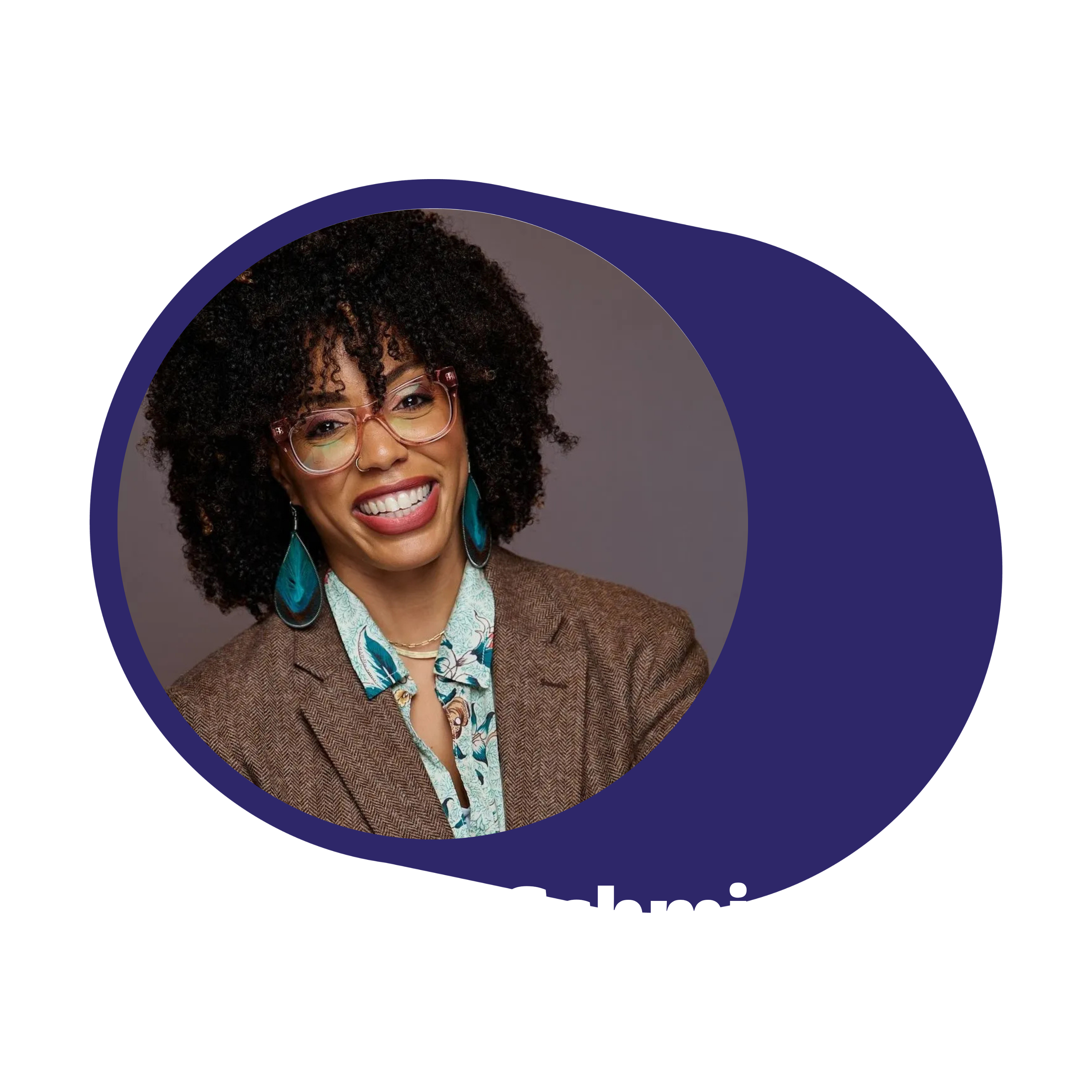
My guest is KeyAnna Schmiedl. She's the Chief Human Experience Officer at Workhuman — not the CHRO, and she'll tell you exactly why that distinction in her title matters. Workhuman is a global employee recognition platform, and KeyAnna leads everything that touches people there.
In this conversation, we talk about how Workhuman is approaching AI internally, why they started by asking employees what problems they actually needed solved, and how peer-to-peer recognition data is turning out to be one of the most honest real-time signals an organization has about culture, strategy execution, and future leadership. We also get into what it means to make work more human today.
Let's get into it.
KeyAnna, welcome to the podcast.
KeyAnna Schmiedl:
Thank you so much for having me.
Steve Smith:
We're excited to have you here. So I want to dive in by starting with your title, Chief Human Experience Officer at WorkHuman. We don't see many Chief Human Experience Officers. You want to talk about that title?
KeyAnna Schmiedl:
Well, I think it means I'm involved in more conversations and, more importantly, my team is embedded in parts of the business and the activities of the business more than is typically thought of in the traditional model. I think it helps that, you know, here at WorkHuman, we make and sell people software, right? HR software, human experience software, talent team software, whatever you want to call it.
And for us it means that when I came in, I said we should be customer zero for all facets of our platform, but we should also be prospect zero, right? We have the team of practitioners right here that are the same people that we try to partner with externally and bring on as clients.
So let's be part of the product and development conversation. Let's make this idea of, you know, innovate and improve just part of how this team works and how this team partners with the business.
Steve Smith:
I think that's a great way to approach the work. I think that everything you were just talking about very much sounds like a product leader. You know, it's a very product sensibility. It seems like you bring very much a product development mindset to HR, with a lot of, like, fast feedback loops.
Iteration, looking for themes, focusing on communication. Where did that come from? I mean, is that something that you've picked up in tech companies? Is that what is it about that has become embedded in your work, and then what are some other ways that it comes into practice?
KeyAnna Schmiedl:
So listen, I would love to say, oh yes, it's the tech companies that gave me this. No, I had it before then. Probably to the chagrin of my middle school teachers. I had it back then, and it's this idea that I came to learn through, you know, university studies, systems thinking. It's saying like there are a myriad of ways to look at this, and so what's the best way to look at this through this prism to see most clearly and get to the root cause of what's going on, as opposed to getting trapped in treating symptoms.
Right? So I would tell you, part of it is growing up in a mostly white environment. My grandmother moved our family before I was born out into the suburbs in a town in Massachusetts where they were the second Black family, and I grew up, and it was, you know, a few more Black, a few more Puerto Rican kids, but still very much a white town.
And so for me, I very quickly, early on, realized that me being different inherently made some folks comfortable when it came time to, like, you know, stop teaching history and pivot to Black History Month for the February of it all and then get back to the rest of history. Me being in the room made teachers and students feel like they couldn't maybe answer as honestly as they would want to, or breeze over parts that they think that I would care about. And it was interesting to realize that that's the impact that you have in just being different. And I think it just meant then, okay, well you are uncomfortable, but you being uncomfortable makes me uncomfortable because I haven't done anything.
So can we have a conversation about why that is and understand each other better? And whether or not that makes us friends at the end of the day, it at least means that we have a basis of respecting each other and understanding where each other are coming from. And I kind of took that, and sort of, my college and learning career grew around that.
I worked full-time in hospitals, in pharmacies. Originally thought I wanted to be a nurse, and then, you know, worked for a very long time in higher education at Harvard Medical School and then at Harvard proper, the Graduate School of Arts and Sciences. And I would tell you that the through line in my career has been asking those questions.
I asked enough questions as the receptionist at the front desk of the dean's school that then they created a dean's briefing coordinator role for me. And it's because people were disarmed by my questions, because they were underestimating me, which meant the question that everybody else has in the room, but they think they would be deemed stupid if they asked it out loud, I get to ask it because people are not assuming that I know in the first place. And so that meant I got access to information easier than folks who were way more tenured than I was. It also meant that I wasn't afraid to build relationships with faculty, students, and people in the administration, which just then made me better at my job.
And so in some ways I've learned that it's a bit of a superpower. You can plop me into a room and I'm gonna have a great conversation with the people that are there and who want to engage, but at the same time, it's then saying, huh, here's what I'm taking from this. Here's how I'm bringing this back to my team. Here's what I think we should start thinking about and how it could change our approaches. And here's what I want them to kind of chew on and then bring it back to me and say, do we think this works? And so I think it's both the questioning, but also having a collaborator's heart at the center of everything.
Steve Smith:
Well, I love the fact that you kind of want to get to talking about the elephant in the room, because I think that especially right now in the industry, it's really important, because the elephant in the room is AI. And I think that HR has had yet another thing dumped in their lap. A few years ago it was COVID, figure that out. Now it's AI, figure that out.
And it's really kind of funny how, you know, when you think about this somewhat patronizing conversation around, you know, HR needs to earn its seat at the table, it's just like, well then how come every time there is a major shift in the business environment, it gets dumped in HR's lap, you know? How are y'all handling AI at WorkHuman? Because I think that there's some, from what I've heard, I've heard some really interesting things that point to you're doing it in a very different and very correct way to approach it. So how's that going so far?
KeyAnna Schmiedl:
Man, we could spend an entire podcast series around the why is it that HR is supposed to be proving its seat at the table again. But I think a couple of things. One, I think there are still longstanding, very traditional organizations and mindsets within some organizations that remember when HR was personnel. They remember when it was, how many people do we have here? How much do they cost us? What are they going to cost us tomorrow? And how do we make sure that that cost stays in line with the growth trajectory of the business, right?
And then we said, no, we want to measure some other things. And we got into turnover and measuring hours, and then we got into, well, what about employee sentiment? And so we're going to ask them the same set of questions over and over, and we're going to then say, alright, here's what we're going to do about it. But by the time we implement anything, we're asking you the next set of surveys, and so on. And it kind of has just grown from there.
And I think that, honestly, HR and people in the people space have gotten much more sophisticated than anyone realizes on the whole, but are only able to rise to the level of the sophistication that the business will allow them to be at. And so when we're talking about AI, it's because everybody knows you can't just say embed AI and then all of a sudden the thing is happening. You embed things through the people, be it new technologies, processes, whatever, it's through the people that work at the organization.
And so, yes, a lot of people will say we're dumping AI onto HR and they need to figure it out. Or, you know, a tech leader will take on the AI, but then they know that they have to be partnering with HR to make these things work. And I think for us here, one, I can't walk down the hall without bumping into somebody who has an idea around how we could do the people stuff better, right? Everybody here to some extent thinks that they are a people or a talent expert, and in a way that's wonderful, and in a way it's a little bit exhausting, but that's okay, because everybody is well intentioned.
But what it means is that there's an expectation that we will be part of the conversation, and that if a conversation starts without us, we will very quickly be added to it and find out about it and make our way in there. And I think what's nice is that as my tenure has grown here, the pulling us in is less and less. And starting with us is more and more, and it's seen more as a joy rather than a chore.
Right. So when we started the AI hackathons, that was the CTO and myself, along with product and everybody else that you would think of, right, when we launched the AI Council. That was me looking at him and saying, probably gotta do a thing. And he was like, yep. Here's what my team has started to think about. And I said, here's what my team has started to think about. Let's bring in comms, let's bring in marketing, let's bring in the other minds that we'll need to solution for this.
I think where it works really well is that the approach that I have is, let's start with trusting the people until they prove we can't trust them anymore. And let's start with asking them questions about how they are already using AI in their day-to-day and how they would like to be using it at work, right? Because that operates under the assumption we know you're doing this, you can submit this anonymously if you want to, but we want to understand the tools that you feel work really well for you, and that if you had them here, would allow you to take off and get out of the tasks and into more of the work that you want to be doing.
And we got real, true, honest feedback about that, and that informed a number of the tools that we have decided to invest in, and people know that. They know that because they shared this with us. That's why we have an OpenAI ChatGPT instance, right? That's why, for product and engineering and technology, we have Claude Code instances. It's why we've invested in adaptive learning platforms. It's because we said, we're hearing this is how you would like to use it, and these are the tools that you feel like are the easiest ones for you to acclimate to.
Let's start there. Let's see how that goes. And then let's see if we need to make any tweaks along the way. And so in that way, it starts with collaborating with your people. And it also starts with just being thoughtful about what that you want to get out of this, as opposed to starting from the careful position of here's all of the things that it can't be used for. Then you have people then asking you, well then what can it be used for? And then people get exasperated because they're like, well, all the rest of this stuff, right?
Let's start by deciding, defining this stuff that people can use this for. And then back into the, oh, alright, well, here's where we would put up lane markers and just check with us if you're gonna change the lane. And here's where, for our customers, you can absolutely not go beyond these borders. And as we're kind of getting more acclimated, let's then identify the right use cases to support. And the ones where we say, let's have a conversation about that, because there may be some considerations here that we're not thinking about. Let's make sure there are more people involved in that from different areas of our business so that we land in a decent space that is not over-engineering this process.
Steve Smith:
You know, everything that you're talking about, I think that HR always gets the bad rap of, like, everything in HR is "thou shalt not." And the way that you're approaching it is no, let's explore possibilities. Let's open the floor to the entire company to get involved in this conversation.
And I think that, you know, the hackathon story is a really great one, because it's just like the best ideas came out of HR, out of customer, out of finance, and not necessarily engineering. What does that tell you?
KeyAnna Schmiedl:
I think what it tells you is a lot of people are drastically underestimating the savviness of, whether you want to call them the GA functions or the back office functions or whatever it is, but the savviness of the non-tech aligned folks in their business, right? You expect innovation to come out of tech, but why wouldn't you expect innovation to come out everywhere else in your business.
And what's interesting is, especially as we think about some of the product enhancements and places that we've gone with our external offering, some of that has been informed by conversations that we're having internally, right? This idea of Topics, it was an idea for us that we had sort of batted around at the executive level and in product and in technology. But honestly, the last hackathon that we did, or, well, the most recent all-company, that one that we did, I should say, it came up as, why aren't we using recognition to identify the work that's being done that is aligned to the strategic initiatives.
And that's literally what Topics is, right. It's the real-time pulse of who's working on what in the company and what of that aligns to what you said your key goals as an organization are. And if you're not seeing the sensors light up on a certain strategic initiative, well then you need to go back and figure out why that is the case. Right, who has not been empowered correctly, who doesn't have access to the resources or the tools, or who doesn't feel the psychological safety to speak up about why something isn't working and needs to be unblocked there.
And so it's really helped both my own team as well as the broader business to feel empowered about, we have some, if not autonomy, certainly authorship in what the future of work looks like, and why wouldn't we want to try to codify that in the space that we lead, but also in the spaces where we want to collaborate with other organizations.
Steve Smith:
You know, the great thing about that is when it, it seems like one of the problems that when you're reading about AI and the obstacles that it's running into in the business environment is going beyond, oh, the board says we need AI, so let's adopt AI, and we don't really know the business problem we're solving by really getting it into the hands of the people where the rubber meets the road in the business. It seems like you're not starting with, we're just gonna throw some AI at it. You're starting with, okay, what are the business problems we're actually wanting to solve and address?
KeyAnna Schmiedl:
Yeah.
Steve Smith:
That's, I mean, that's the way it should be.
KeyAnna Schmiedl:
Yes. And I agree, right? I don't, I think what makes me nervous is where people say, like, that sounds novel or different, and I'm like, no, it shouldn't. Like, why wouldn't you start with what problem are you trying to solve? We do that everywhere else. Right. And I think what's been amazing is that we have not told people you need to be an expert in this.
We started with, what do you know about AI? Like, free verse, whatever you want, write it down. What do you know about it? What do you think about it? How do you feel about it? If you're using any tools right now, what are those, in an anonymous survey? And then what we got back informed our learning and enablement strategy, right? Because we went, oh, I think there's some confusion between what should just be straight-up automation that honestly is probably tech debt that we needed to have solved for a long time ago, and then what is truly like AI solutions that we want to invest in.
But I'm not telling you to solve for that. I'm saying let us then put our AI experts and our technologists against this and say, what is the best solve for this problem? I want my people identifying problems, right? People across the entire business. And if you have an idea about how that can be solved, great, write that in too. And then let us supply you with the people with the expertise and the tools.
Now that we've kind of gone along that journey, and people have more of a consistent baseline understanding and a slightly more advanced understanding, we've then said, okay, for the folks who had raised their hand and just said, I have a general interest in this last year, we want to take you, AI ambassadors, and we actually want to get you more into bootcamp style understanding, so that you can help to bridge that gap between, my part of this department or this team is trying to solve this problem, what are the best solutions here, right?
So scaling the one to many, and as we've done that, we partnered with a university in Dublin. We had a five-day, like, nine-to-five bootcamp where once folks turn in their final projects, they'll have a certification in this work. But then also they are now better partners to the AI engineers and to the technologists, to then be able to say, I think this is this size, scope, challenge for us to solve. I think these are the right solutions for us to be looking at. This is the department budget for this, or there is no department budget for this. I think it will require this many number of hours, and if we could get it done by this time, then here's what that means to the business, right?
And so that's not me dictating that that's how this should work. It's naturally how it evolved because we had the people involved at the start. It's also what allowed us to say, look, we could go nuts and hire, you know, a million AI engineers and try to retain all of them in this race that everybody is at to getting all of this talent. Or we can say, let's have a reasonable amount of those folks here that makes sense for our business, and let's identify, out of all of the challenges that we said we want to solve with AI, let's have them then cut it down to, okay, these are the top fifty, here's the first two that we're going to work on.
Because they are the meatiest, and we think they're going to take the longest, and the rest of these will actually take less time. But these proof cases, here for us it's in customer service and it's in customer excellence. If we do all of those things, it actually, it's likely going to have a knock-on effect to the next twenty-five projects on the list. So let's start there. And that's what we said we're doing from a company-wide investment. We're starting in those two areas to say, let's really solve these more gnarly challenges that we think get us more scale and support, that we think allow us to have an additional headcount prevention conversation, as opposed to just, you know, oh, you're bringing in AI so you should be shedding X number of bodies, right?
Like, we don't want that to be the main part of the conversation. It's what problems are you trying to solve, and how are we doing right by our folks that are here first, before we think about new folks that we're necessarily bringing in.
Steve Smith:
You know, you brought up something that is sort of, if we're gonna be talking about elephants in the room, is the way that some companies are approaching AI is a cost-cutting play. And I think that what we're starting to see kind of broadly across the workplace today is a lot of existential dread on the part of employees when it comes to AI, is like, oh, am I gonna have a job in five years? Am I training AI to replace me?
How are you handling that internally at WorkHuman? I mean, just, obviously you're a culture-building company. You have to be very thoughtful about it. You work with some of the largest brands in the world to help them build cultures. How are you approaching this kind of gnarly problem?
KeyAnna Schmiedl:
Honesty, transparency, authenticity, and humility. Look, those are my personal core values. I think they align quite well with our values here at WorkHuman, but it's having honest conversations about what we know and what we don't know, and updating that information as frequently as possible. And also asking the questions of the people to say, what is it that you're looking to know right now?
We also, you know what, we're a little bit cheeky, we're a little bit fun. We had a campaign last year around, like, the AI hype, right? And so we have our own sort of, I don't want to call them advertisements, because that's too kind of grandiose and maybe a little bit gross, but, like, you know, these little mini marketing angles inside of our own building, where it was like, AI is going to take your job to the next level. Let's talk about how you can invest in this upskilling and what you're looking to do.
Our team is leading, just like any other people organization, a conversation around, you know, what are, what are skills, how does that align to the external market, to align up jobs. And it's really just for us to then be able to say, okay, and then these skills in this alignment mean this is the role, which has these types of tasks associated with it. And so here are the tasks that AI should take on. That then means the role primarily for the human is this. And maybe now there's some new interesting combinations of roles, right?
On my own team, as we've evolved, it's been a, well, hey, now that we have internal communications back on the team, right, for the last year and a half, where it was in marketing before, these parts of the people spectrum that can kind of sit in different organizations, and when they sit in HX, it was like, well, but this is also a person who knows a lot about DEI and CSR, and so let's partner them with our sustainability person, and that's their portfolio. Well, now let's look at workplace experience and actually how it could be the broader working experience, and now you've got a broader culture portfolio, but with really critical pieces as a part of that.
That wasn't a job that existed, did you know, X number of years ago. It's a job that's based on the skill set that that person has, and also how we think about bringing these core critical pieces together to support the broader work that we're trying to do, and give folks more exposure to opportunities, to conversations, to sharing their lens on the work.
And then I think, you know, as we sort of, about the conversation about resourcing these things, you don't just throw AI at a problem and then say they're cost savings, right? You hear from companies all the time that are like, we thought that our spend on tokens would be $20,000 a month, but it's actually $200,000 a month. Because once you set up these three agents, that one is writing the code, the other one is checking the code, and then the third one is connecting all the dots, and then the first one rewrites the code again, well, they're generating their own tokens. Nobody was thinking about that. So there is overhead in the AI itself.
So until we actually sit down and truly think about what is the core differential for any business at the end of the day, and our CEO, my boss Eric, says this all the time, at the end of the day, every business is going to have access to the same tools. The things that are really going to differentiate these businesses, especially you, to your competitor, is going to be your people. How creative your people are, how sustained and fulfilled your people feel, what they are interested in driving in your business that then drives your business forward, and where are those opportunities for them. So there is no way that you get away from having a people conversation when you're talking about AI. And if you try to, you're just circling a nonsense discussion.
Steve Smith:
And it's great to hear all of that, because it seems like the people part of the conversation is getting lost in the how are we going to implement the technology. And, you know, I guess another thing that you were talking about earlier, it sounds like the core of your business, recognition, is front and center with the way that you're approaching AI.
So, you know, I know that WorkHuman has a new product, Topics, that turns recognition messages into real-time insights on whether a company's strategy is actually landing with employees. How is that actually working in practice, and is that part of, are you actually kind of using that as you're implementing AI in your own organization?
KeyAnna Schmiedl:
Absolutely. So I'm gonna give you maybe two examples here. One touches on the broader point, and one actually drills down to values and behaviors. So for the first point, we have, you know, our company-wide strategic initiatives, like any other organization does, and my team is tagged to a couple of them.
But the one that you would probably not be surprised by is, you know, AI and transformation and all of these great things. And so for me it was, okay, great, so my head of global learning and enablement and performance is co-leading that effort with the head of technology, right? And so me and the CTO are the exec sponsors for this work, but we said you all are closest to this in the, in the whole how does this need to get done, and the what, you're the two best people to have this conversation and to guide the organization.
And so that you also have the person who leads our internal recognition efforts, so being able to set up Topics to say, these are the strategic initiatives, let's see how recognition is aligning to them in these moments. And then, looking at the data and seeing actually those initiatives where things are flagged yellow, not that we're necessarily seeing, I mean, we're seeing a slightly less recognition for those moments, but what we're seeing in the natural language process would tell you it's really tough here, and we need to figure out what it is.
Right, it's the great job trying to disentangle this, you know, ball of wires that we thought was going to be an easy solve, and so now we realize we actually need to take a step back and do some more due diligence here, right? People getting recognized for things like that, that then tells me, okay, well what was, why wasn't it an easy solve when they're taking a step back? What does that mean? It means that then at the company-wide level, we're adjusting due dates for things, but then we're also saying, hey, what support do you need from the executive team, from senior leaders across the business? Or is it just more general people power, access to tools, other resources to be able to solve for this?
And so it lets us as a senior exec team know where we need to pivot our energy and support and focus, as opposed to saying we're spread thin across all of these things. For the things that are going green, there are lots of recognition moments, but you're seeing that there's more recognition around the progress and the benchmarks than there is for the toil and the work, that tells you this is moving along as I would expect.
And so, as a leader, and as somebody who then within my own area, right, has our own, you know, strategic initiative areas that we're looking into, it helps me to focus my energy in those places where my support is definitely needed, or could help cut the halftime of a conversation or a series of efforts by a certain percentage. And so that then makes me feel like I'm more on top of, I understand what's going on, and I'm in the right places at the right times.
The second thing that I'll give you, I said around values and behaviors, is that as we've gone along, and as, you know, AI and transformation in this idea of, like, I want to throw out the conversation around change management. There is not change management anymore. Like, change management went out the window in COVID. We were not trying to change-manage anything. We were just trying to get everybody adaptable and resilient enough to stick with it. Right? Change is coming too frequently, too often to say you have to put a change management process to this.
There are some pieces and tools from change management that are wonderful, but we also need to stop having conversations with our people like, okay, now that change is done. Because then you're just starting up another one right after that anyways. And so I actually really like what the chief people officer of Klaviyo has to say around this. She says, you know, I want changeable people, which actually just reads as changeable, who understand, like, the only constant is this idea of change.
And so we've updated, not the values, but the descriptors around the behaviors, to help people identify what do we mean when we say this now. Is there additional context that we need to consider? And for us, as part of the Topics conversation, right, is during our all-company meetings, we are having conversations and panels that are fueled by recognition moments to tell the story of where does our value of innovation show up, where does our value of respect for customers show up, who are the people that are getting recognized for these things, and not just the people that you constantly hear about that are those very visible leaders, but the people who are everyday people who are doing this work and telling their stories in our business, because we are still about the people connection.
And it's not just, wow, we achieved this goal. It's, here's who's helped us to achieve and make these accomplishments, and that's what I think is really important, and that's what Topics allows us to do, both in terms of the tool itself, but then the tool powering better conversations, better alignment to work and priorities.
Steve Smith:
What does making work more human mean in 2026? You know, after everything that's gone on with AI, and is going on with AI, after the return-to-office fights, after all of just the noise that we've been dealing with in the 2020s workplace, what, in your perspective, does it mean to make work more human?
KeyAnna Schmiedl:
I think it means finally putting to bed conversations about, can we treat our humans like adults. I have kids, and my oldest is gonna turn twelve this year, and my youngest is gonna turn eight. And I will tell you that I let go of this concept of what it means to be a parent and started to really feel like, I don't know if I'm doing this right, but I feel good about what I'm doing, when I was able to tell them, hey, I just, you know, I was working from home one day, and they came home from school and they were asking me questions, and I was like, guys, can you just go figure that out? And they did.
But then I came out and I said to them, I'm really sorry I snapped at you. I was not having a good day today. I had some hard conversations at work and I was really frustrated about that, but I took it out on you, and I'm sorry. This wasn't about you, and I want to be better for you, but that I think means maybe give me five minutes between when you come in the house to when you come ask me for something, so that I can make sure that I can turn around and just be mom, and not mom who just came out of work. And they were able to get that.
And then my youngest was like, the other day I had a bad day because, said this to me and, and then all of a sudden you're in a conversation about your kids' day and their feelings, which, you know, half the time I'm like, how was school? Good. Yeah. What was a great thing that happened today? Nothing. What was something that was not so great that happened today? Nothing. What kind of day was it? A day. Okay, cool.
So, like, those are the conversations that I want to have. And I think, you know, we've been having conversations kind of around the people almost like they're children, and we're saying, well, we can't let them do this, and we don't want them to be scared, so let's strategize how we have this conversation with them. And sure, people as a group, as like a body, a collection of human beings, can have its own sort of momentum and energy, but individual human beings are reasonable.
And so if you start from the mindset of prioritizing best intentions, and you have that across the board, to their managers, managers to their leaders, and so on, as well as on the way down, then what you get to do is prioritize the impact. What is the impact this had on you? You know that this wasn't my intention. Okay, that's great. But now let's talk about, well, if it made you feel this way, then I didn't nail it. So I need that feedback.
So I think human in 2026 is truly open, honest, and transparent dialogue with your people across the business, to say, what I owe you is to bring you in on what I know right now and trust that you can handle that until you show me that you can't. For your people to be able to say, and I will trust you once enough time has elapsed from what you said to what's actually happening, to know that that is consistent and it's true.
Steve Smith:
It's a strong last word. I really appreciate you sharing that with us. KeyAnna Schmiedl, thank you so much for joining us today. It's been a great conversation.
KeyAnna Schmiedl:
Thank you, and likewise.
Steve Smith:
Most organizations have more cultural intelligence than they realize. The problem is where they're looking for it. Surveys tell you what people were willing to say on a Tuesday afternoon when HR asked. Recognition data tells you what people actually noticed, valued, and thought was worth calling out — voluntarily, in the moment, without being prompted.
What KeyAnna is describing is using that signal at scale. You can see which initiatives are gaining real traction and where things are quietly stalling before they show up anywhere official. You can identify future leaders based on how their peers talk about them, not how their manager rated them at year end. The data is honest because nobody was told to produce it.
If you take away only one thing from this conversation, it should be her point about trust. Workplaces everywhere are seeing trust tanking. If you are worried about that, you can start by telling your people what you know and updating them when things change. Then give them enough time to see if the message matches their reality.
If you enjoyed this episode, make sure to subscribe to Work Tech Weekly on Apple Podcasts, Spotify, or YouTube. And I'll see you next time.