Jenn Harrold:
A supporting culture isn't about removing the pressure. It's really about making sure that the support is in place for you to perform at your highest level possible. No one wants to just get up every day and go to work and work for eight or 10 or more hours and then hit repeat the next day. We want to know whose life am I impacting, or what am I doing for myself from a development standpoint? We all have our different questions that we're asking, but ultimately we want to make a difference.
Steve Smith:
Hey everyone, welcome back to another episode of Work Tech Weekly. I'm Steve Smith, Managing Director of Growth at Rep Cap.
Most companies hiring at volume are chasing experienced talent. They want people who already know the job. NewDay USA does the opposite — they hire almost no one with a mortgage background, and they've built one of the more deliberate talent development models I've come across to make that work.
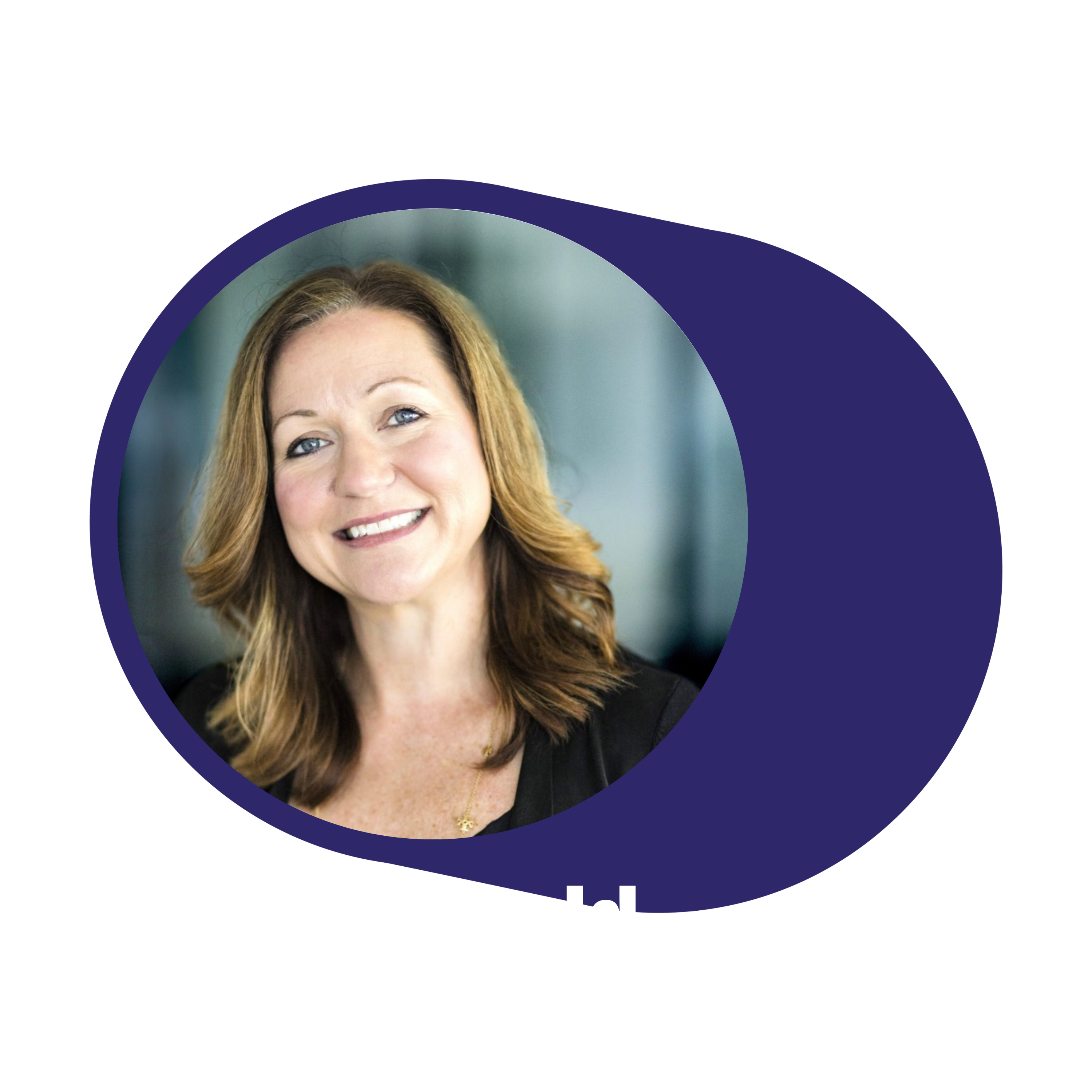
My guest is Jenn Harrold, SVP of Human Resources at NewDay USA. NewDay is a mortgage banking company serving exclusively veterans, service members, and their families. Jenn came up through recruiting, not the C-suite, and she has built this culture from the inside out.
In this conversation, we talk about why NewDay bets on coachability over credentials, how they recruit and shadow candidates before they even start, and what a monthly feedback cadence actually looks like in practice across a high-performance, commission-driven environment. We get into their data that shows 60% of new hires that stay for 2 years achieve home ownership, how they doubled their intern program in a year and then did it again, and what it means to balance high expectations with a genuinely supportive culture in an industry that isn't known for either.
The question underneath all of it is whether a model this specific to one company's mission can actually travel. That's worth listening for.
Let's get into it.
Jenn Harrold, welcome to the podcast. Great to have you here.
Jenn Harrold:
Thank you so much, Steve. Looking forward to it.
Steve Smith:
Well, well, why don't we start by just kind of talking a little bit about your role, you're SVP of Human Resources at NewDay USA. Tell us about your organization.
Jenn Harrold:
Sure. Happy to. So NewDay USA is an organization that's been around for more than 20 years, and I think that a lot of individuals in mainstream and civilian day-to-day lives may not be as familiar with our organization, but our veterans usually are. So we are an organization that serves exclusively veterans and service members and their families.
We provide home ownership and a path to home ownership and financial services specifically through mortgage banking. So helping individuals. So helping individuals finding homes, purchasing homes, and also on the refinance side. And ultimately, our goal is to put millions of veterans in a home over the next 15 to 20 years.
Steve Smith:
Wow. That is a fantastic goal. And I know that, I mean, from my own kind of personal experience, it's just like my father was a veteran, and you know, federal programs helped him and mortgage programs helped him buy every house he ever bought, including the last house he ever bought during his lifetime, which was when he was in his late sixties.
So it's just like, it's really great to find out about your organization and how it really does change people's lives. And I know we're gonna have a chance to talk a little bit more about that as we go on, but I wanted a chance to kind of start with you and kind of like your career journey.
So you started off as a recruiter. How do you think that being a recruiter kind of shaped the way that you approach HR and the people function?
Jenn Harrold:
Sure. So, you know, starting as a recruiter, it gave me an opportunity to get really close to decisions that hiring leaders and managers were making, not only around talent, but around the business. I was able to see what talent worked within the organization as we grow and develop, that talent who stays in the organization or internally, as I assisted in identifying talent internally through internal recruitment. And ultimately, saying yes to a lot of opportunities led me down the path to the career that I've shaped over the last 20 plus years. But I would say that on the recruiting side, it continues to give you a chance to really look at what shapes an organization, especially organizations that are in growth mode, or even when they're not growing.
As I experienced in my time through ODP, we had periods of reinvention and trying to figure out how to keep up with the demanding changes within the external environment. And oftentimes we were re-recruiting talent internally to take on different roles. So that recruitment role and experience I started with 20 plus years ago has really stayed with me to even the current role that I'm in today.
Steve Smith:
Well, you know, something that's interesting that I learned about NewDay is that there you're pretty deliberate in hiring people that do not have a mortgage background.
And so that kinda runs against the way that a lot of companies hire, which is like, we want people who have experience in what we do.
What was the idea behind that, and as, you know, an experienced people leader, how did you get comfortable with that and become convinced that, no, this actually makes sense.
Jenn Harrold:
Yeah. So I think there's a couple of layers to that, Steve. And on its surface, number one, the mortgage industry is highly regulated. That's very well known,
and it is very difficult to undo years of experience or process, or even, quite frankly, mistake. And so one of the things that NewDay got right many years ago is shifting to the very large investment that it took to hire and train individuals with zero experience and teach them not only our methods and our process, but also teach them the regulations and ensure that with compliance, we're able to follow all of those regulations and still be able to help veterans, especially that VA loan.
It is very difficult for the realtors as well to be able to work through that process. And so we do want to make sure that we are training individuals our way. But I think, you know, stepping back from NewDay specifically and in our environment, something that I've experienced and have observed over the years, and it absolutely rings true here, a lot of times companies and hiring leaders specifically over index on trained, ready-made talent. It does take an upfront investment and a lot of financial investment and time to train people up. But if you are able to, as an organization, create a path with clear career goals and opportunities for growth and development, and coach and train along the way for the skills that are needed, then just focus on the soft skills that you can't always train for.
Things like coachability and communication, that is our focus here. So we do absolutely double down during our interview process on a few of those skills. And we just make sure that if we can hire competitive talent, individuals that are able to interpret information, communicate effectively, then we know we can train 'em on the rest.
Steve Smith:
Well, I mean, and it sounds like you're going after a pretty competitive set of candidates, you know, it's just like if you're looking at, you know, essentially like quality of candidate, it seems like you're probably, you know, like, you know, you're in Florida, a lot of competitive universities there. What makes a 22-year-old college student that has options decide, oh, I don't have any background in mortgages.
I'm gonna go do this. What is the thing that is essentially your hook as an employer to get them to say, yeah, I do want to do this. Is it just the training, or is there more to it than that?
Jenn Harrold:
I think it's a couple of things. So we have our corporate headquarters in South Florida, in West Palm Beach. We also have a branch that is very active, and that we do a lot of hiring straight out of college in Maryland just outside of Baltimore. And I think that the recruiting story of a clear path. So knowing that if I work hard, I will get rewarded, and there's opportunities for earning potential for the chance to develop. And whether I choose to stay at NewDay and continue my career at NewDay, or take those skills and go somewhere else, we do create the opportunity and show them the opportunity once they come on board that they can go far.
They can go just as far as they'll allow us to take them. But I think the hook, the attractiveness, is throughout our entire process from the first interview all the way through to their onsite time with us. We do, we are very transparent. We do show them how hard work is rewarded, but we are very clear that it takes hard work. And then I think going back to the clear path, we absolutely, do create opportunities during the interview process for a candidate to see what it could look like for them six months or 12 months in. The way we do that is we incorporate a one hour, usually 60 to 90 minute shadowing opportunity. And so our candidates are side by side with an individual that's in their rookie period, meaning they're on the floor as an account executive, a licensed loan officer, and they're usually in their first three to six months, many of them just around the corner from their first promotion, or maybe as in this last week having received their first promotion. And we tell those candidates, you ask any and every question, really lay it all out on the line, and make sure that you know what the opportunity could look like for you. And I think the other hook for us is that, many of the students that we go after, many of the graduates that come to NewDay or choose to come to NewDay, they do have opportunities, but the differentiator is that they have earning potential right out of the gate with NewDay. And also they see that clear path, and they're able to communicate with individuals who can demonstrate, I've been there, I was in your shoes. And we do start that early, so well before the interview process. They see that in their, in our intern program, about 50% of our hires come directly from our intern program, and so we start that conversation very early, starting in junior and in senior years with the potential grads.
Steve Smith:
Well, it's, I mean, what's interesting is what you have there is what if you surveyed young people and asked them what they wanted in an employer. It's just like, I want to go somewhere where it's just like, obviously I can make money, but is there gonna be training? Is there growth potential? Is there mentoring?
It's just like you have a lot of things that, quite honestly, a lot of employers struggle to build. How much of this infrastructure was in place when you came into the organization, and how much of it was you had to point 'em in the right direction and really get 'em to fulfill all of this potential and really do the things that it takes to become an employer of choice.
Jenn Harrold:
Yeah, the foundation was here at NewDay when I came on board about two years ago. I would say a lot of strong compliance and institutional knowledge. What I would probably describe is more of an administrative function, and what was needed when I came into the organization and what we've been able to accomplish over the last couple of years, I would say primarily two things. One, scale, being able to take the existing programs, organize around them and ensure that we can scale them quickly. Two years ago, we hired just under 200 people. Last year, we increased that by 50%. This year, the goal is to increase that even more, and we're only able to do that by making sure that our systems and our processes work like clockwork and everyone knows what to expect and that we can move with speed.
And so a lot of that was really creating the opportunity for us to scale quickly and ensure that we weren't going to, or ensure that we were putting different measures in place so that we could find the breaks. We can't prevent the breaks. We don't always know the unknowns, but we can certainly identify what are the things we need to measure? What are the meetings that we need to have to ensure that we're all reviewing and looking at the feedback? And when we see something cracking, we don't wait for it to break. We make an adjustment and then we move forward. The perfect example is our intern program, in 2024 was just over a hundred people. And on the very last day, our CEO came in and told us what a wonderful job we did, and then said, I'm going to give you a year to double it. Essentially what he was asking us to do is double the program. In 2025, and we more than doubled the program,
and saw, and we actually increased the conversion rate.
So we saw a lot of success. We made a lot of changes in the delivery of the program, but at its core, the elements remained the same. And so I would say that, you know what? Hiring at volume, onboarding at scale, and onboarding at volume, and then making sure that we're being intentional about our decisions and intentional about how we are going to look for opportunities to improve or to get back on track is what my role was in the process and in bringing these programs forward or in scaling what it is that we needed to accomplish.
Steve Smith:
So, you know, one stat that I saw that really jumped out at me that I really was interested to dive into with you is, you know, 60% of employees at NewDay achieve home ownership within two years. So like at an average age of like 26 and a half, that's something that is just remarkable, especially in this day and age.
Is that something that's a deliberate outcome of the business model, or is that just, you know, a happy accident that is a part of just the way things worked out?
Jenn Harrold:
Yeah. Steve, that's a really great question, and I wish that, you know, our leadership or NewDay or any one of us could take credit for that. I think that there's a correlation for sure. Can we measure it? And is it exact and precise and consistent across each person, each time? I don't really think so.
We've looked at this data a number of different ways, and ultimately what we find time and time again is for individuals who are with us for two or more years, once they reach that point, then 60% of them are homeowners or they're in the process of purchasing their first home. And it just happens that the average age is that 26 to 28 age range. And I think it's a couple of things. One, whether they are a loan officer or on the operations side and participating in our underwriting development program, they are learning so much about the home ownership process, and they are able to ask questions that are very educated and look at the process differently than even in your average 30 or 40-year-old first time home buyer who really doesn't understand the process. So I think that there's certainly something to be said about the skillset that they're learning and how they're applying it individually for themselves. I think what NewDay is contributing in addition to the training is giving them opportunity for that earned and income potential. We offer a base rate with uncapped commissions,
and that's both on the sales side and the operations side for our employees. We truly believe in a spirit of generosity, and if you're going to work hard, then you're going to get rewarded really well. So I can tell you that everyone from our grads who join us to those that have been here for a long time are bringing much experience to the table.
There's a, we embrace the work hard, play hard mentality. There's very much a spirit here of if you work hard, and many times that can mean first one in last one out when you're getting started, then you'll create opportunities for yourself that, you know, many of your friends around you just aren't quite there yet.
In addition to home ownership for our employees at NewDay, we oftentimes see many of them purchasing new cars or paying off student debt, reaching personal financial goals well before they expected to, and that's something that they should be proud of.
Steve Smith:
You know, one of the, kind of the topics in industry conversation is around Gen Z. And as with any new young generation in the workforce, it's it sometimes is not flattering. It's just like, oh, there these young people, they come in, they don't have the soft skills that are needed and or this, that, or the other.
What's your take on that sort of perspective, and what's been your experience working with a younger workforce?
Jenn Harrold:
Yeah. I might be a little biased, and maybe it just hits too close to home. So I have, my son is a senior in college and he's exploring his career options, and so I do bounce things off of him and many of his peers often. I've spent a lot of time talking to our employees as well, and there's one thing that I find in common. Probably does have a lot to do with the profile that we recruit. I do find that they're very coachable, so we do need to, as leaders, we do need to shape them, provide feedback. Gen Z looks for feedback. In fact, if you don't give it to them, they're going to ask,
and you better be ready because you can't just give them a generalized answer.
They look for clarity. They look for specific feedback. And ultimately, I find our population to be very coachable. And I think ultimately, as leaders, if we're leading them and not just managing the outcomes or the KPIs that we need and pausing to give them the feedback that they deserve. And we match up programs to help, you know, leaders to be able to do that on the day-to-day basis.
So leaders get regular reporting on performance. We do pause monthly, so we don't believe in an annual performance review cycle. We do a monthly cycle. So it's more of a hands-on ongoing approach. And that's not just on the sales side, that's across the board with operations as well. I think you have to make sure that you're putting the right systems and process in place to enable leaders to meet the Gen Z population where they're at.
But I ultimately, I find them to be very coachable. You just have to know what you're working with and what to expect, and then build in them the confidence early on so that they can continue to rise to the occasion.
Steve Smith:
And feedback in and of itself, that's giving good feedback is a skill.
And learning to receive feedback is a skill. What do you do in the organization to make sure that number one, managers are having productive conversations, giving good feedback? Are you know, are there enablement tools or data that you're making sure that they have?
And then what, if anything, are you doing to coach young people on, okay, you want feedback? We're gonna give you feedback, but here's what that looks like in practice, and here's what's your end of the bargain again.
Jenn Harrold:
Yeah. Yeah. So on the leader side, I mentioned we meet monthly. So, myself or a member of my team meets with all of our key leaders, and we have an HR analyst that supports us with all of the data that we pause and look at monthly. And leaders have data available on a daily ongoing basis.
And so they can certainly pause and have conversations. They don't need to wait for me. But we do pause monthly, and we look at all of the data at a point in time in terms of what were we expecting, what are the expectations for these individuals in this group? How is their cohort or how are their peers performing? And are there any other external factors that prevented performance from being where we expect it to be? And I use these monthly check-ins with the leaders as little micro coaching opportunities on what leadership development, feedback, coaching, whatever the topic might need to be, but on what they need to hear in the moment. Because every leader is sort of in a, on a different place along the continuum in terms of how well they are doing at giving feedback. And ultimately metrics are very easy to talk about. I was expecting 10 and we landed at seven, and here's the gap. And yes, that is factual. We need context and we need coaching.
We need, whether it be a QC call or let's look at the metrics behind this data and this story. So my questions to them are often very involved around what are we doing to make sure that they're getting the feedback they need to improve, and what are the expectations in the next report or performance period?
And how do we set that up for this individual? So the conversations are very different. If it's someone in our Jumpstart program, which essentially means they're new to the organization, they're still in the associate level program and training program, those conversations, we often refer to them as an arm around conversation.
You need to put your arm around them. You need to coach 'em up a little bit. Be very positive. Make sure we're firm in our expectations, but be very positive in your delivery. And don't wait a month before you check in with them again.
You know, we always are learning, all of us, and so there's a lot of different methods or tools and tricks that I would offer to them and behind it, or our guests kind of wrapped around.
It is a process that's shared by our HR team and our analytics team around making sure the follow through is happening. So making sure that the actions, the conversations are taking place, and then making sure any documentation that might be necessary in communication with that individual is also documented, but it's the frequency I think that really makes a difference.
You can't wait another month or two to check in and expect a different result if the coaching wasn't happening throughout. And then you asked about employees receiving the feedback. I think here at NewDay you figure it out really fast in your first six months that you're always going to be getting feedback in real time and very specific feedback at least once or twice a month.
But incorporate even into our training curriculum, and in our methodologies we will pull QC calls, and so we'll pull a call with a veteran. The leader will listen to it, they'll coach the individual one-on-one, or they'll praise and call out what went really well in that call. Then we use those calls as examples in team settings. And we talk about it as a team. And so there's always coaching going on. It's very open, very transparent, and the more comfortable that we all get with that, I think the better it serves all of us. And certainly we have to address it one-on-one from time to time with individuals who may be a little resistant to the training and the feedback.
But ultimately, I think what we find is if it's very uncomfortable for them, they realize that part's not going away
Steve Smith:
All right.
Jenn Harrold:
As an individual. They're not going to change the methodology that we've seen has worked for us at scale. So sometimes they may opt out and choose to move on. So we took them as far as we could for as long as we could, and they may have chosen to move on, but for the most part, within about six months, our employees see that environment helps them learn from peers and from leaders.
Steve Smith:
It's interesting 'cause you're talking very much about, I mean, you're obviously a very high performance culture, and it's something that any growing organization has to be very intentional about, the performance part.
But then there's also the support part, and to, you know, the put your arm around people, that really, you know, not forgetting that there is a human in the equation and making sure that they get the support that they need.
That sometimes those can really be at odds, and there can be some tension there that, how do you make sure that you're able to diffuse that tension and that, hey, we want to have standards, we want to have accountability. We have to have performance as an organization, but we want to be able to support all of these people in our organization to make sure that the process is transparent and fair.
What are the things that you actually put into practice to make sure that happens?
Jenn Harrold:
Yeah, that's a really great question. I think the high performance culture and having those expectations of high performance can be viewed as having conflict or tension when then being a supporting culture is in the same environment. For us, I guess we view them as being interdependent in order for us to have those high expectations and want to deliver results as an organization. We also know that the structure that's in place requires us to have leaders who are being developed and who are demonstrating that support and that coaching to our new hires. And then all throughout the career journey that someone spends with NewDay. So as an example, the leader environment, the structure that we create is a little twofold.
One, we want to give increasing levels of responsibility. But we know there's a big jump from individual contributor to manager or leader of a team. So we have team leads where you might be responsible for two or three, then you go to captain, and you're responsible for maybe two smaller teams. And so that structure that we create does two things.
One, it creates the career path for individuals to move from early career and individual contributor to a leader at the division level, which might mean 40 or 50 people. But it also creates the opportunity for the coaching and the support to be in place. One leader cannot be everywhere at the same time, and certainly can't spend the right amount of time equitably with everyone as they need it to grow and develop. So we have that structure in place for just for that reason. So any team lead or coach or captain may have responsibility for very specific areas of a team's performance. All of that working together then to ensure the outcomes that we need as a business. Because, you know, at the end of the day, while we do have a very noble purpose, we are also a business, and we do need to make sure that we are producing the results expected from our leadership and from our board.
Steve Smith:
Well, and I mean, and then there, I guess there's the added element of you're in a highly regulated industry, it's commission driven, which is gonna make it more competitive. It's high pressure. How do you, I mean, that's not necessarily the habitat of putting together the kind of culture model that you're describing.
How do you make it work with those constraints? You know, take an environment where people, you know, you wouldn't look at it at first blush and say, oh, that's going to be a highly supportive culture for people. How do you make that work?
Jenn Harrold:
Yeah. You know, I guess at NewDay, and even before I joined NewDay, I have this same, I guess, philosophy. You know, a supporting culture isn't about removing the pressure. It's really about making sure that the support is in place for you to perform at your highest level possible. We don't try to, you know, make it look pretty
and we don't try to cover it up. We are very transparent about what we know you can do to perform at your highest level. And then it's everything that we have working in place together to provide that support along the way. And I think I'll go back to the fun. No one wants to, it doesn't matter if you're in your twenties or if you're in your forties or even older than that. No one wants to just get up every day and go to work and work for eight or 10 or more hours and then hit repeat the next day. We want to know whose life am I impacting, or what am I doing for myself from a development standpoint? We all have our different questions that we're asking, but ultimately we want to make a difference.
We want to make an impact. And we want to know that the hours and the hard work we're putting in are rewarded, and we wanna have fun along the way. And at NewDay, it, any given moment you could just never know what to expect. We do a lot of celebrating. And then we also have a lot of fun.
A recent example, you know, we, the screen that you might see behind me here, we wave the American flag all day every day, but it also is a screen we can use to display games or different things happening. So you have March Madness that wrapped up a few weeks ago, and it's nothing for us to pop out a note to all of our employees and let them know, stick around after work tonight.
We'll have happy hour. The game will be on the TV. So just creating that community of fun and connection and creating the moments for our teams to connect outside of work. And it brings the human aspect that we all have. And I think that those moments go a long way, and that's not the kind of fun everyone wants to have.
So there's a variety that we have to make sure is in place, but you really just have to make sure that, you know, don't compromise your standards. Don't compromise your expectations. As an organization, you can have high expectations, so don't remove the pressure, but you have to relieve the valve every once in a while and let people let loose and have a little fun.
And also make sure that you are recognizing. And here at NewDay, that's public recognition for awards, achievements, promotions. And those are the ones that get all the headlines here and that we hear about, several times a year. But even the small wins as a team, which we'll often send around in messages or in emails. So everything big and small, that's not just on the professional side, but even on the personal side, we also highlight personal milestones that people are reaching, such as buying a, their first home, or growing their family, getting married. They opt in for those things, but if they opt in, then we celebrate those as well.
Steve Smith:
It wouldn't be 2026 if we didn't talk about AI. And certainly AI is reshaping the workplace faster than any of us would care to think about on some days. But, you know, it seems like, you know, HR and HR leadership has almost by default found themselves in a key role of implementing AI in the organization, what's, how is it impacting your organization?
What's the kind of role that you're seeing HR take on, and kind of what's that doing to the future of your workplace?
Jenn Harrold:
Sure. So when the conversation or topic of AI comes up, the first two things that come to mind are all about capability and capacity. And those are the same two words that we talked about in talent assessments and workforce planning, even, you know, 10, 20 years ago. And so when we're incorporating AI into that discussion, then it's all about what are we doing to enhance our capabilities?
What are we doing to speed up our ability to deliver and increase our capacity as a team? And that could show up in a number of ways, but ultimately, we, there are many roles where AI can enhance our ability to interpret information more quickly. But we still need to know what questions to ask, or what are the data points that we should be measuring to ensure that we are delivering the right outcomes at speed, being able to communicate effectively.
You know, ultimately these are all things that are still going to need to be in place, and in any role, certainly portions of that role, or as we've seen in the market, even an entire function or role could be replaced with AI. But I think there are numerous opportunities where effective communication, having dialogue, understanding context, agency of decision making, and ultimately outcomes of certain bodies of work still are going to need that human interaction.
But here at NewDay, when we think about AI, our focus is really around increasing our capacity. How can we deliver certain bodies of work at speed? And we've done that over the last many years in complementing our work with our NewDay India operation. And so we do have some portions of our business that operate 24/7. But ultimately we know that in order to grow at scale and to do so quickly, there are certain elements where AI plays a role. Then one of those would be even in the way that we provide feedback. So coaching is often given to leaders, and that's given from an AI model that we use to listen to the calls and pull out what's working, what's not working, what meets compliance, what are the opportunities that we could provide our individuals some coaching on so that they can improve what they're doing next time. So there's definitely, you know, rather than having someone listen to, which we still have to do that too, we still have humans listening to calls as well. But there are a number of different ways in which we can enhance our capabilities at speed and at the scale that we need to do so in using AI.
Steve Smith:
You know, there's also, and maybe it's even more pronounced with Gen Z and younger workers, there's a lot of AI anxiety right now. There's a lot of worry about, okay, so I'm on a career path. Will this still exist in 10 or 15 years, or is this all gonna be automated? You know, and obviously we're sort of all in the middle of it.
Like, we don't know. Nobody really knows what's going to happen, I'm kind of curious, how are you, as a people leader, approaching this because it sounds like your organization really works hard to be transparent and communicate clearly, and some of that is telling employees, here's what we know, here's what we don't know.
How are you striking the right balance in and knowing that this is a theme that's going on with your workforce?
Jenn Harrold:
Sure. You know, I think the questions that I hear most often, or the conversation and the dialogue at least that we hear most often is really around the Gen Z population in particular, around their ability to adapt so quickly to tools and technology. I'm quickly finding myself in the position that I viewed my parents in many years ago.
If something changes on my phone, I need my son or my daughter to explain to me how I incorporate that change. Most of them go pretty well, but sometimes there's a change that I just am not quite getting. And I think that, you know, the Gen Z population, they adapt so quickly. So even if we make a change in one of our internal systems, a CRM, they seem to adapt very quickly to those changes. And you know, so far the dialogue or the questions of what will happen to my role in 10 plus years just hasn't quite reached the surface. At least not one that say a constant thought or stream of thought. Anyhow, that said, we do often get questions in some of our leadership talks when we bring leaders in.
You'll always have a question along that line, especially from newer hires, where they want to know the perspective of leaders. And what I can say about at least our industry and about NewDay is that it will be very difficult for, you know, most of the components of the work to be fully led by AI or technology.
I mean, it's highly regulated. There are a lot of compliance laws and rules that are in place, and there's a lot of decision making that must happen that can't always really necessarily be made on a decision tree, which is what you need in those, whether it be a large language model or some other form of AI decision making and automation. When it comes down to it, the human factor of purchasing a home, underwriting the home, closing on the home, there are so many components involved that we can enhance. I think over time with technology and with AI, and we've seen those enhancements over the decades, but ultimately as we look to the future, I think the tools will evolve.
But I don't see anything, at least in, maybe in my lifetime or the immediate future where AI is gonna fully take over a full component of the process. And I'm not a technology expert, so I could be entirely wrong there, but I find it very hard. And even in the conversations that we've had to see something like that happen in our industry, I think there are many other kinds of roles or skillset that can become overcome by, or I'm sorry, there are many skill sets that I think we're going to see AI take over. I even look back to, again, 20 years ago as recruiters, we had to read the resume. We had to look for the keywords. We had to go through an entire pile, if you will. And then you see products come to market where you're starting to automate that process and read through the resumes and be able to prioritize against those certain keywords.
And so there are elements of a process, but to imagine an AI technology interviewing a candidate and shortlisting a set of candidates, and then guiding them through the hiring process with a hiring leader, I hope I don't see that in my lifetime. It's such an art in my opinion. There's a lot of science to it, but I think there are a lot of roles where so many components are more art than science.
Steve Smith:
This has been a fantastic conversation. Thank you so much for sharing, you know, your background, your experience, but also, you know, how you've gone about building a great culture at NewDay. What do you know now that you wish you had known at the start of your career about building culture?
What do you feel like if you were going to impart a final word of wisdom to listeners about that aspect of HR, and about people leadership, what would that thing be?
Jenn Harrold:
You know what I certainly didn't realize early on in my recruiting days, and even in my early leadership days over certain functions within HR, is how much people pay attention to what you say, what you don't say, what you do, what you don't do. Especially your team, they really do observe everything, and those decisions in terms of thought and actions and words, really do need to be as intentional as you can make them. And, you know, ultimately then all of that creates for you that microculture that you want to see on your team, which links back to the organization. And so just realizing the power that sits with that at such a young age, I had no clue. And even now in my current role and current capacity, I constantly am reminding myself at how much in, for myself and for our leaders, it's important to remind us that they're always watching and they're looking for reassurance. They're looking for us to give them a confidence boost, and or they're, they're just looking to see what we're going to do next, and they're learning by looking at all of that. And so I think that's, you know, the one main takeaway, and it's something I'm always continuing to learn from today is how important what you say and don't say is, and then I'll add a second one, even though you asked for one.
The second one is how important as a leader it is to just show up as an individual first. And sometimes that means revealing more about yourself and your personal life, and at NewDay especially, it's very important for us to get to know people, their families, their hopes and dreams, what gets them going in the morning.
And that's incorporated into our touch base time, our one-on-one time with individuals. And we really do value that here. And I wish that I had started doing that on a more regular basis. Earlier on in my career, I always felt like I needed to keep the two separate. And still today, you know, just try to remind myself that it's about humbling yourself, and your team really does want to get to know you on a personal level.
And you don't have to be friends, but you absolutely do have to be friendly, and that's part of it. So I think that's important.
Steve Smith:
Well, those are wise words and a great way to round out the conversation. Jenn Harrold, thank you so much for joining us. It's been a delight.
Jenn Harrold:
Steve, thank you so much. It was great to speak with you this afternoon.
OUTRO
High performance and a supportive culture get talked about like you have to choose one over the other. Jenn's view is that they're interdependent. Trying to separate them is where a lot of organizations get it wrong.
A lot of that comes down to frequency. The monthly data reviews, the regular one-on-ones, the recorded call reviews where leaders coach in real time — it all adds up to a cadence that makes the culture real rather than aspirational. You cannot wait a month or two to check in and expect a different result if the coaching was not happening in between.
And the microculture question applies well beyond NewDay. Your team is always watching what you say, what you do not say, what you do and do not do. Those moments accumulate into a culture whether you are being intentional about them or not. Most leaders figure that out later than they would have liked.
If you enjoyed this episode, make sure to subscribe to Work Tech Weekly on Apple Podcasts, Spotify, or YouTube. And I'll see you next time.