Jason Bodin: Steve, guess, on average, how many decisions do you think a person makes per day?
Steve Smith: About 8,000.
Jason Bodin: I'm gonna go with thirty-five thousand. You're talking about all the little decisions that you're making throughout an entire day — the shoes, the toothbrush, what order I'm doing things in. There are things that we don't even know that we're making decisions on. And so if technology can peel these off, think about the bandwidth that allows within the organization for all of the employees. That's what we're really moving towards — eliminating all of those decisions so that the workforce can be more productive.
Steve Smith:
Hey everyone, welcome back to another episode of Work Tech Weekly. I'm Steve Smith, Managing Director of Growth at Rep Cap.
We talk a lot in this industry about AI saving time. But there's a quieter problem that doesn't get as much attention. Managers are drowning in small decisions — approvals, requests, exceptions, judgment calls that never should have needed a human in the first place. And that friction is slowly eroding the bandwidth people need to actually lead.
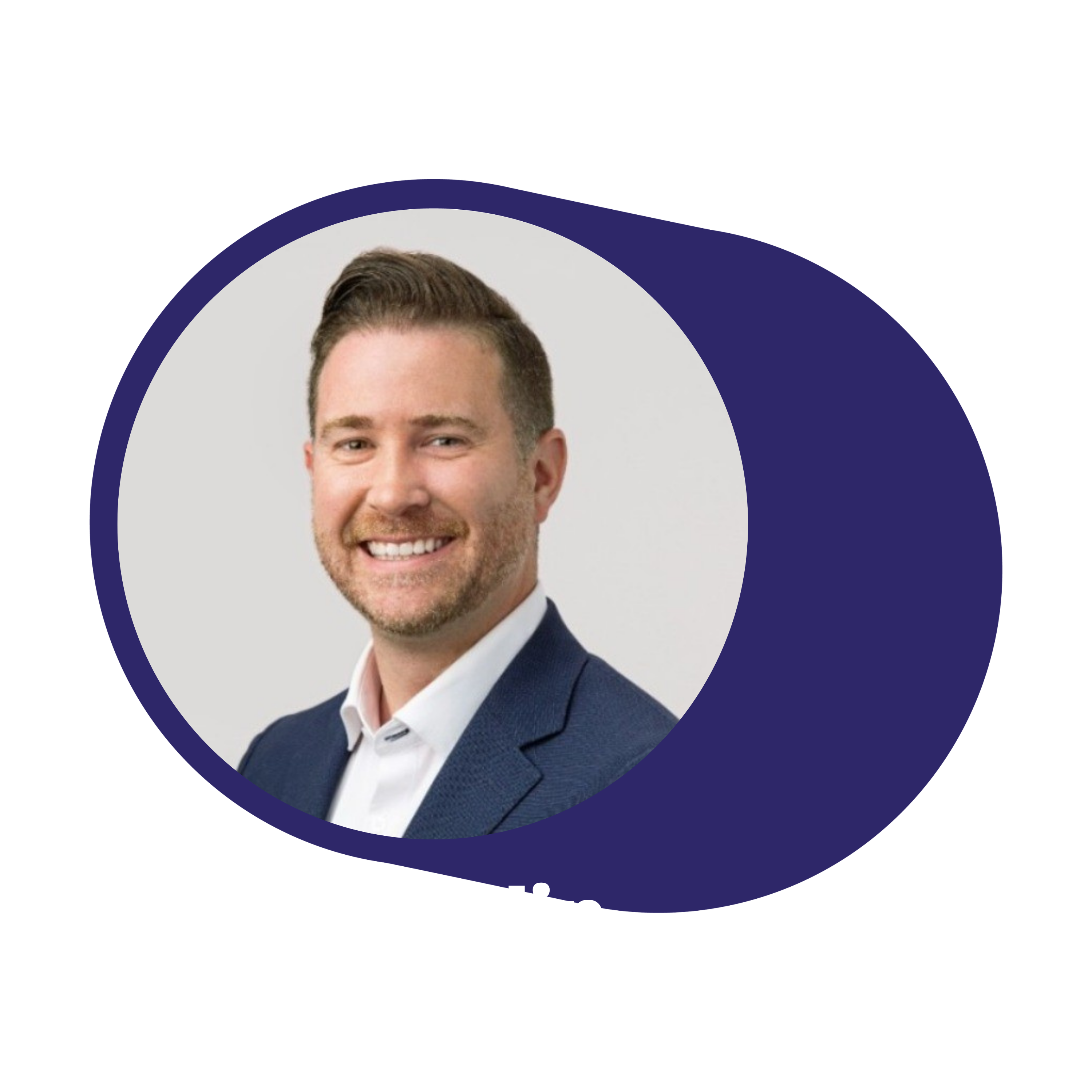
My guest is Jason Bodin, EVP of Marketing and Communications at Paycom. Paycom is a single-database HR and payroll technology platform built to streamline workforce management.
Jason spent over 13 years building Paycom's brand from a regional unknown into a global name in HR tech. He came up through sports journalism and PR, and that background gives him a sharp lens on how organizations tell their story and hold a position when the market is moving fast around them.
In this conversation, we talk about decision fatigue as an organizational performance problem. We talk about what automation is actually supposed to do for managers, why a single database matters more in an agentic AI world, and how Paycom has stayed true to its brand voice even as competitors try to copy the message.
Let's get into it.
Jason, welcome to the podcast.
Jason Bodin:
Hey, Steve. Thanks for having me. Excited to be here with you.
Steve Smith:
Yeah, great to be here. You know, I wanted to start the conversation with something that you and I have in common. Both came out of the world of sports journalism before we found our way into the world of tech marketing. So tell me a little bit about your journalism career.
Jason Bodin:
Yeah, it's a wild journey, as I know you know. But it parallels perfectly because the work ethic that you gain whenever you're working in sports, when you're having to work all day and then all night and you get done at 2:00 AM, and that's a consistent basis. At the University of Oklahoma, you know, so I was in sports PR for them and did a little bit of marketing, and so I had, like, five sports that I'd be working all at one time. So I'd go from tennis to wrestling to men's basketball to women's basketball to football, and when you're juggling all of those different sports, if you can do that, you can really do anything. The amount of hours that you put in, as you know, for very little pay, it, it creates a work ethic and an ethos that becomes kind of your North Star as you continue on in your career.
And I actually look for people who have sports marketing, sports PR, sports communication backgrounds because I know that they're gonna fit in really well here at Paycom, where we have a very work hard, play hard mentality.
Steve Smith:
Yeah, I had a conversation the other day with a client who is an AI consultant who actually started working in sports at LSU. And we were talk- we were talking about just how there's a lot that comes out of either working in sports or working in sports journalism that really does lay a good groundwork.
I know that, you know, w- I worked at newspapers back in the 1990s when there were still things such as newspapers. But, you know, like when we get into the conversation around workforce analytics, it's like baseball stats are probably the first workforce analytics. So there's a lot of parallels there about how do you quantify performance with data that I think is interesting and incredibly relevant.
Jason Bodin:
Absolutely. Predictive analytics within sports. How you... I was a statistician, so I was the guy sitting next to the people who everybody hears on TVs, giving them the stats, giving them the runs, telling them, you know, you think it's so impressive when these guys know, hey, this is his third game in a row to score 20 points or a double-double or whatever that stat may be, 100 yards rushing, and there's people behind that are constantly looking at that data to be able to tell them that.
And then you shift over into the world of HR and payroll technology, and you have very similar not trends in that regard, but you're looking at data, and you take that mindset and that shift over into the world that is HR and payroll, and it's a really good transition. And especially in marketing, right?
We've got to be very data-driven. We've got to look at trends. We've got to create trends. And so again, I think that there's great parallel between sports marketing and PR and then into the corporate world.
Steve Smith:
Well, you know, you joined Paycom in 2012, and it was a very different company at that point. It's had an incredible rise, and you've been a big part of building an incredibly successful brand. Tell me, what was it like then? And you know, what was the brand voice then versus kind of where it's been able to evolve now?
Jason Bodin:
Well, we were really fortunate, I was fortunate that I got hired on by a lady named Kathy Odenhall, who's a great mentor and a really amazing PR and marketing professional who's worked at a number of different tech companies. And at the time, there was five of us, you know, at Paycom, and nobody really, even in our home state, knew about Paycom, what they were about, that there was this giant tech company that was in the midst of oil and gas and really thriving at that time.
And being able to take a brand like Paycom's and make it into the global brand that it is today has been obviously that I hang my hat on. But it's not just about me, it's about the people that have been here alongside me, above me, below me. Iron sharpens iron in everything that you do. You know, I firmly believe that.
You wanna surround yourself with people who are better than you. I learned that early on in my career from people like Kathy and others who have been mentors. When you do that, and you don't take pride like the ego, and then you take that away, have pride in the work and you have pride in what other people produce, then you can create some really amazing things.
And so we went from being really an unknown brand back in twenty twelve to being the brand here locally, regionally, and on a national scale and beginning to be on a global scale.
Steve Smith:
Well, you know, one of the things I know we wanna talk about today is decision fatigue, and there's, I think, a lot to talk about there. But one of the things I wanna kinda tee up first before we have that conversation is, like, and I've run into this a lot too, is, you know, I wanna talk about, you know, whether either when I'm working with my clients or I'm having conversations here, I wanna talk about the trends that I'm seeing going on in the industry.
But sometimes you get people give you side eye when you're just the marketing guy. Like, "Oh, what do you really know?" How do... You know, when someone tries to pigeonhole you as just the marketing guy, even though you have all of this experience, like, dealing with all of the key issues in our industry, how do you deal with that?
Jason Bodin:
Yeah, I think that's a great question. And if you see marketing people who are really excelling at their job, you're seeing them act as a chief of staff in many instances. And so I'm very close with our CEO, with our president. I am in communication with them on a daily basis. You know how the operations is working.
You're in line with the COO and how everything is flowing. I mean, my CSO and I text probably 10 times a day. We have multiple phone calls. We're checking in. How is sales going? How's pipeline? How are we building it? How can we help you guys to close? And so when you have all that information and you have good connections across the organization, you don't really get that stigma because you're looked at and viewed at as the leader. And for our group here at Paycom, we have built that type of reputation. Reputation is everything, right? We talked about that as the brand, that top of funnel. Top of funnel is reputation you are viewed within the marketplace across what's now 1,000 different review sites, and new ones popping up every single day, and listicles galore. If you are in control, well, you can't ever be truly in control of those things, but if you're managing them you're looking at them and you're accountable, then the same thing flows over into the business. And when you can bring the business insights based on what you've seen from trends, I'll give you an example.
Back in the day, I don't know if you're familiar with the Affordable Care Act, but that
Steve Smith:
I have heard of it.
Jason Bodin:
was kind of a big deal and, you know, I got the privilege of reading all 2,000-plus pages of that legislation, and we became the thought leaders in the Affordable Care Act from an organizational perspective.
We were hosting webinars, we were creating white papers, we were doing slicks before anybody else, creating decision trees, being a thought leader in that area, in compliance, which is hitting HR and organizations so hard, that makes you become, "Oh, I can go to them and I can trust them," because trusted brands are brands that everybody wants to align with. And when you build that trust externally, you build that trust internally, and that creates an ecosystem that you really can't compete with. You are leading in that area. And I pride myself on leading, not only internally, but within the industry.
Steve Smith:
Well, you know, let's talk about decision fatigue because it really is having kind of a moment as a concept. You know, it's showing up everywhere from leadership coaching to product marketing. When did Paycom start to kind of tune into this as a narrative that they wanted to talk about?
Jason Bodin:
Well, I think it goes really back to our founding, honestly. When our founder and CEO, Chad Richardson, came up with Paycom back in nineteen ninety-eight, we were the first ones on the internet. Back then, banks weren't really even on the internet. And so whenever he'd have to go in and sell people on not only switching their payroll provider, but doing it over the internet, it was a challenge.
But you create that, and you see how that has led to less decisions based on the automation that is within the system. So you've automated it to go online. We've automated the ecosystem from having that single database. And why that's important is because if you look at AI today, it is only as good as the data that you have. It is powerful whenever you look at a system like Paycom. So employee self-service is another one. Being able to track and ensure that your employees are utilizing the tool, which was never done before. That is a decisioning, right? Policies, procedures that go into that. And so whenever we came out with Gone, which is our PTO tool, you look at that and you think, me as a manager, I have approved so many time offs. I have denied so many time offs. I think back to whenever I worked at the University of Oklahoma, and we'd literally write it down on a piece of paper and submit that and hope. I don't know if I'll get it back, if I'll hear back. I have to ping them. I'm emailing them. I'm texting them. Well, within Paycom, we've taken the policies that go into that, and I as a manager don't have to think about it.
The employee doesn't have to think about it. You've submitted it, and based on the policies of the organization, you're either going to hear about whether or not you've been denied or approved or whether it's been warehoused because maybe I'm putting in for Christmas already and, you know, it's just the middle of the year. The decisioning that you put in, we put into the system is really helping to evolve the workplace from all positions, whether it be the C-suite, the manager, or the employee. Steve, guess, on average, how many decisions do you think a person makes per day?
Steve Smith:
About 8,000.
Jason Bodin:
I'm gonna go with thirty-five thousand.
Steve Smith:
Wow.
Jason Bodin:
You're talking about all the little decisions that you're making throughout an entire day, the shoes, the toothbrush, what order I'm doing things in. There are things that we don't even know that we're making decisions on, and so decision fatigue becomes very real for me as a leader back whenever I was an individual contributor or wherever you're at within the organization.
And so if technology can peel these off, then think about the bandwidth that allows within the organization for all of the employees. And so that's what we're really moving towards organizationally, software-wise, structure-wise, is eliminating all of those decisions so that the workforce can be more productive.
Steve Smith:
Well, and I think what's interesting right now is you know, software and technology can be part of the solution, but it's also part of the problem with AI. You're seeing... I mean, I'm sure you're seeing this at the product level. It's just like product cycles that used to be 12, 18, 24 months are three months now, and I think that, you know, employees, managers, individual contributors are seeing it in the workplace where it's just like, "Great, I can do so much more thanks to AI, but because of it, I'm expected to do more, and I'm expected to do it faster."
How do, how, you know, are people supposed to balance this and think about, you know, and I guess what's the risk of, you know, as a technology company, you wanna be on the side of the employee and you want them to see value in you, but, you know, isn't there also a risk that they may look at it and say, "Oh, this...
They're as much part of the problem as they are the solution"? How do you avoid that?
Jason Bodin:
That's a great point. And you know, you go back to twenty eighteen, twenty nineteen, right before COVID hit, we had the digital transformation, right? Mm-hmm.
All of this tech was everywhere, and everybody was just going out and buying whatever tech they thought was gonna help them to automate or give a better employee experience, and that really convoluted what the employee experience was like. On average, employers have over six different HR and payroll technologies. Think about that. Six different ones, okay? If you can bring that down into one single ecosystem where the UX, the UI is seamless across everything, your data flows, that's a different experience, and that's what we've really gone in and done.
And in fact, ninety-one percent of HR professionals say that they want a single database. So when you look at that ecosystem, sure, the tech becomes a challenge whenever you've got so many different pieces that you have to keep up with, manage different logins. Well, with Paycom, we've eliminated all of that, and so I think that you have a different feel amongst Paycom users than you do elsewhere. Nobody wants to go backwards in technology, Steve. You know that, right? Once you've had an iPhone, well, you're not gonna go back to a flip phone. That I can buy all my airline tickets on my phone in an app, I'm not gonna go back to going up to the desk and buying them. And so we're seeing this evolution, the digital transformation, which has turned into kind of a nightmare for employees and for organizations too as they're trying to track the ROI. Consolidating that down creates a better employee experience where there's more trust. It creates a better for HR and the C-suite because there's more trust in that data, and IT as well. So you look at... sure, you're gonna have some rub there, but whenever you're doing things right, and you're changing your policies and your processes, and the change management within an organization is focused on down to that one true solution, I think you see a different employee experience.
Steve Smith:
Well, and I think that, you know, there's always been the dream. I mean, the past 15 or 20 years is like, yeah, we need to get to one database layer. We need an integrated suite of tools, and once we do that, the data can talk to itself. You'll, you can get all of these wonderful benefits. And for a lot of the last, you know, couple of decades, that's been a bit pie in the sky, and it's been a bit aspirational to say the least.
But something feels different this time. It feels like that, you know, because of advances in technology, that it's a lot more, it's a lot more doable. Are you seeing that same possibility this time?
Jason Bodin:
I would say it like this. AI is a multiplier. It's not a miracle. I was out at HumanX, which is the largest AI conference in the world in San Francisco in April. And going to all the different sessions and hearing from thought leaders, and you've got the AWS CEO, you've got the Perplexity, you see how actually ahead of the trend you are from a Paycom perspective and how we're leading that trend. It's four X, right? You're seeing a great multiplier there. But even as you just alluded to, it's only as good as the data. So I mean, Steve, you've probably been on one of the models. You've been on Claude or ChatGPT, and it's going to hallucinate.
It's going to give you things, you're gonna have to double-check it. And I love that it gets you sixty percent of the way, seventy percent of the way there, but you've still gotta go back and review the data. You've still gotta go back and fact-check it. There are... You know, building agents to watch agents is a very real thing. You may have agents that are watching agents that are watching agents to make sure that things are done correctly, and then you're still gonna have to check all of that. So I love that it is a multiplier. I love what it is allowing us to do from a marketing perspective, from a business perspective. But you've still got to have the human in the loop to be able to make sure that all of that information's correct. And going back to the conversation around the single database, that's what's so impactful about it. The APIs, the integrations, the more that you're trying to plug in, the AI model doesn't know where to pull it from. It may pull it from multiple things. It may give you different answers every single time you ask it if you've got all that. With a true system with only one record base, you're gonna get an accurate answer every single time, and that's very unique within the ecosystem, not only within HR and payroll technology, but across the entire business ecosystem.
Steve Smith:
Well, and I mean, I'm glad you brought up the agentic component because, you know, obviously in our, you know, little technology bubble, it's just like we've been talking about AI agents it seems like forever, although I guess it hasn't been that long. But I mean, it seems like we sort of take it as a given that this is the way things are and that everybody is going to want agents, everyone's already using agents.
But when you go to a lot of HR conferences and you actually talk to practitioners, there's a lot of skepticism, and there's a lot of either passive or active resistance there. What are you seeing from your customers and how are you getting them to understand, "No, this isn't scary. This is achievable and actually beneficial"?
Jason Bodin:
Well, and rightfully so, I'd say to all that you just said. You look at organizations and change management first and foremost. So I'll get to answer that question, but I wanna go and look at the human element, right? Humans are resistant to change. That's natural. It's a byproduct of who we are. Change management is real, right? You've probably read the book, Who Moved My Cheese? That's everybody, you know? And as you grow and mature in your career as a human, you begin to evolve into those, and you have to be adaptable to that type of change. But we're an early adopter organization. We are often coming out with industry firsts.
We are a company that is on the bleeding edge of technology and trying to get usage on that. And I've got to be real honest, it's a challenge as a marketer. It's very challenging because people want to use the technology the same way that they've used it for twenty years. And when you're coming out with a new thing like, "Here's how you're going to do payroll now," you're actually going to give visibility to your employees well before you even do payday. And they're going to review it, and they're going to say whether or not it's correct, and they're going to tell you if there are errors in it, so that way when payday comes, boom, they know exactly what's going into their account, which is mind-boggling to me that it took us doing that in the twenty-twenties whenever before that, nobody had visibility into their paycheck before it landed in their bank account, right?
Steve Smith:
Yeah.
Jason Bodin:
Now, I parallel that and I say, "Look at AI." How long have we been talking about it? We've been talking about it for five years. We talked about it, it grew a lot more two years ago whenever these AI leaders and founders began really pumping into the mainstream media the elimination of all of these things to really get the limelight over into the technology and to get investments over there, right? It does add a nice multiplier layer, and the agentic side of things is another change management thing, right? Where even us internally here at Paycom, got an agent, you've got to watch that agent, and you've got to have an agent that watches that agent, right? And the agents can break, and the agents need to evolve.
And it is a process. So an organization without a process, an organization without a plan, an organization without training going into AI or agentic is going to set up to be failed. It is not setting the team up for success. It's not setting the people up for success. And I see, I think we'll begin to see that evolve.
Steve Smith:
Well, let's bring it back to the decision fatigue conversation, you know? And it's just like, you know, automation can, you know, as we mentioned earlier, it can be incredibly beneficial and be a big part of the solution, but there's also this just cognitive load issue. Just like we talk about automation as in terms of time savings, but a lot of times it becomes a speed versus quality issue.
If you've gotta go back and say, "Oh, I know that my agents are going to get me 60% of the way there," you gotta go back and figure out which 60%. You know, it seems like what I've noticed about what Paycom is doing is that you're making a bet that the quality argument is ultimately gonna be more powerful than the speed argument.
What's behind that position?
Jason Bodin:
Well, I think, you know, our founder and our CEO was really into AI early on and he was like, "Man, it's giving me really obscure answers to pretty easy questions that I'm asking it." And you only go to the model if you trust it. If you have a bad experience with it, you're unlikely to go back and continue usage in that.
And so we thought different than everybody else and said, "We've got a true value proposition in this single database. We know our data is accurate. We know where it all comes from. It's a single source of truth, let's point everything into that, and if it can't give you that answer, it's gonna direct you to where in the system that you can go and take that action."
We're not gonna try to give you something that we think that you're gonna want that it creates some type of illusion. We want the true facts in everything that goes through our AI models.
Steve Smith:
Well, and I think that one of the tensions that we're all running into with AI is the more that you automate potentially you start to lose muscle. You know, if you automate too many decisions especially at the manager level, does at some point, you know, removing cognitive load is removing accountability and maybe gets people and managers a little less...
Well, as I said, it makes everyone a little bit lazier. Is that a potential risk? And how do we mitigate that?
Jason Bodin:
Well, I would challenge that. I would say for myself as a leader, I don't want to spend my time on that. I wanna spend my time on things that are moving the business forward, right? Do you want to be a cost center or do you wanna go and produce revenue, right? Which is what every organization wants. My time is better spent producing revenue. My time is better spent on the brand. My time is better spent on those things. And so if the policy already knows these things that I'm supposed to know, that I'm supposed to be training all my employees on, that HR then has to go and answer a thousand questions on, that just helps streamline the organization. I don't think you're taking away any power. I think you're creating accountability on the technology to automate it. I mean, think about this, Steve. How many times as a leader have somebody come to you and said, "Hey, I wanna take off the Friday before Memorial Day or the whatever before the Fourth of July." Well, sure, yeah, I wanna give you that time off, Steve. Well, then I've got five other people that also want that. Oh, no. I gotta have somebody who's working the floor. I gotta have somebody who's answering the phones. I can't give everybody that time off. I don't want people to not like me. So we're taking that off. The manager doesn't become the bad guy. They're not the villain. It becomes the technology that has the process and the policy within it that is decisioning all of these things, and you can build it based on tenure. You can build it based on whatever parameters that your organization wants set up.
So I think it actually empowers leaders because they can have better conversations about the workforce, about their needs, about their KPIs, about the role responsibilities of their people, versus spending time on those unnecessary things. Going back to the unnecessary action here, right? That's kind of why we created it.
Steve Smith:
Well, I think what's interesting is what, you know, we've been talking about even going back to, you know, the early days of SaaS and cloud, it's just like, oh, this is gonna provide you with more efficiency that will free you up to do all of these other things. But it seems like the lived reality in the workplace right now with AI is more along the lines of the reward for doing work faster is you get more work to do, and we expect you to do it faster, which is causing, you know, burnout, fatigue, and just on top of just sort of the general anxiety that I think people are having around is AI gonna take my job?
Making work, in a lot of ways, just it, it doesn't feel like AI is necessarily my friend and doesn't necessarily feel like AI is taking work off of my plate. How, you know, how do you kind of balance that risk of how your end users are looking at AI and, you know, de-risking that from a brand perspective?
Jason Bodin:
It's the evolution of technology, right? I liken it with my marketing team. We can use it, and we can be really good at it and powerful at it, you can not and be left behind. And the world is moving in that direction. Look at the Adobe Suite back in the day, right? Designers thought that their jobs were going away. What has Adobe Design done for them? Enabled them to create magical pieces of art that they would have never been able to create otherwise, and do it in far less time with less resources, and you're gonna see the same thing. We're seeing the same thing in this AI world. Again, I'll go back to, don't believe you're seeing it from the leaders in AI. It's not a hundred x. It's not what some are perceiving it to be or saying that it is. It is a great asset. It is something that is going to propel you forward, and the more that you learn about it, the better that you're going to be prepared to handle it in your current job or in a future job. And I think that you look at the mindset of people, and this is what I would challenge anybody on, is mindset.
We talked about this before we got on the call, and it's like, manifest things into the ethos. Let's manifest things into the world. And you want to have that positive mindset that is tracking with the trends. You know, you can resist it, but it's not gonna do you any service as it's becoming to, as it's being mainstream across the board.
And so I would say, is it going to take jobs? It does automate a lot of jobs. It does make them to where something that may have been a spreadsheet or anything like that, we can get out of that. Well, let's, let's create other positions because they're out there. There are architects, there are ecosystems. People who know how to utilize AI are a dime a dozen right now. And so the more that we can get people trained up, I go back into training and process and communication. The more that we can do that as leaders within organizations, the better off our people are gonna be, whether it's with us or with somebody else. And you have a responsibility to the people to make sure that they are trained in the modern-day technologies. But the same conversation happened back in the dotcom. The same conversations happened multiple other times, and you see humans evolve, you see the workplace evolve, and we're gonna see it evolve.
Steve Smith:
Yeah, and I think it's, like you said, it's gonna happen, you know, whether we want to or not. And I think that I get where you're coming from with the abundance mindset and okay, so, you know, how are you going to take it on yourself to kind of, to create the future that you wanna see, that you wanna live in, that you wanna work in?
But then there's also, you know, I mean, we work in the tech industry. You don't have to, you know, you can pretty much open up your email or your app of choice, and there's another company cutting 10, 20% of the workforce. And there's... And, you know, on the one hand, you know, we work in an industry where people talk about, oh, people are your greatest asset and all of that, but that's not always what people are seeing.
And I think that don't... Are you seeing that with your customers, just dealing with this anxiety and having this conversation with you?
Jason Bodin:
Obviously, we've got clients across every industry of all client sizes, and not only here in the US, but globally as well. And no, we're not seeing that decline that you see in the mainstream media amongst the organizations that make up our client base of over, you know, nearly forty thousand clients.
So I think that you're seeing that in the headlines because that's gonna make headlines. Did you see today or... Excuse me, 'cause I know you're gonna put this in the future. You've seen Meta out there, who obviously has had some layoffs, and they've come out and they've said they've got to do that to pay for the agentic side, the AI investments.
Those investments are very real, so I think that you'll see those, and I think that you'll begin to see it equalize and kinda level out here as we move into the next year. And I think that's good for business and that will be good for people who want to go and learn about this technology and be trendsetters and innovators with what this is doing, not only for them and their profession, but for the businesses as a whole.
Steve Smith:
Okay. Okay. So, you know, when you talk about, and you've written about this, about how AI tools are changing content discoverability. Obviously, this is a topic that's near and dear to my heart, how, you know, blogs and structured metadata matter more than ever. How is that changing how maybe you're handling the decision fatigue story externally?
Jason Bodin:
Well, okay. So that's a great question, and I think you're looking at AEO, AGO, and the world that is marketing, and those companies who had really solid SEO are continuing to see the benefits of that. I'll also say those companies who had really strong messaging, who had really strong brand stories are continuing to stand out in this world. And then us telling that story in the decisioning logic, you're seeing how the LLMs are going to YouTube videos or other videos that have good meta-metadata, and they're helping to expand upon that story. And so we're going out and doing a lot of testimonials. You see review sites that have really high authority having badges, winning accolades. Those are all playing really well in the marketing side as you're continuing to tell that brand story. And so the LLM models are going in and running off of the storylines that you want it to have that are differentiating you from other brands.
Steve Smith:
Well, and I think it's interesting. I'm glad you brought up the, you know, some of the elements of great content, 'cause certainly we see that in our work. And I think you know, and obviously you're not one of these companies, but there's a lot of brands that are underestimating the value of brand voice and brand point of view in creating great content, bringing in customer voice, bringing in customer point of view but also bringing in market demand and market context.
And it's just like having that really full-fledged, rounded out view is something that seems like a lot of companies aren't doing. But, you know, I'm glad that you're talking about that. How are you approaching that specifically in your content, kind of double-clicking down?
How are you working with your content teams to make sure that your content feels like you and not like, you know, any other company that starts with pay?
Jason Bodin:
Yeah. That's a great question, and it's something that, you know, we've battled for a long time because everybody wants to say the same things so they can come up relevant within these search terms, right? Us having a single database, I've seen every single one of our competitors try to say it in some form or fashion, and it doesn't resonate because it's not real.
It's not authentic. So you've gotta tell those authentic stories. You've gotta really anchor in on what are your key pillars for your organization and how are you differentiating amongst them. We could have abandoned single database a long time ago because everybody else said, "No, it's all about APIs and integrations," but that's not what's best for the customer, and we see that time and time again as we're looking at the true ROI, as we're looking at compliance, as we're looking at driving efficiencies and automation. It's only possible because of the roadmap that we have created for ourselves and held true and steady to it. Going back to, you know, nineteen ninety-eight and two thousand and two and the evolution that was building out Paycom, well, sure it would've been easier to go out and partner and integrate to build this suite to make money and make revenue, but the long term, that wasn't what was best for the client. And so for us, from a content perspective, we're continuing to look at these key pillars that have made us so successful, and we're doubling down on those. We're doubling down on the earned media around them. We're talking about the single database. We're talking about the value proposition. We're doing more research content, right? You've got to be able to show these in multiple areas, the case studies, the testimonials, the review sites, and weaving those and connecting the dots amongst all of these different content pieces will create a really good ecosystem that is the future of where marketing is going, right? We're talking about the LLM models and how they are doing deep learning and how they are recommendations, and you've gotta be in that day one recommendation.
You've got to be able to have the content and the authority to be able to stand upon that so that those models will go and pull your content in as a source.
Steve Smith:
Well, let's talk a little bit about you specifically for a second. You've been at Paycom for over 13 years, which in the world of, you know, heads of marketing where the average tenure is about 18 months, puts you in Cal Ripken territory in terms of longevity. What's kept you there and what have, you know...
Not everything's always easy. What have the hard cycles taught you about the work?
Jason Bodin:
Man, being compared to Cal Ripken, I don't know that I've ever gotten such an honor. That's amazing, and I'm nowhere near that. I'll say it's been hard. I mean, it's a grind. If you're working in a place like Paycom and you're continuing to progress in your career, I mean, don't get me wrong, I've progressed and then I've gone backwards even here at Paycom, because you've got to be agile and you've got to evolve.
I'm a huge fan of Ted Lasso and everything that he teaches within that show. It's be curious, not judgmental, right? Walt Whitman, Ted Lasso, however you wanna call it. If you're curious, you have a curious mindset, then you're going to go and do things that other people aren't. I'll go back to whenever I started, we didn't have webinars, we didn't have social media, we didn't have a lot of things that I got the opportunity to create for the brand. You look at webinars, and I knew back then this is special. Webinars are a special piece of the marketing ecosystem and the content that we create because where else do you get an hour of a prospect's time, right? We're SHRM certified. We're HRCI certified. Those certifications mean a lot to this profession, the content that you're producing to help upskill them is also gravely important. So you go back to twenty twelve when we started those, and you look at all of the content that we've created around compliance angles from FLSA and ACA and trends and the research that you're doing, and those things build over time. And about, I don't know, say six years ago, I was actually at SHRM Conference, Society for Human Resource Management, and a competitor came over and was just peppering me with questions how are you guys able to produce all this content?
Where are you guys getting it from? Of course, I'm not going to share the secret sauce, flattering, right? And you see your competitors copying messaging, and you see them copying, trying to emulate your performance or your demand or all of these things, and you know that you're doing things right. We're challenging the status quo in everything that we do. And from a, from my profession, from my perspective, as long as you are continuing to test, I've failed more times than I can even count. But I've gotten back up really quickly, and I've learned from it, and we have adjusted all along the way.
So I've not done everything right. I've failed a lot. We've won a lot. And I think if you have the mindset that you always want to win, you're competitive in nature, but you're also understanding of the process, you're going to be a really good leader. And I've evolved over time. Don't get me wrong. I was not always a great leader because I thought I knew the way. I thought I knew the plan. And once I learned that, wait, if I surround myself with people who are better than me, holy cow, the sky is the limit. And so from creative to demand to PR to events, I surrounded myself with people who challenge me on a daily basis, and I ask for the challenge, right?
I ask for it. I say, "Rip it up. Tell me how we can make it better." Now, do I want everybody to go out there in front of the masses and beat it up in that form? No. Let's do that and have a clear and concise message when we go out to the troops because we are going in a very competitive industry, and we want to win in everything that we do.
I want to win in review sites. I want to win in reputation. I want to win in demand. I want to win in brand. That mindset helps you to have a long career in whatever you're doing. And then again, surrounding yourself with the best. I wouldn't be who I am, where I am without those people.
Steve Smith:
Well, you know, you brought up something that I think is very interesting that comes up a lot in marketing conversations when I, especially when I'm talking to marketing leaders is, we established a differentiated position, but now our competitors are stealing from us, and they're saying the same things.
I have my own kind of perspective on that, but I'm kinda curious, do you look at that at the market and see that and feel that, or do you look at it and see something different?
Jason Bodin:
I don't really look at the noise, you know. I know that if we stay true to where we're at and our messaging, that it resonates, right? And I'll go back, I'll tell you another story. We talked about Beti, which is our payroll engine, and when we launched that, we came out with the tagline, "Now employees do their own payroll." And Steve, you would have thought that we blew up all of the HR and payroll world, right? With that messaging. And we did it in a really good way. But people thought, "I'm not gonna let my employees do their own payroll. They're gonna overpay themselves. They don't know anything about tax law." That's not what we were saying, right?
But we got the conversation started. Now, back then, it was challenging to get people to move over because you have a process and a procedure, and change management's hard because you're not only changing the HR, you're changing the employee. Once they got that visibility, they were like, "Oh my gosh, I have a hundred percent perfect payrolls every single time. I don't have any voids, corrections, reversals. Those things are gone. My employees are happier. They have the visibility into it." Amazing. And actually last year at SHRM, one of my employees was telling me, he got in there early to our booth, was kind of setting everything up, and he, we've got these huge TV monitors that are touch screen, that you can go and play around in our app, and we can show the true value of it. And there was a competitor over there just trying to dig into it, and my employee was like, "Hey, can I help you?" Like, "Yeah, I'm just trying to figure out this Beti thing." He's like, "Oh, well, I don't think you should be here right now, but, you know, what can I help you with?" And he's like, does it work?
'Cause I'm trying to take clients off of Paycom, but we can't figure this out." And, you know, it, you see these stories, and you see the evolution, whereas years ago, challenge. Now we're past that early adopter curve, and people are going, "Oh my gosh, ninety percent efficiency, eighty-five percent time saved." Is truly profound. Whereas, you know this, being in the space, payroll people were staying up overnight to get payrolls done. It wasn't like a, "Oh my gosh, my job, you know, I don't have to do my job anymore." No, they were doing ninety percent more, and now they're able to go, "Oh my gosh, I can do this perfect payroll." And so, yeah, of course, competitors are gonna come in and emulate and that's flattering, honestly. We're gonna continue to stay true to our brand, to our messaging, because we know that is what's best for the end user.
Steve Smith:
And I think that's the correct answer. You don't worry about what everyone else is gonna do or say. Be true to yourself, and that's ultimately the best answer. Jason, thank you so much for joining us today. It's been a great conversation, and look forward to chatting with you more in the future.
Jason Bodin:
I agree, Steve. Thanks for the conversation, and I look forward to listening to future episodes of yours.
Steve Smith:
Thirty-five thousand decisions a day. That's the number Jason put on the table, and most of them are so small we don't even register making them. But they add up. And somewhere in that pile of micro-choices, the judgment calls that actually require a leader are getting buried.
The case Jason makes for automation isn't really about efficiency. It's about protecting the cognitive bandwidth that good leadership requires. When the system handles the policy, the manager stops being the person who has to say no. They get to show up as a leader. The conversation shifts from process to people.
The real question isn't whether automation will take more decisions off your team's plate. It will. The question is whether your people trust the output enough to let it. Because if they don't, the cognitive load doesn't disappear. It just moves somewhere else in the org.
If you enjoyed this episode, make sure to subscribe to Work Tech Weekly on Apple Podcasts, Spotify, or YouTube. And I'll see you next time.