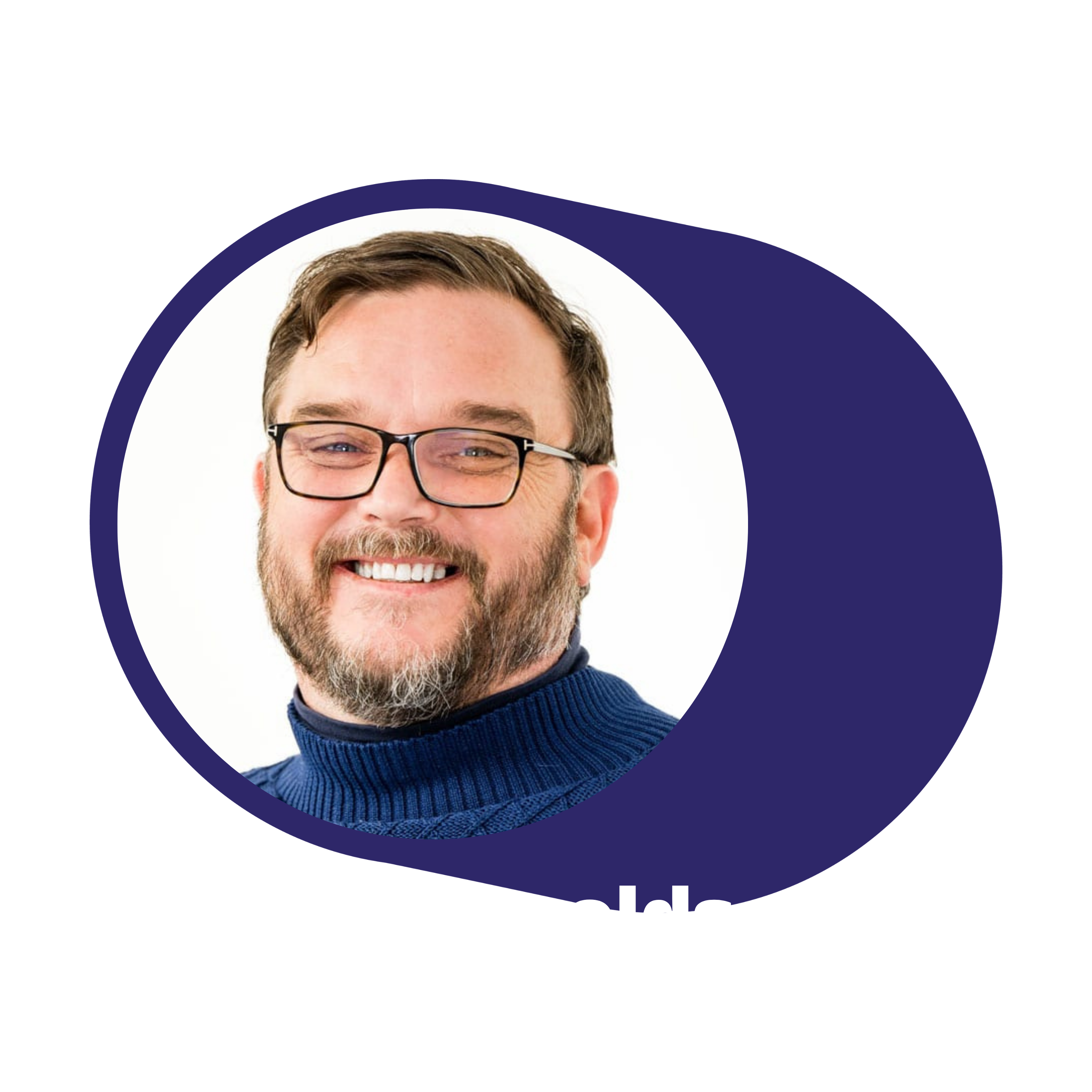
Bjorn Reynolds:
I think AI is a catalyst for change. Change, those that navigate the change the swiftest, with less friction, least friction, in their companies will get an advantage over their competitors. There's no doubt your company will look different, but it won't be eradicated, right? Like there's the zero person company. When there's services involved, will just never happen.
Steve Smith:
Hey everyone, welcome back to another episode of Work Tech Weekly. I'm Steve Smith, Managing Director of Growth at Rep Cap.
Every company right now is chasing the same answer to an AI strategy. Automate the manual work and move faster. Few leaders are asking the harder question underneath that. If the work changes, does the talent pool change with it? And if it does, who's actually built to manage that shift?
My guest today is Bjorn Reynolds, founder and Chief Guardian of Safeguard Global, a global payroll and employer of record platform. Bjorn built one of the earliest global payroll businesses back in 2008, well before EOR was a category anyone had a name for.
In this conversation, we talk about why he thinks AI makes the human capital problem more relevant, not less. We get into a striking stat on how often large language models get employment law wrong, and why that margin of error matters more than it sounds like it should. We also cover Safeguard's decision to sell its payroll division to Deel, and the new tool the company just launched to help companies rethink their entire workforce architecture.
If you're trying to figure out where AI actually fits into your workforce plan, this one's worth your attention.
Let's get into it.
Welcome to the podcast.
Bjorn Reynolds:
Hey, great to be here, Steve. Thanks for having me.
Steve Smith:
Hey, glad, I'm really excited to have you here. You know, there's a lot to talk about, you know, Safeguard Global, you know, is, you know, not, you know, I don't know if we'd call you a pioneer in what became the EOR market, but certainly you were right there at the beginning. You've been doing this for 17 years.
You know, most founders have decided to move on, hit the beach, do something else, or it just got burned out. What keeps all this interesting for you?
Bjorn Reynolds:
You know what? That's a great question, and when I, you know, when I reflect on, look, I think, you know, I'll start with the origin. You know, and I think that's important. You know, when I created the company, you know, I was a young CEO. I was 28 years old. I was running a UK, a small division of a UK payroll company.
And we were growing really fast. Small business, right? Like quicker, faster, better. And you know, I'd been running it for about a year and I was bored and I had an evening of self-reflection, right? I was like, why are you bored? And I was like, look, I want to, if I think about my career, I've always been very focused on where do I want to get to?
And the answer was, look, I want to run a company that's a known brand in whatever industry I'm in. And I'm like, well, that's cool. Okay, now you do payroll today in the UK payroll market. You'll never be that with this company. Because it doesn't have the money to go compete with the big boys, right?
So I then said, well, what could you do with this company? The answer is, do something no one else was doing. So the word pioneer is right at that time, global payroll was in its infancy, right? Ceridian, ADP were pioneering the aggregator model. And so I was like, well, why don't I become a global payroll company?
And you know, I spent the evening writing a business plan. How, what do we need to be at? You know, we connected with a great guy called John Tinsley who had a network of all these vendors. I was like, right, so I've got the vendors, I've got this. Walked in and said, right, we're a global payroll company next day, and away we went.
Safeguard was in that instance, was born, and so why am I still here? Part of that is still the legacy of the origination, right? I want to be the CEO of a globally known brand in the industry I'm in, and that to me is a never ending bar. It's not a number, it's not a target, it's a vision and you know, I'm excited to do that.
I think the second one, which is key for any sort of entrepreneur that scales, is I've loved the evolution of the role of CEO. Right, so I continually ask myself, am I the right person for the role? And what is the role of the CEO at different stages of the business? And it's changed so dramatically that it's interesting, like it's almost a challenge all the time.
Can I continue to learn? Can I continue to adapt? And then I think the third one, and we can move off, is our market is just phenomenal. Like there's never been an interest, if you know. The human capital market and the challenges our customers face has just continued to evolve. And you know, now I look at it and we are looking at, you know, AI, introduction of AI in a company's changing workforces, upskilling workforces, global talent, and you're like, man, I want to be part of that, like my passion.
For helping companies succeed in something that we've got deep domain just drives me all the time. So those are three things. And fourth, you know, I have a board that's not wanted to fire me yet. So, they may have wanted to, but they've never acted on it. So, you know, I have a very supportive board.
Steve Smith:
Well, you know what's interesting is you know, I've talked, I'll be blunt, I've talked to a lot of founders over the years that have said, oh yeah, I invented the EOR category.
Bjorn Reynolds:
Yeah.
Steve Smith:
Okay. But I think that you're probably the closest to being able to make a pretty legitimate claim because you started this company, what, in 2008 and had basically what looked like a global EOR by 2010.
Is that right?
Bjorn Reynolds:
Yeah. And you know what? So I've often, no one will claim it when they're in my presence. That's what I would say. It humors me. I'm grateful for everybody who jumped in because they helped build what's phenomenal. But, you know, and again, we'll thing, so, you know, running a global payroll business and trying, and I'd come out to the stage, right?
So I'll give you the backstory. Had a guy running the US in San Antonio, he wasn't, I came out and this apparently wasn't the right guy, so we parted with him and I was like, look, I'll stay because someone's gotta deal with it. We had three employees, right? So I'll stay. Some of our early customers had always been saying, you're not really global 'cause you're not in the US. Like we had FedEx, we had some great early customers, but they always gave us a bit of a hard time.
So I was like, right, I'll stay in San Antonio for a few months and see what it's like. I then decided to stay longer 'cause everybody would buy from someone with a British accent. Naturally. They just thought we were, you know, so we grew like crazy and I came across this PEO, it doesn't exist in Europe, right?
So this whole concept of PEO was like a new thing for us. And we're like, wow, you can do that. Yeah, and what would happen is we'd get a lot of customers signing up for payroll saying, I want you to run a payroll in Country X, Brazil. But they were never employees, right? So they weren't actual employees of the company.
They were contractors, but people wanted them in the same platform, in the same thing with their, so we sat there and we're like, we are losing all this business and we're a payroll company. We want to implement everything. Can we do a PEO, so we still get the revenue and we'll just call it international PEO.
And so that's how it was founded.
Steve Smith:
You know, your title I guess is Chief Guardian, you know, and either that's the most authentic thing in the world or you are completely on brand. What, which one is it?
Bjorn Reynolds:
Yeah. That's a good que— You know what, so I used to drive my team crazy because, you know, as we scaled and yeah, we had more people. I, you know, I'm not structured, so I never wanted us to have offices. No one was ever allowed an office. We all sat out with everybody back in the office days, and I didn't care about titles.
So, you know, and I understand, and you know, in different countries titles are important, or for hierarchy titles are important. For me, it's what your output was, right? What do you do and how do you connect? So I refuse to give ourselves titles. And so, you know, like we were talking one, I'm like, we're all guardians.
And then someone was like, well, you can be the chief guardian. Because actually, you know, I have this belief like everybody, everybody is important in my business. No matter what they do. We all succeed, you know, with what we're responsible for. And if there's a break in the chain, it causes friction and we are, we're not there.
So we used to just refer to each other as guardians. Riff off the name and then yeah, someone was like, well, you need to be the chief guardian. So people half around it. So it kind of is a name that stuck. And, you know, I don't, I'm not massive on CEO and Founder after 17 years, fi zero seems you know, it's true.
But again, it's, it seems a bit dated. So, yeah, Chief Guardian is sort of not, you know, pretty practical for me.
Steve Smith:
Well, you know something interesting I've noticed over the years, and I've been in and around the HR tech space since 2001, and I've talked to, you know, founders, executives, people in pretty much every category of, you know, the industry. But one thing that's really stood out is when I connect with payroll people, you have this very, I mean, it's an incredibly buttoned down category because it has to be because it's just like, this is people getting paid. You're dealing with some of the most sensitive information in the company, you're dealing with sometimes 70% of all of the, you know, overhead. It's high stakes, but the people that I've met in payroll, kinda like you, are all, they're seem very down to earth and kind of no bullshit in a way that it seems to beli the seriousness of the category.
They're just kind of, sort of, eh, I'm just gonna, what do you, what's that about? What, what do, why do you think that is?
Bjorn Reynolds:
The way I think about Safeguard is and generally people is we're always trying to evolve, right? There's, you know, the marketplace for payroll. If you think about it, like pre 2008, you know, global payroll didn't really exist.
It did like, you know, you had SAPs and people like systemizing it, but aggregator as they, they call it, or we think of it. You know, Ceridian had launched, ADP's a couple of others, I remember walking into companies and I went, this will never work. Like this is never gonna stay. You are absolutely dreaming.
It's not there. And so, look, I think about people that do dove into global payroll as, as like adventurers 'cause it wasn't. And then people who have come after are all people that are pushing the boundaries of like, how do we make this the most amazing market that really is there. And so, you know, I just think they have a thrill for adventure, right?
I think the unknown is complex. It's difficult, it's not routine. So you need to have some really good characteristics to be able to go, how do I, it's you can never be happy with the mundane, that's for sure. It's, I always reflect back and even if you think about, you know, an EOR company, you know, paying people, it's really, it's become so much more than pay, right?
Like even that is like the evolution of going, hey, now I'm actually helping you have a location strategy. Now I'm helping you evolve through countries. I'm, you know, I'm there at the HR, I'm there at payroll, I'm at, I'm covering a lot of your business process, you know, so I think you've got to, I think you've gotta have the character.
To continually change, and that's probably it is we change agents rather than, hey, here's our box, and that's all we like doing.
Steve Smith:
Well, and it's interesting 'cause you said something earlier that, that also kind of struck me. 'Cause I, a lot of times I would talk to people about, okay, so you know, doing the backyard barbecue question, what do you do? Oh, I, you know, I work in marketing and content for companies in the human capital and HR space.
And they're like, why? That sounds incredibly boring. And I'm like, actually, I think it is the most stimulating business challenge of the 21st century is figuring out how do you attract, retain, engage, and mobilize people to achieve business outcomes. And I mean, you basically said something that's along those same lines.
I mean, what do you think that's changed in the age of AI that AI has made that the human capital and the people challenge less relevant? Or did it make it more relevant?
Bjorn Reynolds:
I think it makes it more relevant, you know, by far more relevant because, you know, I— you get to every, every area on the spectrum of what AI will do. And I think the answer is no one still knows, right? It's not there. Without doubt, what you're seeing is companies dive into it, right?
And so if you think about companies going, right, I'm, hey, I need an AI strategy, right? Well, that's HR. Okay, what is that AI strategy? Hey, I'm gonna, I'm gonna find ways to automate out the manual. Great. Now people have more time to be upskilled because automating manual just get, doesn't do anything.
Or I'm gonna get data faster. Well, you still need people to respond to that. So, so there's no, in my view of definitely if you think of my industry, like good luck building an AI tool that runs payroll globally or that can file taxes globally or you know, can answer. It can't. And it won't. So people in AI are intrinsically involved and what that means is that the status quo isn't the same and the status quo is going, companies have gotta go, what do I look like in three years?
That's superb fun, right? Because your talent pool will change there. So to me, I think AI is a catalyst for change. And change those that navigate the change the swiftest, with less friction, least friction, in their companies will get an advantage over their competitors. And that's what we want to be able to help 'em with.
Right? How do we help you navigate that talent pool, the future state? And then, you know, there's no doubt your company will look different, but it won't be eradicated, right? Like there's the zero person company. When there's services involved, will just never happen.
Steve Smith:
Well, I mean, we're kind of in this interesting moment where it seems since maybe early '22, mid '22, there was this, in terms of spend, uh, on people. It seems like a lot of companies decided, okay, there's gonna be a recession. We need to batten down the hatches. We bought too much HR tech during the pandemic.
We need to prune the tech stack. And it, it seems like now we're in this environment where if, you know, the pendulum swung toward the employee during the great resignation, it has way swung toward the employer and it, if anything, it seems like employers are under investing in people now. Do you, is that what you're seeing or are you seeing any change in that dynamic?
Bjorn Reynolds:
You know, and remembering the great resignation period, well, and wage inflation that came with it, I'm gonna bring that to the same is I think as you look at an AI strategy across, you know, CEOs are looking, going, right, you know, I want to implement AI. I want to implement AI tools.
There's some great use cases where that's gonna supplement and help their businesses grow exponentially. To have any successful transformation, you need to have the people that can do that, right? Like it's not just somebody sitting there vibe coding their way. It's someone who understands business process, understands data, understands flow, you know, they're the new gold right for companies and they're really expensive.
Back to grave, wage inflation for anything AI is going up dramatically. So you've got this bubble that's happening around employee growth and people are going, well, if I've gotta buy that, how do I fund everything else? Because I've still gotta hit profit, I've still gotta hit my goal. So I think you're right.
Like people are looking at their labor force going, I need, I'm going to, I'm gonna just make people have less because I've got to fund the future. So we are seeing that and that's where I think global talent comes in because, you know, as you think about it, you know, I always think of the great example of, you know, in a remote modern world, you can get.
You know, let's take a, you know, a let's say an executive assistant, right? There's, there could be a hundred grand in the US, buys you a good executive assistant or mediocre one. Maybe like as, as a benchmark, 50 grand in you know, the Latin America buys a phenomenal one, right? So, so some of it to me is all this like paid desperation and talent pool that you can get, right? Like, and so that's where I think companies are now looking at. I've seen, we are seeing more companies than ever before that have always been US domestic or European domestic vendors going, hey, I need to move these heads. I'm find new homes for them in different countries because I've gotta fund expensive resource here to get through and implement and, you know.
With your background, Steve, you'll know there's a lot of people who spend a lot of money on transformation projects which fail.
Steve Smith:
Most of them do.
Bjorn Reynolds:
And never get you the ROI and I think we're in that and people are gonna looking for an ROI and you know, are they gonna get it or not gonna get it? And, and will that then rebalance hiring and make my hiring?
As you realize, I didn't get the gains I expected.
Steve Smith:
Oh yeah, completely. And I think that, I mean, what, I don't remember if it was IBM or PWC, someone had a stat a few years ago about 70% of all business transformation projects fail. Why should we think that? Anything's going to be different this time of AI when people understand the underlying technology, even less than they did with cloud or anything else, but.
Bjorn Reynolds:
Yeah, it's gonna be a fascinating thing but ev— and that's why I think HR has that. Like it's, you know, HR becomes, you know, how literate is the organization? What is the strategy like, you don't want a million, you know, a hundred people running off using non-version ChatGPTs and chucking data, like you've gotta policy this, right, and you've gotta make sure that the company's open to try, but also you've gotta have a lot of guardrails and governance around it.
It's a really fascinating time.
Steve Smith:
And there's, and right now, just to be frank, there's, it doesn't seem like there is a lot of governance and I think that smart organizations, when you talk to people on the tech side, they're like, AI and agents and go there faster. And then you talk to people on the HR side, on the buyer side, and there is a lot of legitimate reservation because they don't sense that the organization, the governance is there at all.
And then it's interesting when you talk, when I'm talking to people in, you know, the most compliance driven of our industry, like payroll or anything that is touching on regulation and compliance. And then they're like, oh, you know, there's some hoodie wearing dude in Silicon Valley who thinks they can vibe code their way out of this.
And I say, good luck with that, because they realize that it, as you mentioned earlier, it's not only is it, it is just not possible, you know? No matter how good the AI gets, there's so much rapid change. You can't keep up with it.
Bjorn Reynolds:
So we sit on a lot of proprietary knowledge, right? And whether it's pay data, whether it's employment law data, whether it's employment law cases, right, like across the globe. You know, our knowledge base is something that's great to be able to amalgamate, build out as a tool for companies to use.
And, you know, that's, you'll have seen the release of Intelligent Workforce recently. It's interesting, and I use this as a stat and the, so if you run employment law questions through the LLMs, they are 86% accurate. Facts that, and that's over 250 different questions. You know, that we used in our test models for our own which is powered by our HR people.
We've got HR people in all of the countries we're in around the world. So they become the center of the knowledge risk. So imagine that 86% correct, that 14%.
Steve Smith:
If what? What destroys your company?
Bjorn Reynolds:
So, so that, I love that stat. I'm like, you know, when speaking to people about, well, why don't I just use, you know, ChatGPT for my plumber? Well, I mean, you can be right 86 times out of a hundred, but those 14 is what loses you your job.
Steve Smith:
Right, exactly. Yeah. 86%. When I was at UT, that would've been fine. 86% right in a compliance heavy industry does legitimately put you outta business.
Bjorn Reynolds:
Yeah, yeah. It's a shock. And intrinsically they're phenomenal. Like, don't get me wrong, I love AI. But it's wrong. You know, it can be wrong. Like it can definitely be wrong, and you have to be able to have the expertise to back up. There's some great use cases there.
I mean, even at a sales process, right? I, I have two young girls, right? Sidetrack here. My— and Isabel and they, they taught me into getting a puppy, right? I didn't want another dog, taught me into getting a puppy. So I was trying to find puppy trainers and the first one I rang was an AI sales agent. And I hung up 'cause it was impossible to speak to someone.
All it wanted me to do was use calendar to book a meeting, to speak with someone. I'm like, I just wanna talk to someone, like you're just a small company. And so just the process put me off of just the buying decision. The next one, I called the owner, answered, and I was like, hey, let's, can we talk? And so I think we've all got stages to go before it embeds within a business structure.
And those are jumping in earlier grade, but you're gonna lose some customers because people aren't ready to buy it that way yet. So it's a fascinating world.
Steve Smith:
Let's talk a little bit more about, uh, EOR specifically. 'Cause it's just, you know, were there in 2010, but it seems like EOR really didn't take off until you started to see companies like Deel and Remote and Rippling start to kind of bring some definition to it right before the pandemic started.
And then the pandemic just poured gasoline on growth for the entire industry. So I mean, obviously you have a point of view on this because, you know, you sold your payroll division to Deel back in, in 2025. You know, what was the actual decision like that, about, around that internally? Well, I mean, what, what was sort of like guiding your thinking on—
Bjorn Reynolds:
That's a great question. You know what? So we'd built two great businesses. You know what was apparent? We built the global payroll business and we built an EOR business, two very different characteristics without a lot of crossover. And, you know, the enterprise customers would buy EOR. But an EOR customer would never buy global payroll.
Maybe say big transformation, global payroll. 'Cause if you are selling new US headquartered and you are doing like four people for them in Spain and you go and say, hey, I want to do your 5,000 people, they, we're with ADP, we're great. So what was apparent to us is there were two phenomenal businesses with two different trajectories.
And you know, it, one, one wasn't core, right? Like it, it had to be. And so EOR, fast growing, great margins, but not being funded as well as we could do. 'Cause we're trying to run two businesses. Payroll, phenomenal, great longstanding customers, great customers, great team long. But I think the global payroll industry really needed a rollup strategy, right?
So you need to get to scale. And, you know, again, my personal view, it didn't happen. But, you know, I think if someone came in and said, right, I'll take you know, active, Safeguard and, uh, global pay, whatever, you know, you know, put them together. You got a 200 million business. It's making money, it's growing, it's a big fish.
You know, I think that's, that was the strategy. And, and so we sort of started running them as two businesses and Deel, you know, wanted to move up to enterprise, you know, they were selling payroll, but small business payroll, you know, they didn't have the capability necessarily, and the tenure and it just fit well.
And they're a good company. We like the leadership really well. And, you know, they came in and, and the team, you know, liked the look of it as well. I think they, you know, wanted to help Deel get into the enterprise payroll area and it came off and, you know, Philippe over at Deel's a great guy and, you know, said we hit it off.
And it seemed to make sense. And what that allowed me to do was to really focus on, you know, our EOR and core HR business, right? You know, because as well as EOR we, you know, help companies when they have entities. We're providing HR support, we're providing small business, payroll, accounting, bookkeeping.
So, you know, we really wanted to focus on that at the SMB mid-market level and the transactional HR that was very different to us, you know, was found a good home for it.
Steve Smith:
So you have a new product. You just launched Intelligent Workforce. Tell me about that.
Bjorn Reynolds:
So excited about it. You know what? So to back to, uh, the comment we had about the market, right? Like workforces are gonna change. And I always like to think of myself as my best customer, right? So I, you know, the— when, before we sold global payroll, we had 2000 employees.
Across 80 countries around the world, and all you ever really see is a salary, but you know where they are and you get all the, but are they, are they in the right places? Are we paying the right amounts? Are we have we got them the most efficient organization we can have as they're, and so we started this idea of saying, look, imagine a system where you can feed your census data in.
And that system based on salary benchmarking, based on employment law, based on, you know, complexity to hire, and, you know, in that country, availability of talent comes back and reimagine your workforce for you. So you can come in and say, hey, as a CEO, if you did these moves, you could save, you could increase your talent.
And you could save five percentage of, uh, you know, EBITDA, you know, you can improve EBITDA by 5%. And that's really what it was, is designed to say, hey, across companies that are now looking to go global or gonna be changing their workforces, how do we provide a platform that sits above all of our comprehensive data sets?
And allows companies to be able to look at their workforce architecture of the future and go do this. So imagine a world where, you know, I'll give you a live example. Someone's come back and said, okay, you know, we need to, we want to move, you know, a team from the UK to South Africa, right? Like you would be able to put your census in, it would come back with a range of countries costs.
Savings, what the high, you know, high salary costs are, what the social costs are, make a recommendation, but then build you a plan. Hey, in the UK, if you're looking to do that, redundancy is this. Here's how you make that practically happen. It's not just a benchmarking tool. It's a tool that guides your HR organization to be able to actually make the recommendations happen.
And then below that, we have the services that allow it to happen, right? So it's connecting strategy to fulfillment to service within one platform.
Steve Smith:
That's really interesting because I think that one of the advantages that EOR and, you know, global hiring via remote work has brought to the table is the ability to arbitrage talent, and to some extent arbitrage location. But it seems to me that this product takes that to a whole other level and really, you know, at a time where now you're bringing in, okay, not only do we need to think about talent and location arbitrage, we need to think about human versus AI arbitrage.
It seems like that completely—
Bjorn Reynolds:
Percent.
Steve Smith:
Uh, provides the level of insight that an employer would need to really best optimize workforce costs.
Bjorn Reynolds:
I think so. And you know, I mean, like it, it was founded on the basis, you know, similar to that of going look. You know, as a CEO I've got it, I've got both growth and profit goals to hit. Right. And I think you mentioned earlier, salary is 70% generally of cost, right? You know, I mean, op— you know, it can vary, but, well, am I optimized?
And the reality is people don't optimize. Like they, they don't, they grow where's easiest, right? So, you know, we started way before we had this tool of going, you know, you have, if you wanna hire in a high cost country, you know, you have to justify it. Does the need, the role, need to be there? Because here's what we found is, you can back to my example, but I'll give an engineer at a $200,000 engineer in the US to get great.
You can get the same for a hundred thousand across 15 different countries. They're both great. You don't need, you know, so, so that's the question CEOs have really gotta look for, but hiring managers often look for what they know. It's their muscle memory, I've always hired here. And so, so you needed, and that's what this tool brings out, is there's no doubt, you know, change starts from the C-suite.
And so if a CEO can use this tool and go, hang on, I could drive 5 million of efficiency through my workforce, it'll go downstream. And that's the change agent. Hey, go make something happen. Right? Like it's having that tool that can actually give you that and say, we can upskill your talent and drive savings, which allows you to fund the projects that you're trying to fund.
And, you know, you're seeing a lot of layoffs in the market. My, you know, I don't think that's because people have got to the AI efficiency. I think it's because they're trying to fund the AI efficiency, right? So what we do is you still got projects to hit, you know, you've still got deliverables to be able to achieve as a business.
So I think that this, this tool plays perfectly in time to allow C-suite and down to go, how do I manage the future workforce architecture of my company?
Steve Smith:
Well, I think you just said the quiet part out loud there about they're using this to fund the AI transformation, the cuts. And, uh, we'll see how that all ends up playing out. It may be a big boon to your business when they have to go back and rehire a bunch of people.
Bjorn Reynolds:
You know what, uh, again, we're we'll welcome it with open arms. But equally, look, you know, change being a change catalyst is great. You, if we think about the— you know, you mentioned some really big things. You know, I remember when, you know, COVID happened, right? And we were a fully office-based company, right?
Like everyone was in an office and, within days, you've gotta go work out how to get them up from home. Like that's changed and suddenly the world changes. And I think feel AI is like that sort of change is we don't know. We don't know if it's permanent, we don't know what's gonna happen, but it's enabling our customers.
That's what I love is going, how do I help you be successful? Because if I can do that, we win as a business, right? Like that's where we are. And so they're having to answer all of this. And then on top of that, you've got, governments gonna go, I'm gonna regulate everything on this. You know, can you imagine Europe saying, we're gonna let you AI take over every employee's job.
It's never gonna do that. It's just not, it's gonna regulate it. So in all of these worlds, you've got so much compliance changing around. You know, categorization of employer, what employers can do, what they can't do, it's impossible to keep up with that. If you're a HR executive and you don't know the world, like how do you keep up with that?
So you need people to be able to go, here's what you need to think about.
Steve Smith:
Well, I think, you know, one of the things when you look at kind of the, the buyer environment right now. And I think we touched on this a little bit earlier, but buyers are legitimately confused and dunno how to differentiate products because everything sounds like this is an AI powered blah, blah, blah, and it blah, blah, blah, blah, blah, blah, blah.
And it's just it's just noise to them. So you know, how do you get that story out and how do you make sure that you are able to differentiate with buyers in this type of environment?
Bjorn Reynolds:
Simply human, when it matters is what we say and it's true. It is like for me, my end user, you know, the customer is always talking about an employee. So I can AI as much as I want, you know, internally and I can drive efficiency and I can scale knowledge. But ultimately we are human when it matters.
When that employee needs to speak to a HR representative, 'cause they've got a problem and a bot, an agentic HR ain't gonna cover it. We are there when a practitioner in the US is trying to understand employment law in Namibia and deal with a dispute because it's interrupting their business. We are there.
And so that to me is it, is we can all come out with agentic and AI and all of the terms, what no one can say. And what we've said for years is we are human when it matters. And that's how I think we differentiate ourselves and continue to do so. And I, and I, as I said earlier, I can't see AI replacing that fully, like you can, you know, stretch the, you can provide more time for HR skilled HR people by getting, you know, answering some of the sort of mundane queries that will come through.
But they're experts in their field. And experts isn't just legislation, it's context. Right. It is in this dispute. Here's what you need to do. It's how to handle it. It's the nuances of years of that profession, which you can't replicate. So yeah, I like the term human when it matters.
Steve Smith:
Well, Bjorn Reynolds, it's been a pleasure getting to talk to you, talk about your company, talk about global hiring and employment. Been a fantastic conversation. Thank you so much for your time today.
Bjorn Reynolds:
Thank you too, Steve. I've, hey, really enjoyed it. Great questions.
Steve Smith:
AI is right most of the time. The problem is the rest of the time.
An 86% accuracy rate on employment law questions sounds impressive until you remember what the other 14% costs you. A wrong answer on compliance doesn't just slow you down. It can end up with you in front of a regulator. That's why the guardrails matter more than the accuracy score itself.
The real point underneath that stat is judgment. Not the ability to retrieve an answer, but the ability to know which answer applies to the mess in front of you. That's the kind of expertise that builds up over years. You can't prompt your way into it.
It comes down to being human when it matters. AI can handle scale and speed. But the moment something actually goes wrong for an employee, a person needs to be the one who picks up the conversation.
As more companies rebuild their workforce around AI, that distinction is going to matter more, not less.
If you enjoyed this episode, make sure to subscribe to Work Tech Weekly on Apple Podcasts, Spotify, or YouTube. And I'll see you next time.